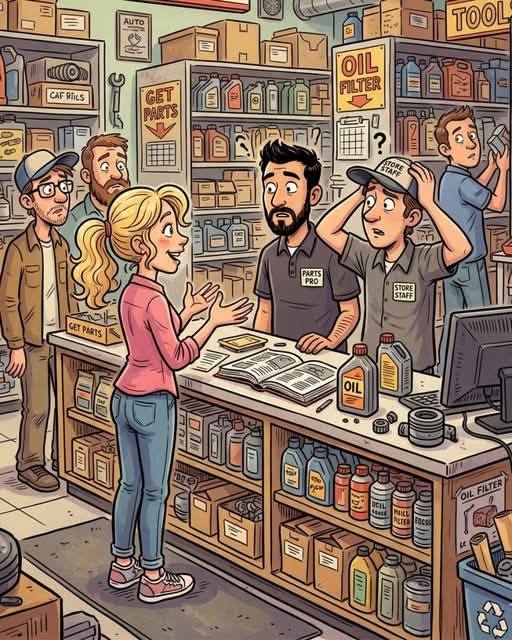
It begins with a simple misunderstanding in an auto shop.
A woman walks in asking for a “seven ten cap,” confusing the mechanics until one of them finally flips the number upside down and realizes she means an OIL cap. The room erupts in laughter, not because anyone is cruel, but because everyone instantly recognizes something painfully human in the moment: life becomes a little more confusing as time moves on.
And somehow, humor helps us survive that truth.
As people grow older, everyday frustrations start piling up in ways both ridiculous and strangely relatable. Bodies creak like old engines. Knees complain louder than car suspensions. Eyes struggle like dim headlights on a rainy highway. People joke about “spare tires” around the waistline or “leaky exhaust systems” because humor softens realities nobody enjoys admitting out loud.
Laughter becomes a kind of emotional maintenance.
That is why silly jokes, wordplay, and absurd misunderstandings never really disappear, even when they sound completely ridiculous on paper.
A tiny snail buys a flashy sports car, paints a giant “S” on the side, and speeds through town just so people can shout, “Look at that S-car go!” The joke is simple, silly, and completely impossible — yet people still laugh because absurdity briefly interrupts the seriousness of ordinary life.
Another story imagines Cinderella decades later: older, lonely, and suddenly granted another magical wish. She becomes young again, wealthy again, reunited with her transformed cat companion — only for him to joke about regretting being neutered years earlier. The humor lands not because it is realistic, but because it twists a familiar fairy tale into something unexpectedly awkward and human.
Keep reading…