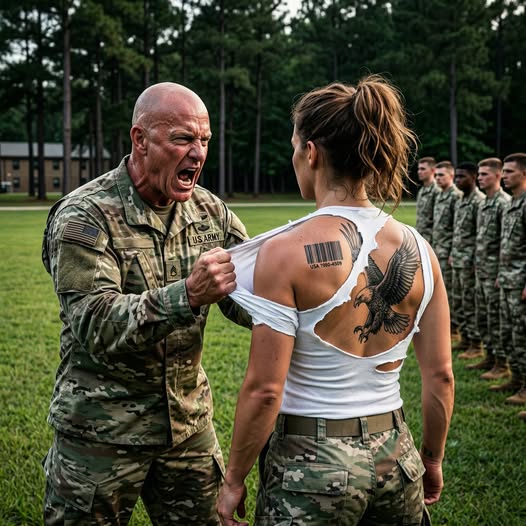
As one of the few women in the program, I felt the pressure to prove my abilities. Some people were skeptical at first, and the atmosphere wasn’t always welcoming. But instead of reacting to every comment or challenge, I focused on learning, observing, and improving my performance.
Being underestimated, I realized, can sometimes provide unexpected advantages.
A Moment That Changed Everything
During a formal inspection led by a senior general visiting the base, something happened that shifted the entire tone of my time at Fort Carson.
While adjusting my uniform after a routine check, a tattoo on my arm became visible—a symbol connected to my father’s unit. It was a design I carried as a personal tribute and reminder of why I had joined the service in the first place.
When the general noticed it, his reaction was immediate and serious. He asked where the symbol came from. When I told him it was connected to my father, Captain Elijah Kane, the mood around us changed.
That moment made it clear that the story behind my father’s unit might be more complicated than the official records suggested.
Searching for the Truth
After the inspection, I began noticing subtle changes. Access to certain archives became more restricted, and conversations around the base grew more cautious. It felt as though my questions had opened a door many people preferred to keep closed.
Not long after, I was approached by a senior officer who had spent years studying military history and operations. Without sharing classified details, he explained that some missions from that era were complicated and often misunderstood by the public.
What mattered most, he told me, was that many stories from past conflicts remain incomplete—and sometimes it takes years for new perspectives to bring clarity.
A Story Larger Than One Person
As I continued training, I realized that my journey wasn’t only about uncovering details from the past. It was also about understanding how service, sacrifice, and memory shape the people who serve today.
Military history is filled with moments that are still being studied and interpreted. While not every question has an immediate answer, the pursuit of truth is part of honoring those who came before us.
My father’s legacy wasn’t just about a mission or an incident—it was about commitment, courage, and the responsibility carried by the next generation.
Moving Forward With Purpose
The experience at Fort Carson reminded me that resilience often begins with asking difficult questions and staying committed to personal growth.
Sometimes the biggest impact comes not from confrontation, but from persistence, professionalism, and the determination to keep moving forward. For me, that means continuing to serve, continue learning, and continue honoring the people who inspired this journey.
The past may shape us, but it doesn’t have to define the limits of what we can achieve.
What are your thoughts on stories like this—where personal history and service intersect? Share your perspective in the comments and join the conversation.