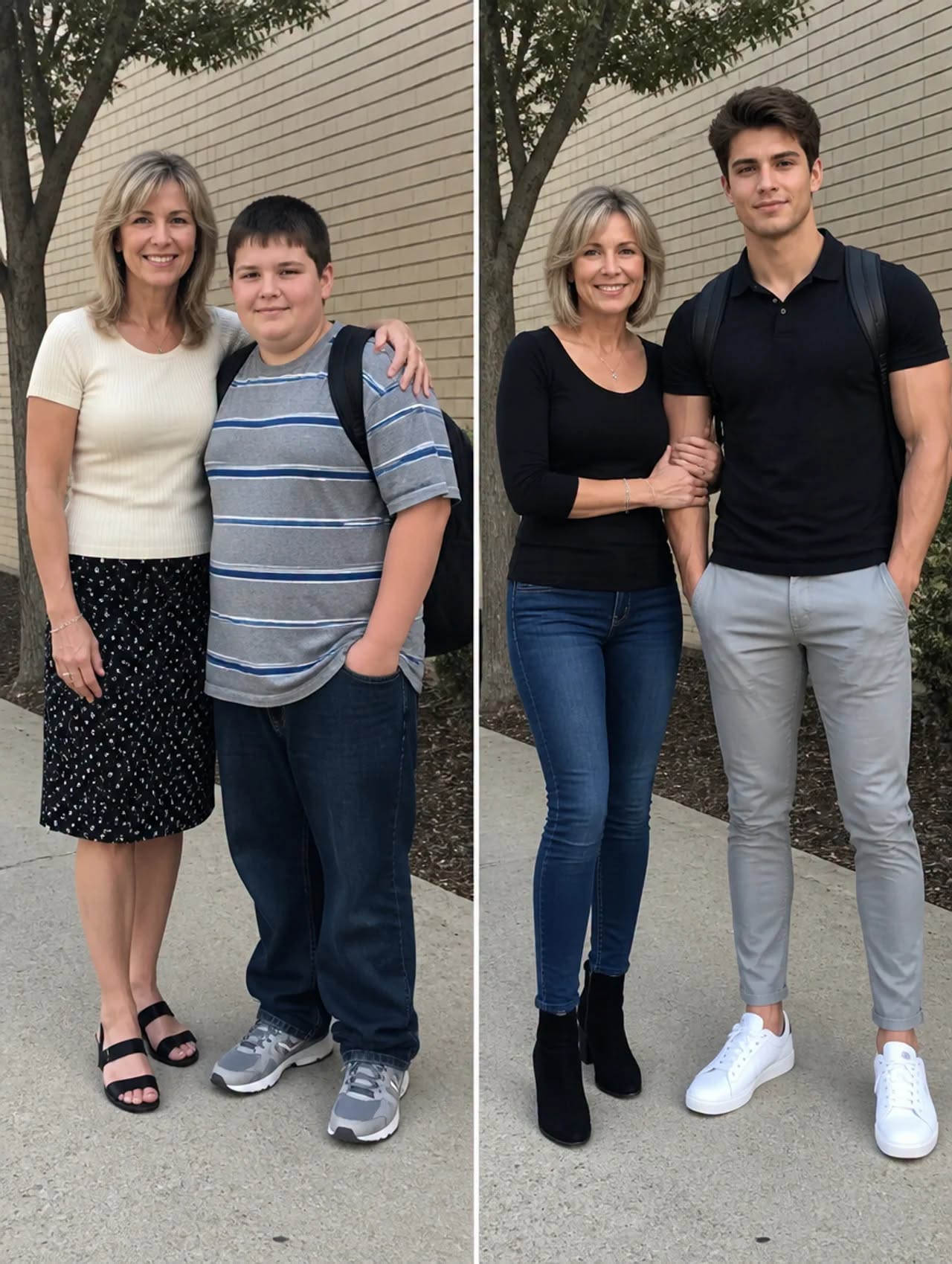
“No way…”
“I think it is.”
The same people who once walked past him in the hallway without saying hello were now staring.
My son didn’t look angry.
That surprised me.
After everything he had gone through, I expected bitterness. I expected him to want them to feel embarrassed or guilty.
But when he walked inside, he simply smiled.
He greeted people politely. He shook hands. He asked about their lives.
Some looked uncomfortable.
They remembered.
They remembered the jokes.
The exclusion.
The way they made him feel invisible.
One former classmate finally approached him.
“Hey… I didn’t know you were coming.”
My son smiled.
“Neither did I, until I decided I should.”
The classmate laughed awkwardly.
“I guess we all lost touch.”
My son nodded.
“Some people lose touch. Some people choose to let go.”
The words were gentle, but everyone understood what he meant.
As the evening continued, people slowly learned what had happened during those ten years.
My son hadn’t become famous.
He hadn’t won some giant award.
He hadn’t returned to prove he was better than anyone.
Instead, he had done something much more meaningful.
He had built himself back up.
After graduation, he worked hard, continued his education, and eventually started his own company. But the biggest change wasn’t his career.
It was his confidence.
He had spent years believing the cruel things people said about him.
Then one day, he decided those opinions no longer mattered.
Near the end of the night, the organizer of the reunion approached him.
“I owe you an apology,” she said quietly.
My son looked at her.
“For what?”
She looked down.
“For not inviting you.”
The room became quiet.
She continued.
“I told myself it was because we lost contact. But honestly… I think part of me was afraid. Afraid of remembering how we treated you.”
My son’s expression softened.
“I was hurt,” he admitted. “For a long time.”
She nodded, fighting back tears.
“But?”
“But I realized something,” he said. “The people who made me feel small back then don’t get to decide who I become.”
Nobody spoke.
Then my son reached into his jacket and pulled out a folder.
Everyone looked curious.
“I actually came here for a reason,” he said.
Inside the folder were documents about a local program he had created.
A mentorship program for teenagers who struggled with loneliness, bullying, or feeling like they didn’t belong.
“I know what it feels like to think nobody sees you,” he said. “I don’t want other kids to spend years believing that.”
The room went silent.
The people who once ignored him were now listening carefully.
Some looked ashamed.
Others looked inspired.
Later that night, as we drove home, I asked him the question I had been holding in my heart.
“Why did you really go?”
He looked out the window and smiled.
“Because ten years ago, I wanted them to notice me.”
He paused.
“But tonight, I wanted to prove that I noticed myself.”
I reached over and squeezed his hand.
For years, I had wished those kids would understand the pain they caused him.
But that night, I realized something.
The greatest victory wasn’t making them regret what they did.
It was watching my son become someone who no longer needed their approval.