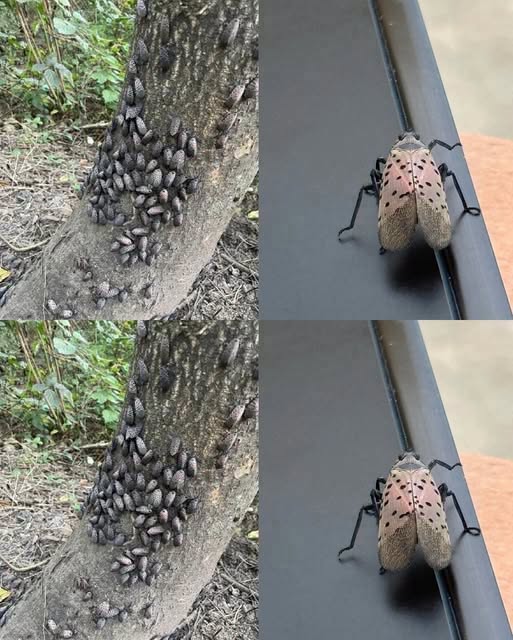
Heavy infestations can weaken trees and vines over time, especially grapes, fruit trees, maples, walnuts, and other preferred host plants.
Learning to recognize the spotted lanternfly during each stage of its life cycle makes early detection much easier.
Young nymphs appear in late spring as small black insects covered with bright white spots. As they mature, they develop vivid red coloring alongside their black-and-white pattern. Adults emerge later in the summer, measuring roughly an inch long with gray forewings covered in black spots. When startled or taking flight, they reveal brilliant red hindwings that make them easy to recognize.
If you spot several on your property, taking action early can prevent populations from growing.
One of the simplest methods is removing individual insects whenever possible. During autumn, it’s also important to watch for egg masses, which resemble smears of grayish mud attached to tree trunks, fences, outdoor furniture, rocks, or other smooth surfaces.
These egg masses can be scraped into a sealed container filled with rubbing alcohol or hand sanitizer, preventing hundreds of insects from hatching the following season.
Another important step is identifying the Tree of Heaven, one of the lanternfly’s favorite host trees. In some areas, property owners choose to remove these invasive trees or work with certified arborists on appropriate management strategies when removal isn’t practical.
If you use sticky bands around tree trunks to catch climbing nymphs, be sure they’re properly covered with wire mesh or protective guards. This helps reduce the risk of accidentally trapping birds, squirrels, or other beneficial wildlife.
Spotted lanternflies are especially challenging because they spread easily. Adults often hitch rides on vehicles, trailers, outdoor furniture, firewood, and recreational equipment, allowing them to appear far from existing populations.
For that reason, many agricultural agencies encourage residents to inspect vehicles and outdoor equipment before traveling from affected areas.
If you discover spotted lanternflies in a location where they have not previously been reported, consider notifying your local agriculture or environmental agency. Early reporting can help officials monitor their spread and protect nearby forests, orchards, and vineyards.
While these insects can certainly be frustrating, early identification and consistent management can make a significant difference. A healthy landscape is much easier to protect when action is taken before infestations become severe.
Have you ever spotted a lanternfly in your yard or neighborhood? Share your experience in the comments, and pass this article along to help others recognize this invasive insect before it spreads even farther.