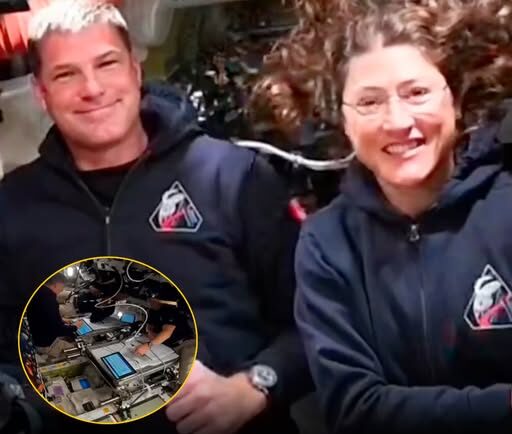
But soon after, viewers noticed something unusual: letters appearing briefly behind the toy in the background. This small detail quickly fueled speculation online, with some users questioning the authenticity of the broadcast and suggesting digital editing.
The Simple Technical Truth
Experts explain that what viewers saw was a common Chroma Key overlay, a standard technique in live video production. It allows graphics, text, or other visual elements to appear seamlessly over the main video feed.
In live settings, these overlays can refresh at slightly different times, creating brief visual inconsistencies that may appear unusual—but they are completely normal and do not indicate manipulation.
Why Live Feeds Can Look “Off”
Space broadcasts involve complex real-time systems, and minor glitches in signal processing or timing can create fleeting anomalies. These are expected and do not compromise the authenticity of the mission footage.
Beyond the Buzz: The Mission’s True Impact
While online theories spread quickly, the real story is Artemis II’s record-breaking achievement. This mission is a key step in NASA’s plan to return humans to the Moon and advance long-term space exploration efforts.
Curiosity is natural, but understanding the technical context helps separate speculation from reality. The mission continues to demonstrate human innovation, scientific progress, and our drive to explore beyond Earth.
💫 Final Thoughts
The Artemis II broadcast shows how easily online speculation can grow—but the facts remain clear: this is a historic journey for humankind.
✨ Did you catch the live broadcast? Share your thoughts below and join the conversation about space, exploration, and the mysteries beyond our planet!