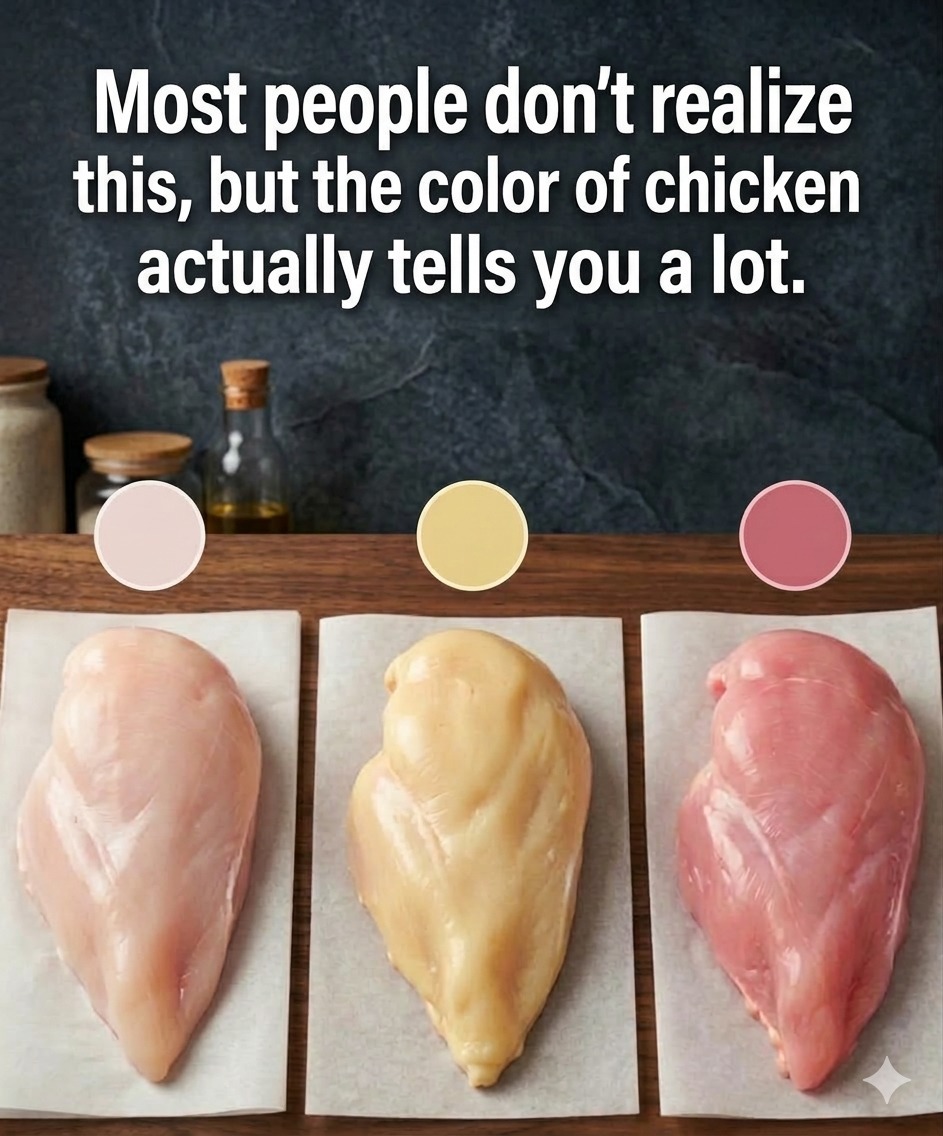
Why Chicken Color Varies
The color of chicken meat is influenced by a combination of factors, including diet, breed, and farming conditions.
Paler chicken is often associated with birds raised in controlled indoor environments. These chickens typically follow a consistent diet and are bred for efficient growth. As a result, the meat may appear lighter in color and have a milder flavor.
Yellow-toned chicken is commonly linked to diets that include natural pigments, such as corn or grass. These ingredients can affect the color of the fat and skin, giving the meat a warmer, more golden appearance.
Does Color Indicate Quality?
Not necessarily.
While diet and living conditions can influence appearance, color alone does not determine whether chicken is fresh, nutritious, or safe to eat. In some cases, producers may adjust feed to influence color, which means visual cues can sometimes be misleading.
What to Look for Instead
To better assess quality, consider factors beyond color:
- Labeling: Terms like “organic,” “free-range,” or “pasture-raised” can provide more context about how the chicken was produced
- Smell: Fresh chicken should have little to no odor
- Texture: The meat should feel firm and not sticky
- Packaging date: Always check for freshness and proper storage
Final Thoughts
Chicken color can vary for many reasons, and it does not always reflect quality or nutritional value. Focusing on reliable indicators such as freshness, proper labeling, and safe handling practices is a more effective way to make informed choices.