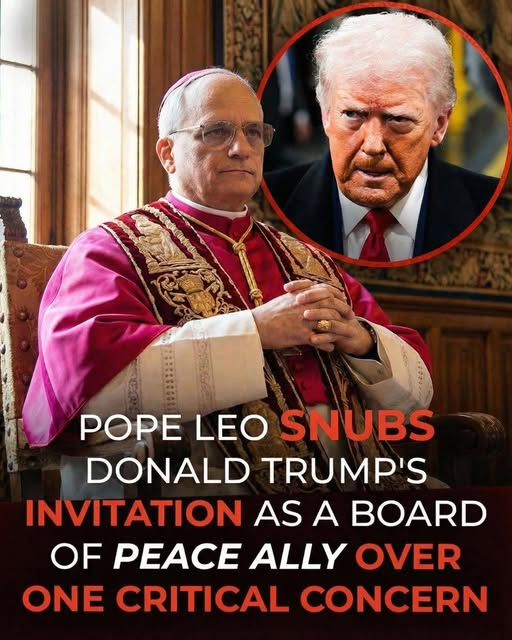
The administration of Donald Trump has extended an invitation to the Holy See to take part in a newly proposed international peace effort, positioning the Vatican within a broader diplomatic conversation. The plan, introduced earlier this year, is designed to encourage long-term stability and post-conflict rebuilding in Gaza. While the outreach reflected an interest in global collaboration, the Vatican has since clarified its stance following high-level discussions in Rome.
In January, President Trump presented what the White House described as an extensive peace framework, which included the formation of a “Board of Peace.” According to officials, this body would supervise elements of transition planning, coordinate participating nations and institutions, and help guide reconstruction initiatives. Administration representatives noted that countries and international organizations willing to assist would be invited to contribute. Although specific diplomatic exchanges were not publicly detailed, the Vatican was openly mentioned as a potential participant alongside other global actors.
The Vatican’s formal response came during a bilateral meeting commemorating the anniversary of the Lateran Pacts. Addressing journalists, Cardinal Pietro Parolin explained that the Holy See would not join the proposed board. He underscored that the Vatican’s distinct spiritual mission and diplomatic character set it apart from traditional political entities. While affirming support for genuine peace efforts, he indicated that certain elements of the proposal required further clarification. He also reiterated the Holy See’s longstanding position that international conflicts are best addressed through multilateral channels, particularly the United Nations.
The White House responded in measured terms. Press Secretary Karoline Leavitt stated that the administration views peace-building initiatives as matters that should rise above political divisions, adding that the decision was disappointing. President Trump has previously expressed respect for Pope Leo XIV, who has indicated he does not plan to engage directly in partisan political matters. In past remarks, Pope Leo XIV has emphasized openness to dialogue on humanitarian and moral concerns, while noting that direct political engagement with U.S. officials is generally handled by American bishops. As conversations around reconstruction and diplomacy continue, Washington and the Vatican appear prepared to operate within their respective spheres — one centered on policy and governance, the other grounded in spiritual leadership and multilateral cooperation.