
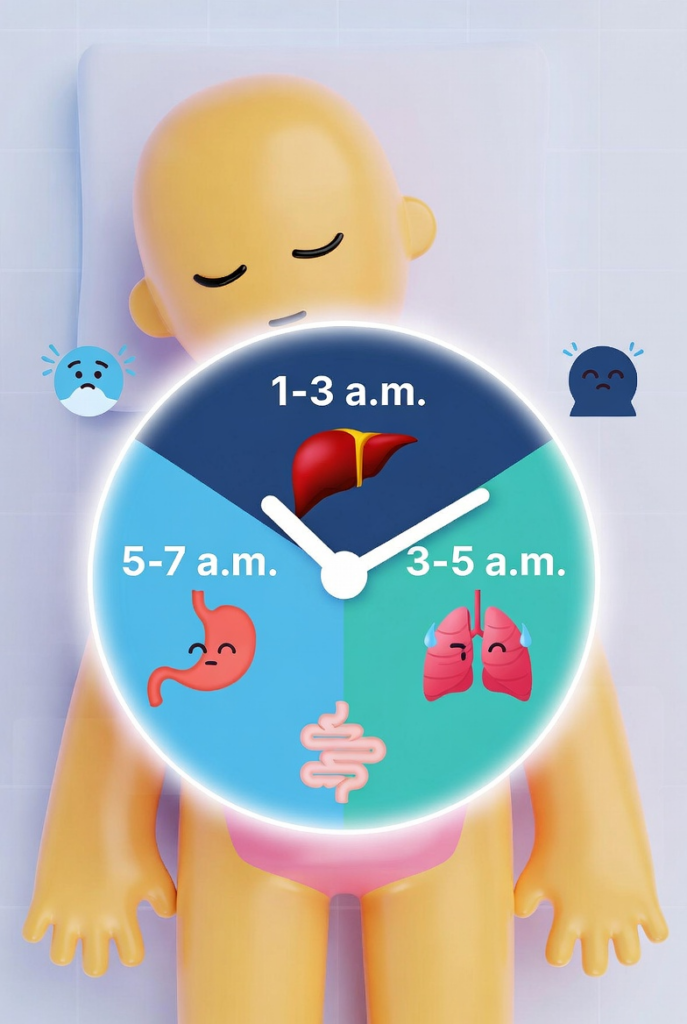
- 3:00–5:00 a.m. — The lungs take over. Symbolically, this time is tied to breathing, letting go, and emotional release. Waking during these hours might signal grief, worry, or suppressed feelings.
- 5:00–7:00 a.m. — Linked to digestion and renewal, this is a period for preparing your body and mind for the day ahead.
While TCM interpretations aren’t backed by modern clinical trials, many people find them helpful for self-reflection, helping pinpoint stressors or emotional patterns that may be affecting sleep.
No matter your perspective, recurring nighttime wake-ups are a signal worth listening to. Practical tips to restore deep sleep include:
- Maintaining a consistent sleep schedule
- Creating a calm, dark, and cool bedroom environment
- Limiting screens and blue light before bed
- Managing stress with mindfulness, journaling, or gentle stretching
If disrupted sleep continues or begins to affect your daily life, consulting a healthcare professional is the safest step to identify underlying causes and reclaim restorative nights.
Sleep is more than a pause from life — it’s a chance to reset your body, mind, and emotions. Paying attention to these wake-up patterns could be the first step toward deeper rest and better health.
Have you noticed yourself waking at the same time each night? Share your experiences in the comments below — you might discover you’re not alone, and your story could help others find answers.