Over time, the baby also showed signs of discomfort, including interrupted sleep and reduced appetite. While none of the symptoms were extreme on their own, the lack of improvement raised questions.
Around the same time, something unusual began happening at home.
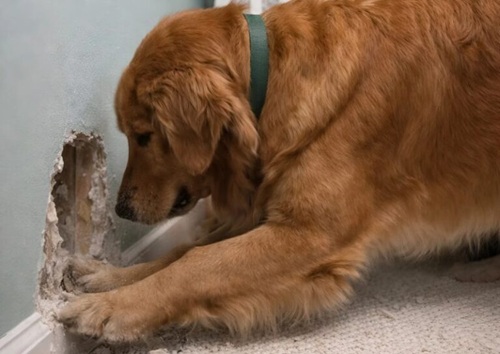
The family’s dog, typically calm and well-behaved, started focusing intensely on one specific area of the nursery wall—right behind the baby’s crib. At first, it seemed like harmless curiosity. But the behavior quickly became repetitive.
The dog would return to the same spot again and again, scratching and sniffing with growing persistence. Even when moved away, it would come back and continue focusing on that exact location.
As the days passed, the behavior became harder to ignore.
Eventually, the scratching caused visible marks on the wall. This prompted the family to take a closer look.
What they found changed everything.
Behind the wall, there were signs of hidden moisture. A more detailed inspection revealed a slow plumbing leak that had likely been there for some time. The damp conditions had created an environment where mold could develop inside the wall.
This area was located directly behind the crib.
While only a professional assessment can confirm any direct health impact, poor indoor air quality linked to moisture and mold can sometimes affect sensitive individuals, especially infants.
The discovery also helped explain the dog’s behavior. Animals can sometimes detect changes in smell or moisture that humans may not notice right away. The dog’s repeated focus on that spot may have been a reaction to those subtle environmental changes.
Once the issue was identified, the family acted quickly.
They contacted professionals to repair the leak and assess the affected area. Damaged materials were addressed, and steps were taken to improve ventilation and overall air quality in the nursery.
After these changes, the environment became safer and more comfortable.
This experience highlights an important lesson: sometimes, small signs—like persistent symptoms or unusual pet behavior—can point to hidden issues in a home.
Paying attention to these details can help identify problems early, before they become more serious.
In the end, what seemed like separate concerns turned out to be connected. Thanks to careful observation and timely action, the family was able to resolve the issue and create a healthier space for their child.