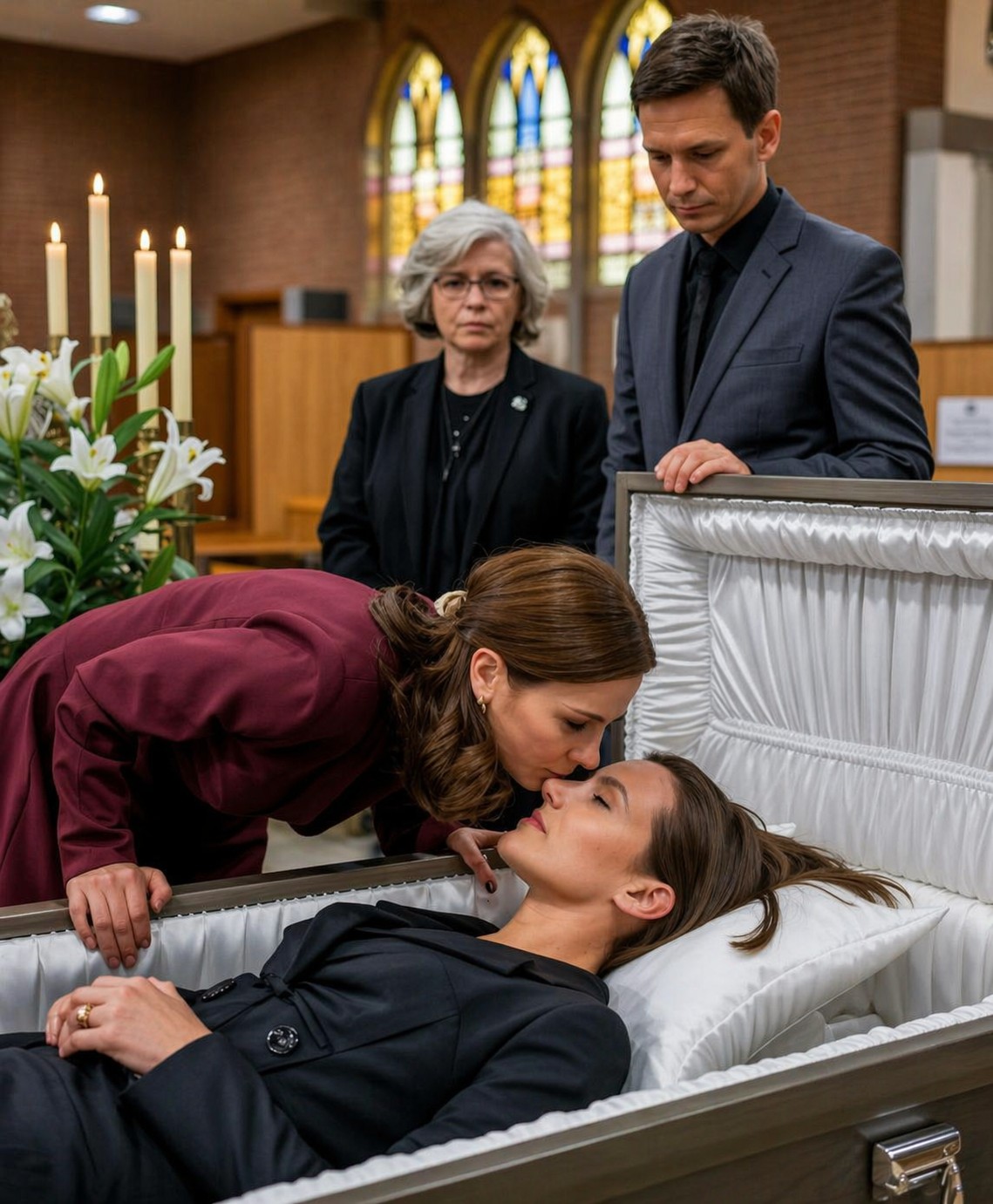
The afternoon air inside the chapel felt heavy, as if even the walls were holding their breath. Soft light filtered through stained glass, falling across rows of silent mourners gathered to say goodbye to Clara, a beloved daughter, wife, and friend who had been taken far too soon.
I sat in the front row, holding a small lace handkerchief she once gave me. Grief pressed down on my chest in a way I could not describe. Every memory of her felt both precious and painfully distant at the same time.
Then the silence broke.
The sound of footsteps echoed through the chapel doors—sharp, deliberate, and completely out of place. Every head turned.
Julian, her husband, entered without hesitation. There was no trace of sorrow on his face, no visible weight of loss. Instead, he walked with an unsettling confidence, as if the moment belonged to him rather than to the woman being laid to rest.
Beside him was a young woman no one recognized.
Her presence alone shifted the atmosphere. The way she dressed, the way she looked around the room, and the ease with which she held onto Julian’s arm sent a ripple of discomfort through the mourners. Whispers began quietly, quickly spreading through the pews.
What made it worse was not just their arrival—it was their behavior. They did not sit quietly in the back or show any sign of respect for the setting. Instead, they placed themselves prominently among grieving family members, as if nothing about the moment required restraint.
The service continued, but the mood had changed completely. Words of remembrance felt harder to hear, heavier to absorb. Even the priest’s voice seemed to waver under the tension in the room.
For those of us who knew Clara deeply, there was an added layer of pain. In her final days, she had quietly expressed concerns about her marriage—concerns she carried with dignity and silence. None of us imagined how visibly those final truths would appear even at her farewell.
Keep reading…