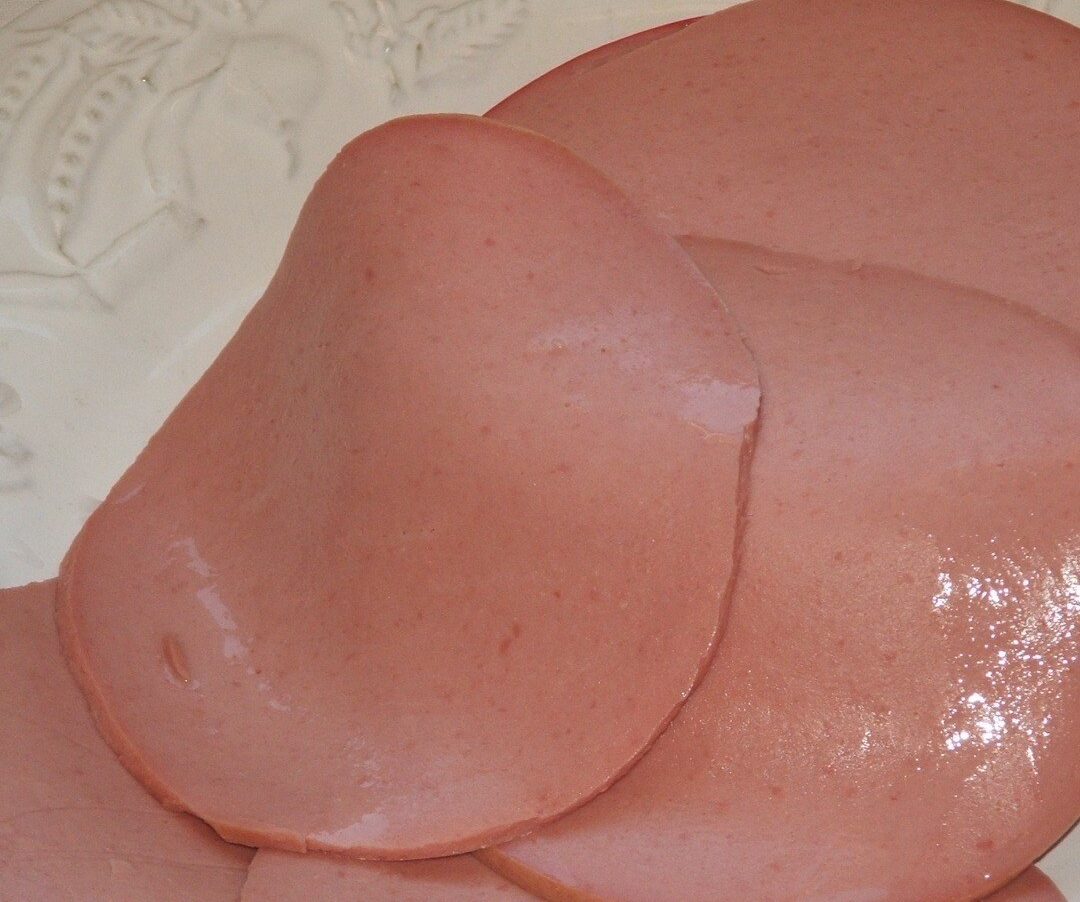
Bologna hides a quiet story most people never stop to question. It sits in lunchboxes, is layered onto cheap white bread, and appears in perfectly uniform pink slices that feel almost artificial. We joke about it as “mystery meat,” dismiss it as junk, and still keep buying it. But behind that smooth texture is a far more structured, regulated, and historically rich food than most realize.
Despite its reputation in popular culture, modern bologna is not the unsettling blend of random leftovers that urban legends often suggest. In today’s food industry, it is typically made from carefully sourced beef, pork, chicken, or a combination of these meats. These ingredients are finely ground, blended with seasoning and fat, and then emulsified into a smooth mixture. That mixture is shaped, cooked, and sometimes lightly smoked to create the familiar slices found in grocery stores.
Strict food safety regulations in many countries, including the United States, mean that commercial bologna must meet defined standards regarding ingredients, labeling, and processing. While it is undeniably a processed food, it is far from the exaggerated horror stories that circulate online. What people often imagine—beaks, hooves, and unidentifiable scraps—belongs more to myth than reality.
To understand bologna, it helps to look at its origins. Its distant relative, mortadella, comes from Bologna, Italy, and is still considered a traditional delicacy. Mortadella is made from finely ground pork and is often enhanced with visible cubes of fat, peppercorns, and sometimes pistachios. It has a distinct aroma, layered texture, and strong culinary identity rooted in centuries of craftsmanship.
Keep reading…