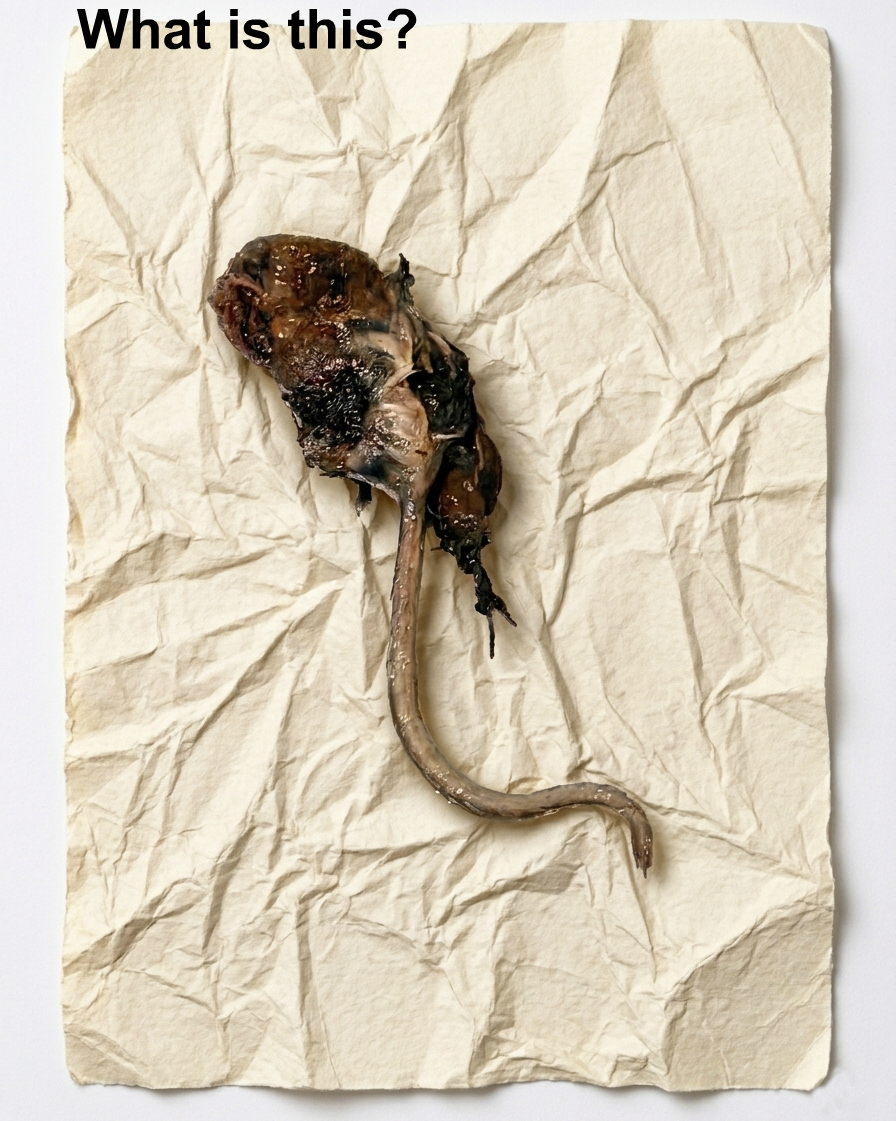
Psychologists often explain this as the brain’s natural tendency to fill gaps when information is incomplete. When we can’t clearly identify something, our minds default to patterns we associate with danger. It’s a survival mechanism that once protected us, but in modern life, it often leads to unnecessary fear.
What makes these moments powerful isn’t just the surprise—it’s the reflection that follows. We begin to notice how often we assume the worst before confirming the truth. How easily silence becomes suspicion. How quickly uncertainty becomes anxiety.
In this case, the truth was simple. A forgotten toy, dragged into the wrong lighting and the wrong moment, had briefly become something unrecognizable. But once understood, it transformed into something much more human: a reminder of innocence, play, and how easily everyday objects can be misread when context is missing.
And perhaps that is the real takeaway.
Not everything unclear is dangerous. Not everything strange is a threat. Sometimes, it’s just life being ordinary in a way we don’t immediately understand.
The mind will always try to protect us by imagining worst-case scenarios. But grounding ourselves—turning on the light, looking again, and waiting for clarity—often reveals a much calmer reality underneath.
Have you ever misjudged a situation only to realize it was harmless? Share your experience below—your story might help someone else see things more clearly.