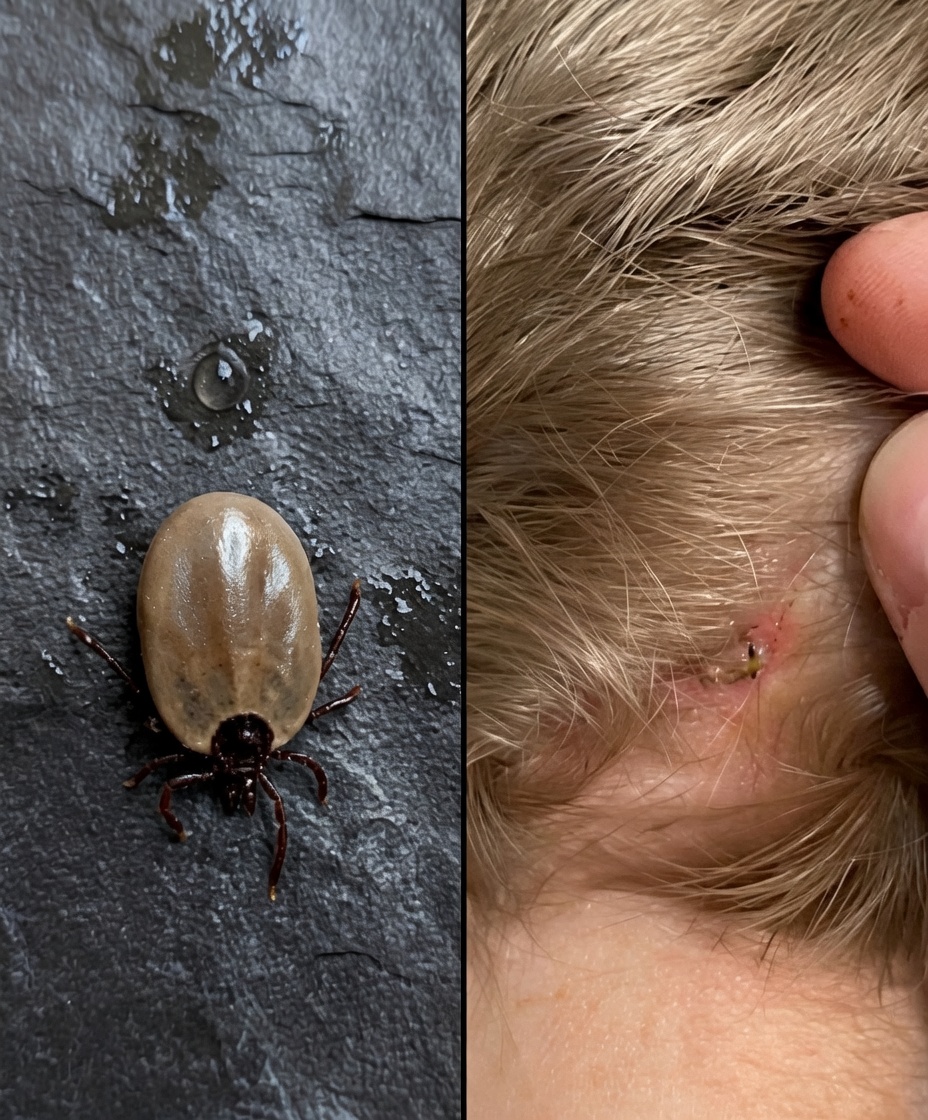
Ticks are easy to overlook. They are small, quiet, and often go unnoticed until long after they attach to the skin. But health experts warn that these tiny parasites can carry serious illnesses capable of affecting the nervous system, joints, heart, and overall health if not recognized and treated early.
For many people, the danger is not the bite itself — it is what may come afterward.
Tick-borne illnesses such as Lyme disease and other infections can begin with symptoms so mild or ordinary that they are easy to dismiss. A headache, unusual fatigue, low fever, body aches, or a strange rash may seem insignificant at first, especially during warmer months when people spend more time outdoors.
That is exactly why awareness matters.
Medical professionals emphasize that early detection can make a major difference in treatment outcomes. When identified quickly, many tick-related illnesses respond well to medical care and are far less likely to lead to long-term complications. Problems often arise when symptoms are ignored or mistaken for common seasonal illnesses.
One challenge is that symptoms do not always appear immediately.
Some people notice changes within days, while others may not connect lingering fatigue, joint pain, or flu-like symptoms to a tick bite that happened weeks earlier. Certain infections can also affect people differently depending on age, overall health, and how long the tick remained attached.
Prevention remains one of the most effective forms of protection.
Experts recommend wearing long sleeves and pants when walking through wooded areas, tall grass, or dense vegetation where ticks commonly live. Light-colored clothing can make it easier to spot ticks before they attach. Using insect repellents designed for ticks and staying on cleared paths during hikes can also help reduce exposure.
Keep reading…