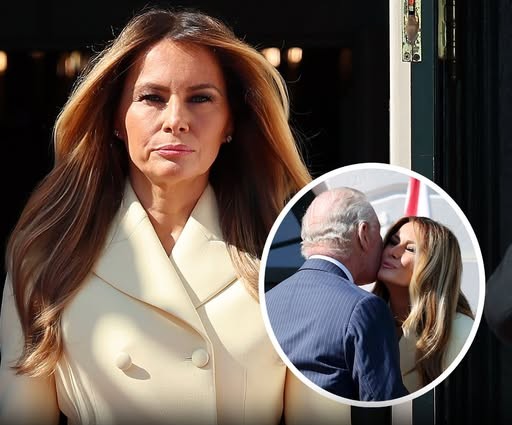
It was during this visit that a brief exchange between Melania Trump and King Charles III drew unexpected public curiosity. The interaction was short, polite, and understated—yet quickly became a topic of discussion across media platforms.
Some analysts, including body language observers, suggested that the exchange reflected standard diplomatic courtesy and mutual respect. In reality, such moments are often less about hidden meaning and more about the natural rhythm of formal introductions between experienced public figures.
How Small Gestures Gain Big Attention
In today’s media landscape, even the smallest interactions during high-level events can be widely interpreted. A simple smile, a brief comment, or a polite acknowledgment can quickly become part of a larger public narrative.
This phenomenon is not new, but it has intensified in the digital era, where clips and snapshots circulate instantly, often without full context. As a result, ordinary diplomatic courtesy can sometimes be viewed through a much larger lens than intended.
A History of Familiar Formality
This was not the first time members of the British royal family and Melania Trump had appeared together at official engagements. Previous visits and events have included similarly brief, polite exchanges that reflect the structured nature of international protocol.
At one earlier event in the United Kingdom, light conversation and informal remarks helped ease the tone of a highly formal setting—an example of how small human interactions can soften ceremonial occasions without altering their diplomatic importance.
The Role of Protocol in a Changing World
Modern state visits continue to evolve. Traditional gestures and rigid formalities are now often replaced with more flexible, culturally adaptive forms of respect. What once might have been strictly defined by protocol is now guided by mutual understanding and contemporary diplomatic practice.
However, public perception does not always evolve at the same pace. This gap between tradition and modern interpretation is often where speculation begins.
Beyond the Headlines
While media attention tends to focus on brief visual moments, the substance of such visits lies in private discussions, policy conversations, and long-term diplomatic goals. These elements rarely make headlines but form the foundation of international relations.
What the public sees is only a fraction of the full picture—carefully presented, highly visible, and naturally open to interpretation.
Final Reflection
State visits like this one remind us how easily attention can shift from formal diplomacy to small, human moments. In a world driven by constant media coverage, even the simplest interaction can take on a life of its own.
Yet beneath the surface, diplomacy continues in quieter spaces—through conversation, cooperation, and shared intent.
If this breakdown interested you, share your thoughts and join the discussion: do you think modern media pays too much attention to small moments in major political events?