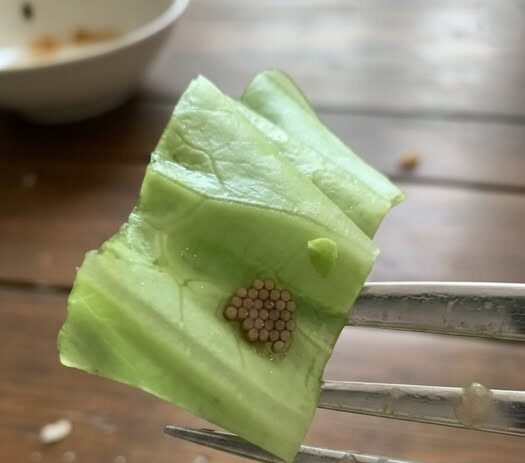
What was meant to be a simple, relaxing lunch quickly turned into a startling surprise for one woman when she discovered something unusual in her salad. While sprinkling what she thought were quinoa grains over her greens, she noticed small brown clusters that didn’t quite look right. On closer inspection, she realized the clusters were attached to a lettuce leaf—and weren’t grains at all. They appeared to be insect eggs. Alarmed, she immediately stopped eating and alerted others nearby. What started as an ordinary meal turned into a sharp reminder to stay vigilant when handling fresh produce.
Finding insect eggs in leafy greens can be unsettling, but it’s not uncommon. Many vegetables grow outdoors, where insects naturally live and reproduce. Certain leafy greens—like romaine, spinach, or cabbage—tend to have tightly folded leaves, creating perfect spots for eggs to hide. Even with modern washing, packaging, and quality control processes, tiny natural remnants can slip through and end up in kitchens and restaurants. From farm to processing facility to store or dining table, produce passes through multiple stages, and while standards are high, no system is completely flawless.
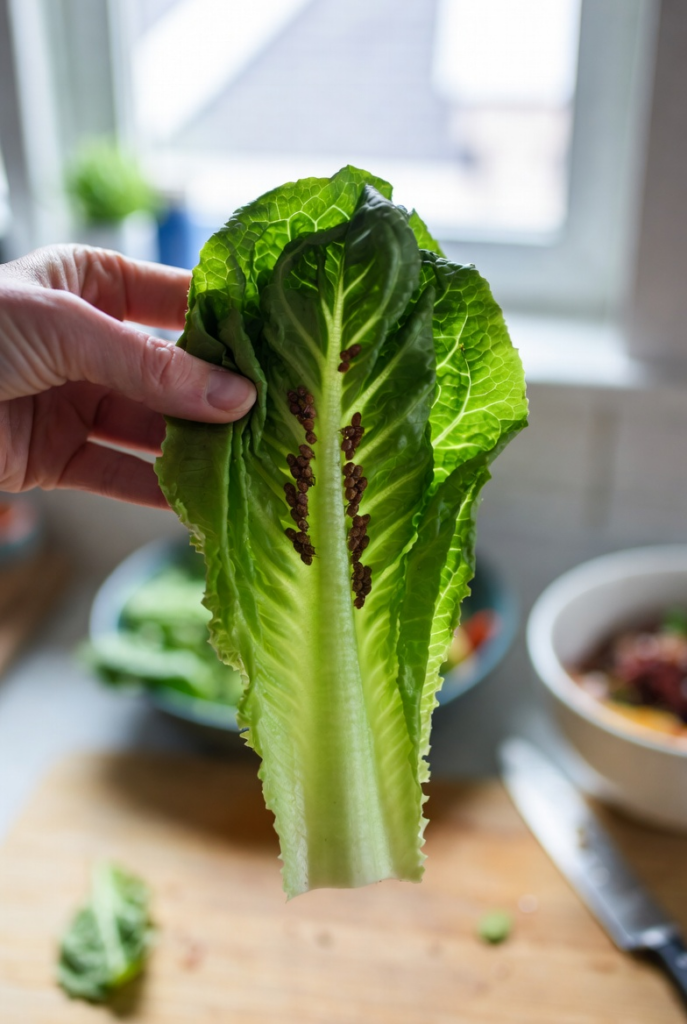
For the most part, accidentally coming into contact with insect eggs poses minimal health risk. Many species are harmless, and stomach acid typically neutralizes any organic material ingested by mistake. Still, the thought of eating something unexpected can be disturbing, and hygiene is always a valid concern.
Continue reading on next page…