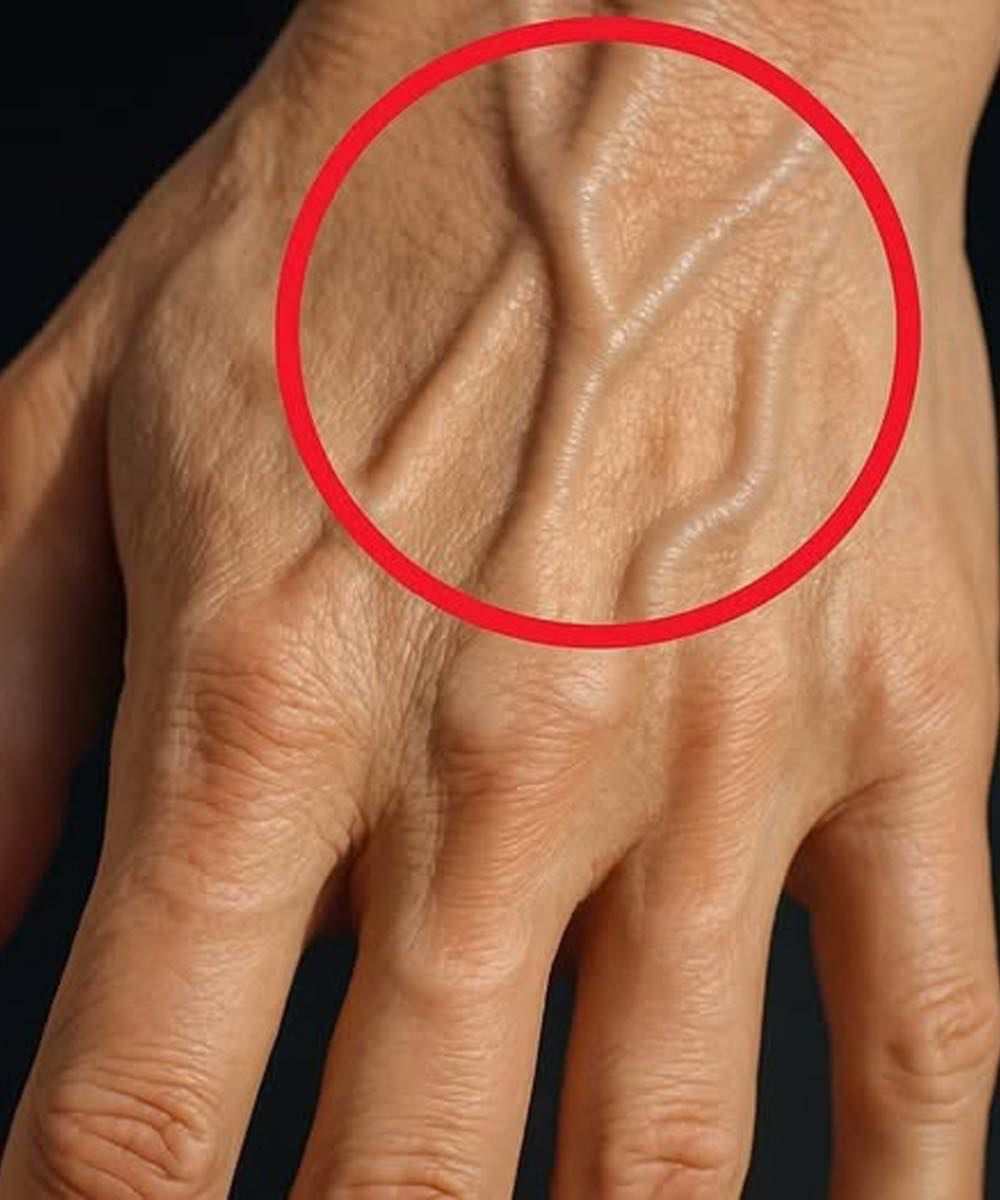
When medical professionals evaluate issues with the body’s filtering organs, they don’t rely on appearance alone. Instead, they look for specific, measurable changes in how the body functions.
Common warning signs may include:
- Ongoing swelling in hands, feet, ankles, or around the eyes
- Persistent fatigue that doesn’t improve with rest
- Noticeable changes in urination patterns
- Foamy or unusual urine appearance
- Nausea or reduced appetite
- Elevated blood pressure readings
These symptoms develop because the body struggles to manage fluid balance and waste removal effectively.
Importantly, visible hand veins are not considered a diagnostic sign in this list.
Why veins don’t tell the full story
A key reason for confusion is how fluid balance affects appearance.
When the body retains excess fluid, swelling tends to occur—and swollen tissue actually makes veins less visible, not more visible. On the other hand, when fluid levels are lower (such as during heat or mild dehydration), veins may stand out more.
This is why vein visibility is not a reliable indicator of internal organ health. It reflects surface-level conditions, not deeper biological function.
What doctors actually rely on
Medical professionals don’t diagnose internal health issues by looking at veins. Instead, they use:
- Blood tests to measure waste levels and filtration efficiency
- Urine analysis to detect proteins or abnormalities
- Blood pressure monitoring
- Full clinical evaluations and medical history review
These tools provide accurate, measurable insight into how the body is functioning internally.
The real meaning of visible veins
In most situations, visible hand veins simply reflect:
- Normal aging
- Lower body fat
- Genetics
- Hydration status
- Temperature or activity levels
They are part of normal human variation—not a warning sign on their own.
The bottom line
Visible veins in your hands are almost always harmless and do not indicate problems with internal organ function. While online information can sometimes create unnecessary worry, medical science is clear: appearance alone is not a diagnostic tool.
If you ever have concerns about your health, the most reliable step is always professional evaluation—not self-interpretation based on surface features.
Final thought
Your body often shows changes that are completely normal, even if they look unfamiliar. Understanding what truly matters—and what doesn’t—helps you stay informed without unnecessary anxiety.
If this helped clarify things for you, share it with someone who might be overthinking their symptoms—and explore more evidence-based health insights to stay confidently informed.