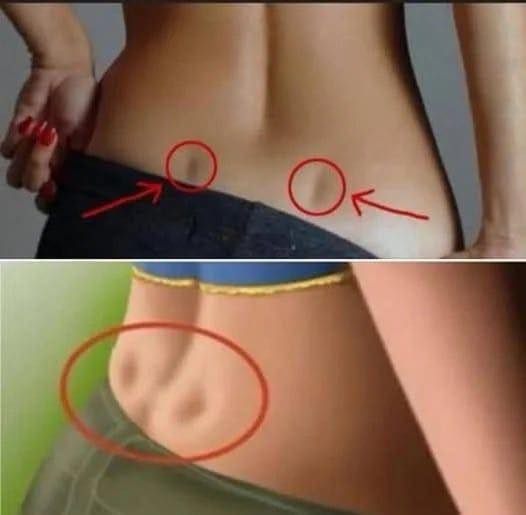
Lower body fat levels may make natural contours more noticeable, and a well-developed posterior chain (glutes, lower back, and core) can add definition to the area. However, even with consistent training, their appearance is never guaranteed if the underlying structure isn’t there.
This is why they shouldn’t be treated as a fitness goal.
The Myth of “Achieving” Lower Back Dimples
On social media, these dimples are sometimes presented as a body aesthetic to aim for. In reality, that’s misleading.
Unlike strength, endurance, or mobility, this is not a performance-based trait. Focusing on it as a goal can lead to unnecessary comparison and frustration, especially when progress in fitness is actually happening in much more meaningful ways.
A Healthier Way to View Fitness Progress
A more balanced approach focuses on overall strength and function rather than isolated visual features.
Exercises that strengthen the core, glutes, and lower back—such as bridges, deadlift variations, and stability work—support posture, spinal health, and daily movement efficiency. These benefits improve how the body feels and performs, which matters far more than small surface-level details.
Why Function Always Matters More Than Appearance
The body’s primary role is movement, stability, and support. When those systems are strong, everything else tends to follow naturally.
Good posture, reduced injury risk, and improved mobility are long-term benefits that have real impact on quality of life—unlike cosmetic traits that vary from person to person.
Natural Differences Are Completely Normal
Human bodies are not designed to look identical. Variations in bone structure, fat distribution, and muscle shape are expected, not exceptions.
Lower back dimples are just one example of this diversity. Some people have them, some don’t, and both are completely normal outcomes of natural anatomy.
Letting Go of Unnecessary Beauty Standards
It’s easy for small physical traits to become exaggerated online, especially when they are frequently highlighted in fitness or aesthetic trends. But not every feature needs to be pursued or analyzed.
Understanding what is genetic versus what is changeable helps create a healthier, more realistic relationship with your body.
Final Thoughts
Lower back dimples are simply a natural anatomical variation—not a measure of health, fitness, or attractiveness. While exercise and body composition can influence how defined they look, they cannot determine whether they appear in the first place.
Focusing on strength, consistency, and overall well-being will always deliver more meaningful results than chasing isolated physical traits.
Your body doesn’t need to match a trend to be strong, capable, and healthy—it already works best when it’s supported, not judged.
If you found this helpful, feel free to share your thoughts or experiences in the comments—and let’s keep the conversation about body health realistic and positive.