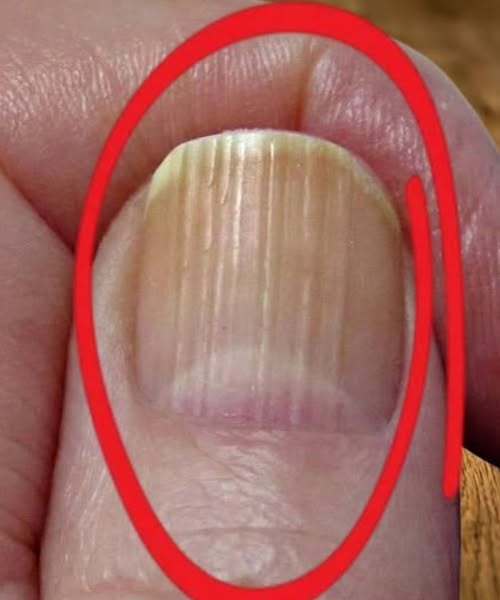
A small ridge may be harmless. A sudden dark line, deep groove, or persistent discoloration may deserve a closer look.
Nails are not a replacement for medical testing, but they can act like a small warning signal. When something looks new, unusual, or keeps getting worse, it is worth paying attention.
Vertical Ridges Are Often Harmless
Vertical ridges are the fine lines that run from the base of the nail toward the tip. These are very common and often become more noticeable with age.
As nail growth slows down, the surface can become less smooth. Mild dehydration and nutrient gaps may also make ridges appear more visible.
Common causes of vertical ridges include:
Aging
Dry nails
Mild dehydration
Low biotin, iron, or zinc
Frequent handwashing
Harsh cleaning products
In many cases, vertical ridges are not dangerous. Keeping nails moisturized, drinking enough water, eating a balanced diet, and protecting hands from harsh chemicals may help improve their appearance over time.
Just avoid aggressive buffing. Too much filing can thin the nail and make it weaker.
Horizontal Ridges May Need More Attention
Horizontal ridges are different. These grooves run across the nail from side to side and are often called Beau’s lines.
They can appear when nail growth is temporarily interrupted. This may happen after the body goes through stress, such as a serious illness, surgery, high fever, or major nutritional deficiency.
Possible causes include:
Recent illness
High fever
Surgery
Physical stress
Low protein, zinc, or iron
Thyroid problems
Diabetes
Circulation issues
If you suddenly notice deep horizontal lines across several nails, it is a good idea to speak with a healthcare professional. The nail itself may grow out normally, but the cause behind the disruption may need attention.
White Spots or Streaks Are Usually Minor
White marks on nails are common. Many people notice small white dots or streaks and immediately worry, but these are often caused by minor injury to the nail.
Something as simple as bumping your nail, biting your nails, or using harsh manicure tools can leave white marks as the nail grows.
Other possible causes include low zinc or protein intake. In less common cases, persistent white streaks may be connected to deeper health issues involving the liver or kidneys.
If the spots appear occasionally and grow out with the nail, they are usually not a major concern. But if they keep returning, spread, or appear with other symptoms, medical advice is the safer move.
Dark Stripes Should Not Be Ignored
A dark line on the nail deserves more caution, especially if it is new, changing, widening, or appears on only one nail.
Dark vertical stripes can sometimes be caused by increased pigment in the nail, a condition known as melanonychia. In many cases, it can be harmless, especially depending on skin tone and personal history.
However, a dark nail streak can also rarely be linked to nail melanoma, a serious form of skin cancer. That is why new or changing dark lines should be checked by a dermatologist.
Warning signs include:
A stripe that gets wider
Uneven or blurry edges
Color spreading onto the surrounding skin
A new dark streak on one nail
Bleeding, pain, or nail distortion
Rapid change in appearance
Do not try to self-diagnose dark nail streaks. A dermatologist can examine the nail properly and decide whether testing is needed.
Brittle Nails Can Point to Bigger Issues
If your nails are not only striped but also brittle, weak, peeling, or grooved, the cause may be more than surface damage.
Hormonal changes and thyroid issues can affect nail strength. An underactive thyroid may cause nails to become dry, weak, ridged, or slow-growing.
Pregnancy, menopause, stress, and changes in hormone levels can also affect nail texture.
Pay attention if nail changes come with symptoms such as:
Fatigue
Hair loss
Dry skin
Unexplained weight changes
Feeling unusually cold
Swelling
Mood changes
When nail changes appear alongside body-wide symptoms, it is worth asking a doctor about blood tests, including thyroid and nutrient checks.
Simple Habits for Healthier Nails
Even when nail stripes are harmless, better nail care can make a real difference.
Moisturize your nails and cuticles regularly. Dry nails are more likely to split, peel, and show ridges. Cuticle oils, hand creams, or simple moisturizing products can help protect the nail area.
Wear gloves when cleaning, washing dishes, gardening, or using chemicals. Water, detergents, and cleaning sprays can weaken nails over time.
Eat foods rich in nutrients that support nail growth, including:
Eggs
Fish
Lean meat
Beans
Nuts
Seeds
Leafy greens
Whole grains
Seafood
Biotin, iron, zinc, protein, and omega-3 fatty acids all play a role in stronger nails. Supplements may help some people, but it is better to ask a healthcare professional before taking them, especially if you suspect a deficiency.
Hydration also matters. Nails can become dry and brittle when the body does not get enough fluids.
When to See a Doctor
Some nail changes are normal. Others should be checked.
You should consider medical advice if you notice sudden new stripes, deep horizontal grooves, dark streaks, nail pain, swelling, bleeding, or discoloration that does not grow out.
Also pay attention if nail changes happen together with fatigue, skin changes, hair loss, weight changes, or other unusual symptoms.
A doctor or dermatologist can help determine whether the issue is related to trauma, nutrition, infection, hormones, or something more serious.
The Bottom Line
Striped nails are not always dangerous. In fact, vertical ridges are often a normal part of aging or dryness. But horizontal grooves, persistent white marks, brittle nails, or dark streaks may require more attention.
Your nails cannot tell the whole story of your health, but they can give clues. The smartest approach is simple: notice changes, care for your nails, and get medical advice when something looks unusual or keeps getting worse.
Healthy nails start with good hydration, balanced nutrition, gentle care, and knowing when not to ignore a warning sign.
Have you ever noticed ridges, stripes, or color changes on your nails? Share your experience in the comments — your story may help someone else know when to pay closer attention.