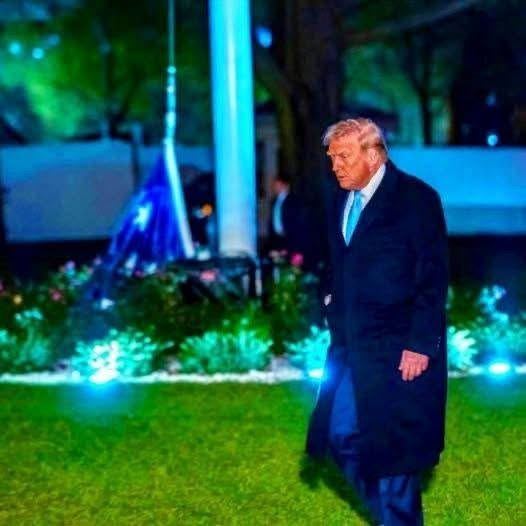
What began as curiosity quickly evolved into a full-scale online storm fueled by assumptions rather than confirmed facts.
A Bigger Conversation About Viral Politics
The situation highlights a growing reality of modern political culture:
Images no longer simply document events.
They instantly become narratives.
In the age of viral media, a single photo can shape public perception before reliable context even exists. Social platforms reward speed, emotion, and strong reactions — often encouraging people to form conclusions long before evidence catches up.
And once a theory gains momentum online, it can begin to feel true simply because so many people are repeating it.
Why Viral Images Spread So Quickly
Part of the reason moments like this explode online is because they tap directly into existing political divisions.
Supporters and critics alike often interpret the same image in completely different ways depending on their personal beliefs. Instead of clarifying reality, viral political content frequently deepens polarization by reinforcing what audiences already expect to see.
That’s why two people can look at the exact same photograph and walk away with completely opposite conclusions.
The image becomes less about facts — and more about perception.
The Real Risk May Be the Reaction Itself
As debates continue across social media, some observers believe the most important takeaway has little to do with the unidentified object at all.
Instead, they point to the speed with which speculation replaced verification.
The incident serves as another reminder of how easily viral moments can blur the line between confirmed information and online assumption. In highly emotional political environments, uncertainty often gets filled with interpretation almost instantly.
And once that process begins, separating fact from narrative becomes increasingly difficult.
A Snapshot of Modern Internet Culture
Whether the image ultimately proves meaningful or completely harmless, its viral spread says something significant about modern media behavior.
People are no longer simply consuming news.
They are actively building stories around incomplete information in real time.
In today’s attention-driven digital landscape, the loudest interpretation often travels farther than the most accurate one.
And that reality continues reshaping politics, public trust, and online conversation every single day.
What do you think — was the internet reading too much into the photo, or was the public reaction justified? Share your opinion in the comments and follow for more trending political stories, viral moments, and fact-focused news analysis.