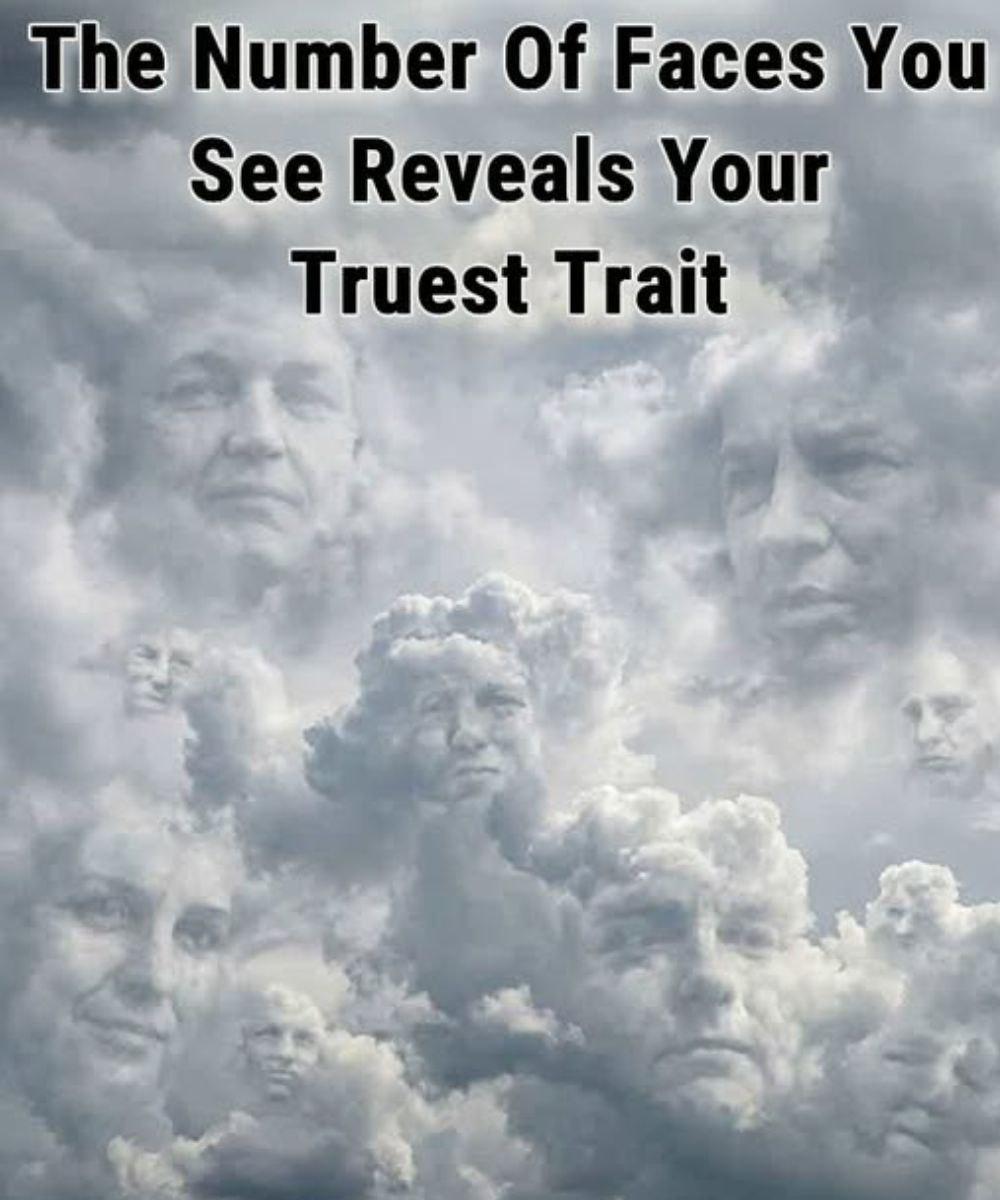
At first glance, the scene feels calm and ordinary—soft clouds drifting across a quiet sky. Nothing unusual, nothing demanding your attention. But if you slow down and look a little closer, something subtle begins to unfold. Shapes start to shift. Shadows take on meaning. And gradually, what once looked like simple clouds may begin to reveal hidden faces.
Some people notice only one or two at first. Others keep looking and are surprised by how many more they can find. This isn’t about getting the “right” answer—it’s about how the mind interprets what it sees, and how attention shapes perception.
So take a moment and ask yourself: how many faces can you see?
The answer isn’t fixed. It changes depending on focus, mindset, and even imagination.
Why the Mind Sees Things Differently
Optical illusions like this work because the brain is always trying to organize the world into something recognizable. When an image is unclear or open to interpretation, the mind automatically fills in the gaps using memory and pattern recognition.
That’s why two people can look at the same picture and see completely different things. One may only notice clouds, while another immediately picks out hidden faces. Neither perspective is wrong—each reflects how the brain processes visual information.
The human brain is especially sensitive to faces. From early childhood, we are trained to recognize them quickly, as this ability has always been important for connection and survival. Because of that, the mind sometimes detects face-like shapes even when they are not intentionally present. This natural tendency is known as pattern recognition.
Keep reading…