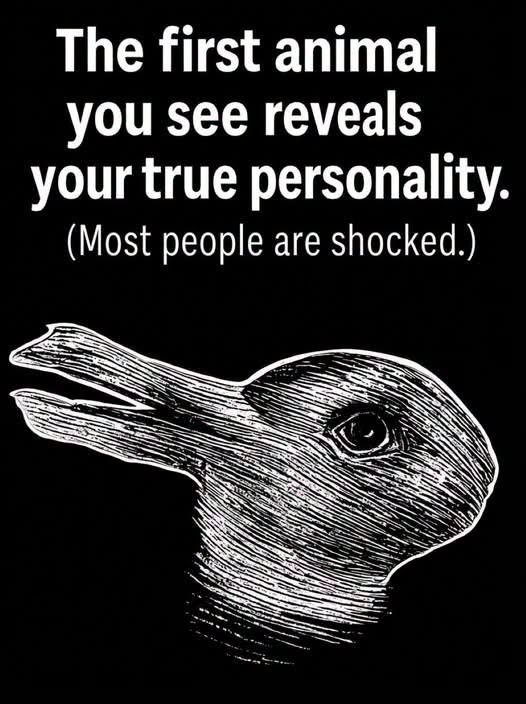
Why Do People See Different Things?
Our brains constantly process enormous amounts of visual information. Rather than examining every detail individually, the brain quickly organizes shapes, colors, and lines into familiar patterns.
This process is influenced by factors such as:
- Past experiences
- Attention and focus
- Expectations
- Visual perception
- Individual thinking styles
As a result, two people looking at the exact same image may notice completely different details first.
A Fun Way to Explore Personality
Many optical illusion quizzes pair your first impression with personality descriptions. While these interpretations can be entertaining, it’s important to remember that they are not scientifically validated personality tests.
Instead, they offer a playful opportunity to reflect on your habits, preferences, and ways of thinking.
For example:
If you noticed the first animal immediately, you may naturally focus on clear details, structure, and practical problem-solving. People with this style often enjoy organization and making decisions based on observable information.
If you spotted the second animal first, you may be more comfortable looking beyond the obvious, noticing patterns, symbolism, or creative possibilities that others might overlook.
Most people display a combination of both approaches depending on the situation.
What Optical Illusions Really Teach Us
The greatest value of these images isn’t predicting personality—it’s demonstrating how perception works.
Our brains are constantly making quick decisions about what deserves attention. Optical illusions remind us that perception is shaped by both the information we receive and the way our minds interpret it.
This helps explain why people can honestly experience the same image in different ways without either person being incorrect.
Enjoy the Experience
Whether you saw one animal immediately or had to look twice, the experience is a fun reminder that every brain processes information a little differently.
Optical illusions encourage curiosity, observation, and conversation. They show that sometimes the most interesting part of an image isn’t what everyone sees—it’s discovering how differently each of us views the same picture.
So, which animal did you notice first? There may not be a right answer, but comparing perspectives is part of what makes these visual puzzles so enjoyable.