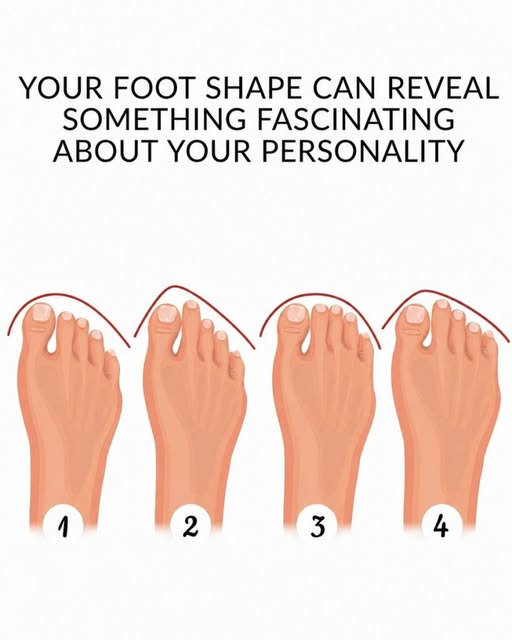
While there’s no scientific evidence that your feet determine your character, many people enjoy these comparisons as a fun and lighthearted form of self-reflection. Much like zodiac signs or personality quizzes, the appeal comes from seeing whether certain descriptions feel relatable.
Here’s a closer look at the most commonly discussed foot shapes and the traits often associated with them.
The Egyptian Foot
The Egyptian foot has a smooth downward slope, with each toe becoming slightly shorter than the one before it.
This shape is often linked with people who are described as:
- Creative and imaginative
- Private or emotionally reserved
- Drawn to beauty and aesthetics
- Thoughtful and reflective
According to personality-style interpretations, people with this foot shape may enjoy personal space and prefer revealing their emotions gradually rather than all at once.
The Greek Foot
Also known as Morton’s toe, the Greek foot features a second toe that is longer than the big toe.
In podomancy traditions, this shape is commonly connected with:
- Confidence and leadership
- High energy and enthusiasm
- Creativity and passion
- Strong emotional instincts
People with Greek feet are often described as expressive and motivated, with personalities that naturally attract attention in social settings.
The Roman Foot
The Roman foot has a more balanced appearance, with the first three toes appearing nearly equal in length.
This shape is frequently associated with people who are:
- Social and outgoing
- Practical and logical
- Comfortable communicating with others
- Ambitious and confident
Personality readings often describe Roman-footed individuals as people who enjoy teamwork, conversation, and building connections.
The Celtic Foot
The Celtic foot combines elements of other shapes, often featuring a longer second toe with uneven toe lengths afterward.
This more irregular pattern is sometimes linked to personalities that are:
- Complex and emotionally layered
- Loyal and protective
- Creative yet determined
- Independent but caring
People with this foot shape are often described as difficult to categorize because they may show different sides of themselves depending on the situation.
Why These Personality Readings Stay Popular
Foot-shape personality tests continue to spread online because they’re simple, visual, and easy to compare with friends and family.
Even without scientific backing, people enjoy these readings because they encourage curiosity and self-reflection. They also create fun conversations about personality, habits, and relationships.
The important thing to remember is that personality is shaped far more by life experiences, values, and choices than by physical features.
A Fun Way to Reflect — Not a Scientific Test
Podomancy should be viewed as entertainment rather than fact. Your foot shape cannot predict your future or fully explain your personality.
Still, many people enjoy seeing whether these descriptions match parts of their real-life traits and experiences.
Sometimes, the fun isn’t about whether the reading is true — it’s about the conversations and self-awareness it inspires along the way.