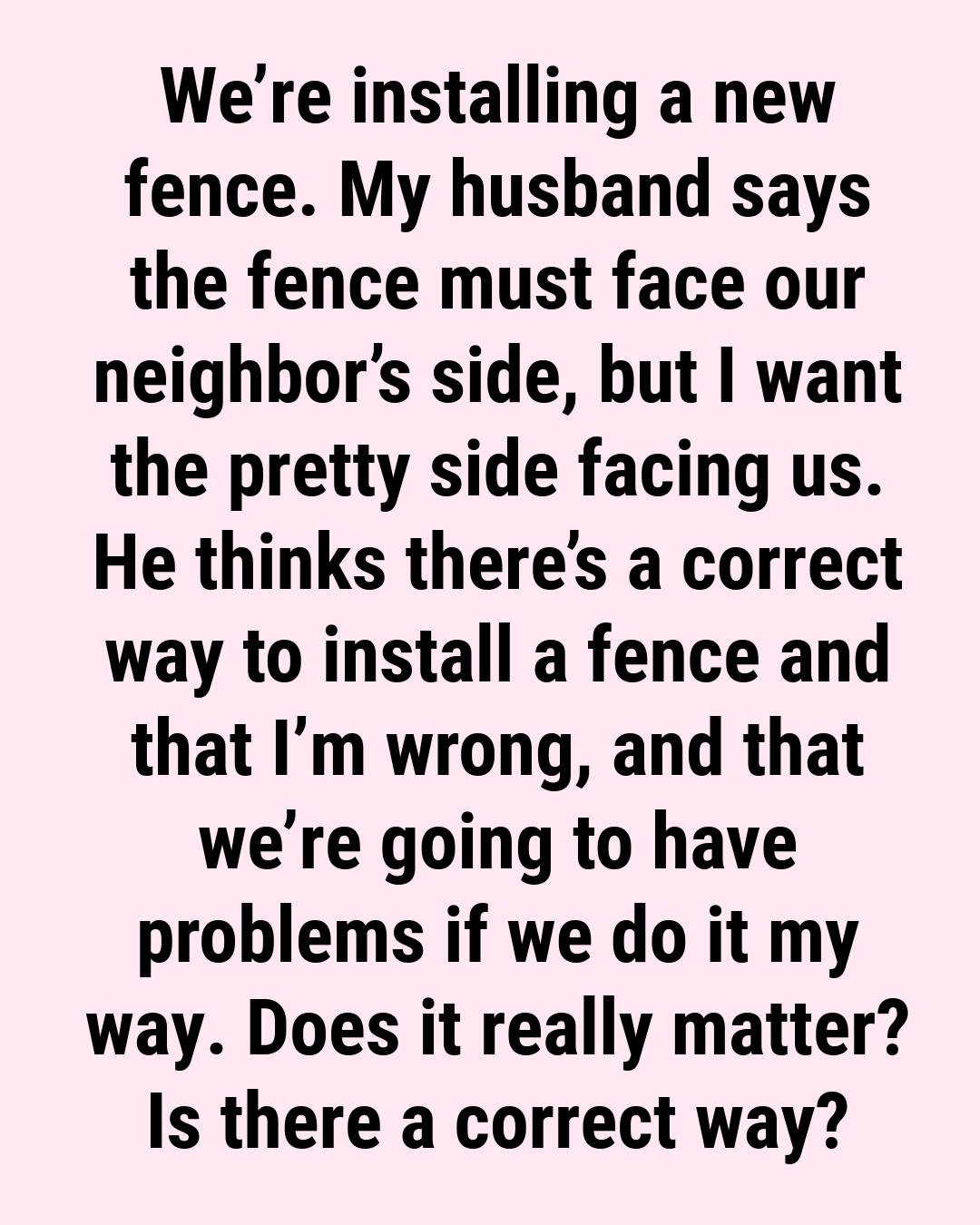
That experience pushed me to look deeper, not into the ground this time, but into local codes, property laws, and neighborhood regulations. What I found challenged a long-held assumption.
The “Finished Side” Rule Isn’t Universal
The first thing to understand is that the idea of always facing the finished side toward a neighbor is largely tradition, not a universal legal requirement. There is no nationwide rule that dictates fence orientation. No federal standard. No single law that applies everywhere.
Instead, fence regulations vary widely. Some cities and counties focus on height limits, materials, setbacks, and visibility near roads or intersections. Others specify which side must face public streets for safety or appearance reasons. A small number of local governments do require the “good side” to face outward along shared property lines—but those cases are the exception, not the norm.
HOAs Can Change Everything
Homeowners’ associations add another layer. In HOA-governed communities, fence rules may be clearly spelled out and legally enforceable. In those cases, orientation requirements are not suggestions—they’re part of a binding agreement. Ignoring them can lead to fines or required changes.
Outside of HOAs and specific local ordinances, however, the rule tends to exist more as an expectation than a legal mandate. It persists because it feels considerate and has been passed down as common practice for generations.
Ownership Matters More Than Appearance
The second major factor is fence ownership. This is where many disagreements actually begin.
If a fence is built entirely within your property boundaries—even by a small margin—it is typically considered your fence. You’re responsible for the cost, upkeep, and design decisions, including which side faces outward.
When a fence sits directly on the property line, things become more complicated. In many areas, that makes it a shared structure. Shared fences often come with shared responsibilities and shared decision-making. When changes are made without discussion, misunderstandings can arise quickly.
Many long-term neighbor conflicts don’t start because someone violated a rule. They start because one person made a decision that affected another person’s daily environment without involving them.
Why Fences Feel Personal
Fences aren’t just functional structures. They represent boundaries in a very visible way—privacy, safety, and personal space. Because of that, changes to a fence can feel deeply personal.
For some, seeing the unfinished side feels like being overlooked. For others, it may feel like a loss of control over their surroundings. These reactions aren’t always about the fence itself, but about what it symbolizes.
At the same time, there are practical reasons someone might choose a particular orientation. Some designs are easier to maintain from one side. Others offer better durability or security. In certain cases, the “finished” side may actually be easier to climb, making inward-facing rails the safer option.
These choices are often practical, not personal.
The Real Solution: Communication
What ultimately matters most isn’t tradition or even legality—it’s communication.
Many fence disagreements could be avoided with a short conversation before construction begins. Sharing plans, explaining reasons, and listening to concerns can make a significant difference. When people feel included, even decisions they don’t love are easier to accept.
For shared boundaries, a simple written agreement can be especially helpful. It doesn’t need to be complex—just clear about placement, ownership, and maintenance responsibilities. Taking this step early can prevent years of frustration later.
A Matter of Wisdom, Not Just Rules
Being technically correct doesn’t always lead to the best outcome. It’s possible to follow every rule and still strain a relationship that matters. It’s also possible to explain a choice thoughtfully and preserve goodwill, even when expectations differ.
Fences are meant to create comfort and privacy, not tension. When disputes arise, it’s rarely because of which side is finished. More often, it’s because communication broke down.
In the end, there is no single rule that applies everywhere. Laws vary. HOA policies differ. Property lines matter. Tradition carries influence, but not absolute authority.
What matters most isn’t which side of the fence faces your neighbor—it’s whether both sides feel respected.