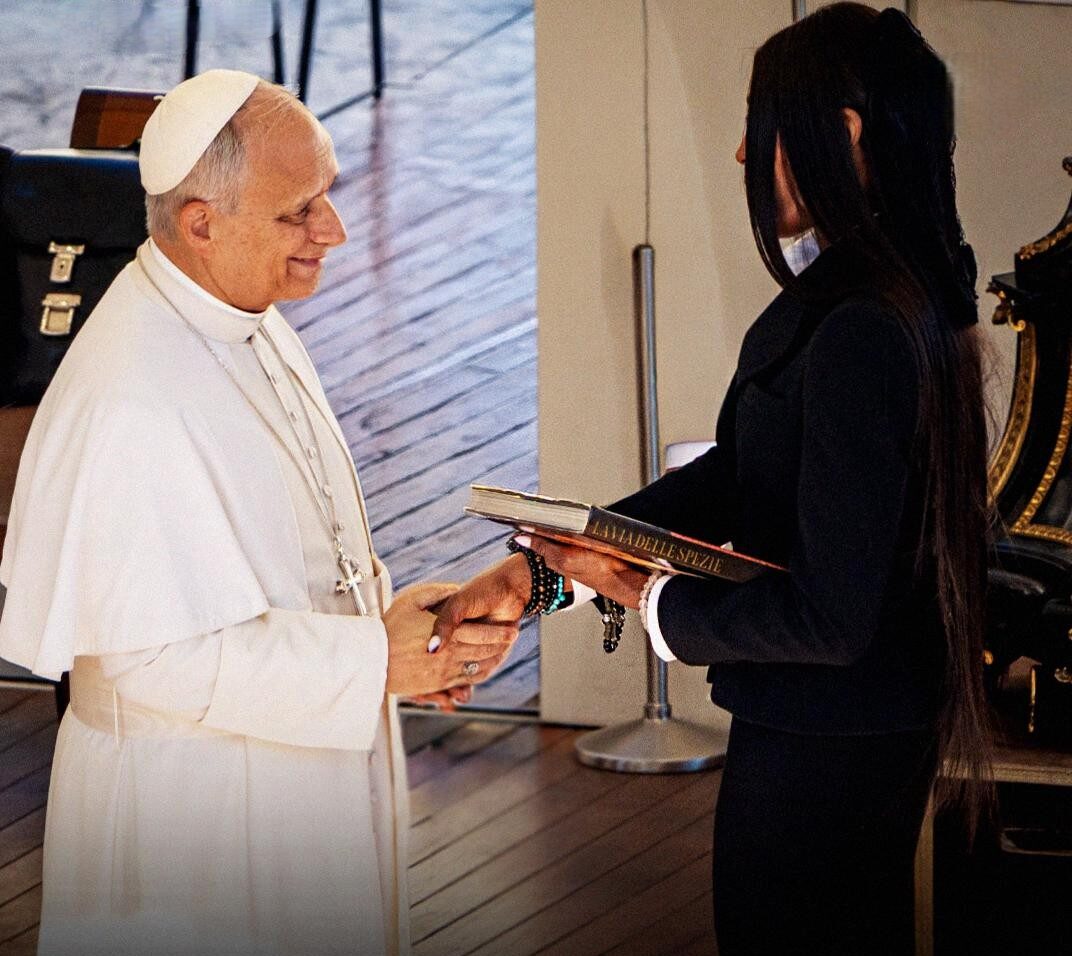
More recently, during a papal visit to Monaco, she again appeared in white alongside the Prince’s Palace ceremony, reinforcing the symbolism tied to her role within the principality.
However, even royals granted the privilege do not always choose to use it. Charlene herself has appeared in black on other Vatican occasions, showing that the tradition, while formal, still allows personal discretion.
Strict Protocol — With Occasional Flexibility
In traditional Vatican protocol, women meeting the Pope are expected to wear black dresses paired with a lace veil, known as a mantilla. This is the standard observed by many dignitaries over the years, including former First Lady Michelle Obama during her 2009 visit.
Yet, as modern diplomacy evolves, so too do interpretations of these customs. Some royals have chosen simplified or modernized versions of the dress code, reflecting a balance between respect for tradition and contemporary style.
Even Queen Elizabeth II, during a later visit to Pope Francis, opted for softer tones rather than strict traditional attire — showing that protocol often bends to context and personal preference.
Who Is Not Included in the Privilege
Despite its exclusivity, the privilege of white is not universally extended. It does not apply to non-royal Catholic figures, political leaders, or spouses of non-Catholic monarchs. Even among Catholic royals, some are not granted the honor, highlighting how selective and symbolic the tradition remains.
There have also been moments of controversy when the dress code was interpreted more loosely, sparking debate over whether modern figures should follow or reinterpret such long-standing customs.
A Tradition That Still Captures Attention
Ultimately, the “privilege of the white” remains one of the Vatican’s most visually striking traditions — a small but powerful symbol of history, faith, and royal protocol intersecting in one of the world’s most sacred spaces.
While only a handful of women are entitled to it, its meaning continues to spark global curiosity every time it appears on the world stage.
What are your thoughts on traditions like this — should they remain strict, or evolve with modern times? Share your opinion and join the conversation below.