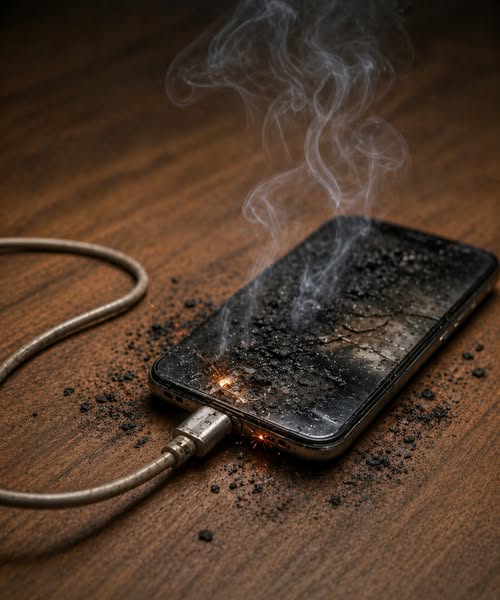
Understanding this is the first step toward safer habits.
The Hidden Danger of Cheap Chargers
One of the biggest risks comes from low-quality or counterfeit chargers. These are often cheaper and widely available, but many lack essential safety features like voltage regulation and overheating protection.
Without these safeguards, devices can receive unstable power. This may lead to battery damage, reduced performance, or excessive heat. In more serious cases, it can increase the risk of electrical faults or fire hazards.
Certified chargers, on the other hand, are designed to manage power safely and consistently—making them a far better long-term choice.
Don’t Ignore Damaged Cables
Charging cables go through constant bending and wear, especially near connectors. Over time, this can lead to frayed wires, cracks, or loose connections.
Even if a cable still “works,” visible damage is a warning sign. Faulty cables can cause short circuits, sparks, or localized overheating. Replacing them early is a simple step that prevents bigger problems later.
A quick inspection now and then can go a long way.
Everyday Habits That Increase Risk
It’s not just the equipment—how you use it matters. Leaving devices plugged in long after they’re fully charged can contribute to heat buildup. Charging on soft surfaces like beds or couches traps heat and limits airflow.
Over time, these habits can affect both the charger and the device, increasing wear and raising safety concerns.
Switching to a hard, flat surface and unplugging when not needed are small changes with a big impact.
Watch Your Power Sources
Outlets and extension cords also play a critical role. Overloading a socket with multiple devices can lead to overheating. Low-quality extension cords or older wiring systems may struggle to handle electrical loads safely.
Using surge protectors and well-maintained outlets helps distribute power more effectively and adds an extra layer of protection.
It’s not just about what you plug in—it’s where and how you plug it in.
Simple Habits That Make a Big Difference
Improving safety doesn’t require complicated changes. A few consistent habits can significantly reduce risks:
- Choose certified, high-quality chargers
- Replace worn or damaged cables immediately
- Unplug chargers when not in use
- Avoid charging near water or heat-trapping surfaces
- Use proper outlets and avoid overloading sockets
These small steps protect both your devices and your environment.
Balancing Convenience with Safety
Charging devices is part of daily life, and convenience matters. But taking a few extra seconds to check your setup or adjust your habits can prevent long-term damage—or worse.
Awareness is key. The more attention you give to these small details, the safer and more reliable your devices will be.
A Smarter Way to Stay Powered
Chargers may be small, but their impact is not. Treating them with care ensures your devices last longer and your space stays safe. It’s a simple shift in mindset—one that turns routine actions into smarter decisions.
👉 Found this useful? Share it with others—because safer habits start with awareness.