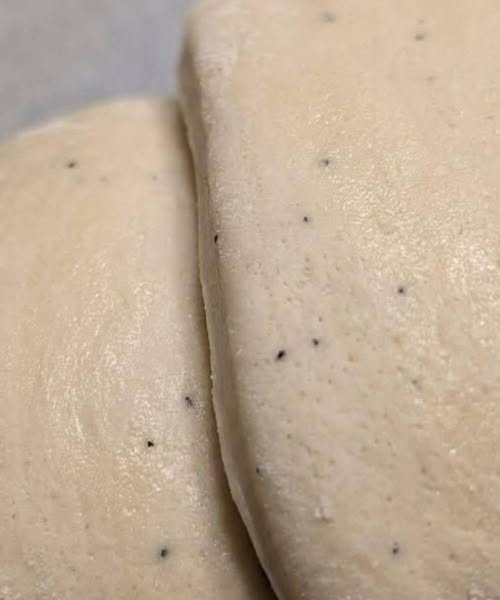
One common reason for black dots is the flour itself. Some puff pastries are made with less refined flour, which may contain natural grain particles. These tiny bran fragments can appear darker in the dough.
This is especially common in stone-ground or minimally processed flours. These specks are completely safe and do not affect food quality.
Butter and Baking Reactions
Puff pastry contains butter, which includes milk solids. When exposed to heat during baking, these milk solids can lightly brown or caramelize.
This natural reaction can create small dark spots. Far from being a problem, it can actually enhance flavor by adding a richer, slightly nutty taste.
Storage and Freezing Effects
How puff pastry is stored also matters. Long freezer storage or repeated thawing and refreezing can sometimes cause minor discoloration due to natural oxidation.
If the pastry has been properly sealed and shows no other signs of spoilage, small spots caused by storage changes are usually harmless.
To reduce this effect:
- Keep it tightly wrapped
- Store it at a consistent temperature
- Avoid unnecessary refreezing
Check Smell and Texture
When evaluating puff pastry, consider more than just appearance:
Smell: It should be neutral or slightly buttery. A sour or unpleasant odor may indicate spoilage.
Texture: It should feel firm and consistent. Slimy or overly soft dough should not be used.
Color: Small isolated dots can be normal, but large unusual patches may be a concern.
When It’s Safe to Use
If the pastry:
- Has small, dry specks
- Shows no fuzzy mold
- Smells fresh
- Feels firm
…it is generally safe to bake and enjoy.
In many cases, those dots are simply the result of natural ingredients or normal baking reactions.
When to Discard It
Do not use the pastry if you notice:
- Fuzzy growth
- Spreading discoloration
- Strong off-odors
- Sticky or slimy texture
When in doubt, it’s always safer to replace it.
Smart Storage Tips 🧊
To keep puff pastry in good condition:
- Store it tightly sealed in the freezer
- Avoid repeated thawing
- Use clean surfaces and utensils
- Check expiration dates
Proper handling helps maintain quality and reduces confusion about harmless changes.
Final Thoughts
Small black dots on puff pastry are often completely normal. They can come from natural flour particles, butter reactions, or storage conditions. By checking smell, texture, and overall appearance, you can make a confident decision.
Food safety is important—but so is understanding how ingredients behave. A careful inspection can help prevent unnecessary waste while keeping your meals safe and enjoyable.
Join the Conversation 💬
Have you ever noticed unusual spots on baked goods? What did you discover? Share your experience in the comments and stay tuned for more helpful kitchen tips and food safety insights!