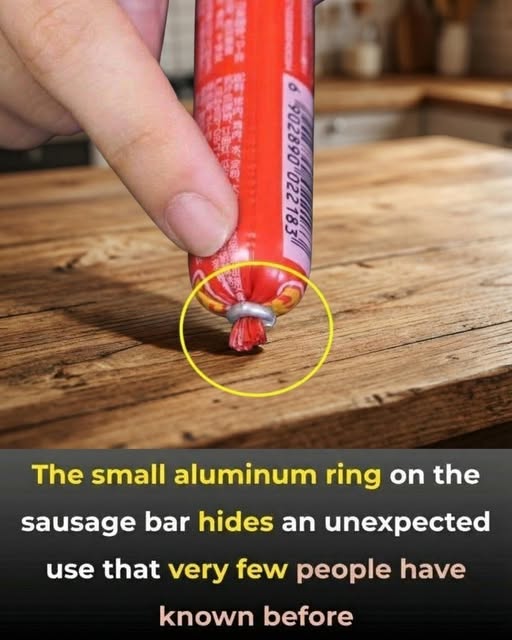
At first, it barely registers—a thin metal clip at the end of a sausage stick, easy to ignore and even easier to toss aside.
Yet that tiny aluminum ring isn’t random, decorative, or leftover packaging. It’s a purpose-built component that plays an important role long before the product reaches a store shelf.
What looks insignificant is actually part of a carefully engineered process designed to protect freshness, maintain quality, and support food safety from production to purchase.
This small detail reflects decades of refinement in meat processing, where even the smallest elements are optimized for reliability and consistency.
Why Sausages Have That Metal Ring
The primary job of the aluminum ring is to seal the sausage casing securely. Sausages are filled into casings made from natural materials or synthetic alternatives, and once filled, those casings must be closed tightly.
After the meat mixture is packed inside, the open end needs a closure that’s clean, durable, and dependable. The aluminum ring is crimped firmly around the casing, forming a tight seal that blocks air, moisture, and contaminants.
This seal helps preserve flavor, texture, and aroma while also supporting shelf life. Without it, sausages could dry out, absorb surrounding odors, or become vulnerable to bacterial growth. Even minimal air exposure can gradually affect quality, especially in cured products.
The ring acts as a final protective barrier until the sausage is opened by the consumer.
Helping Sausages Keep Their Shape
Beyond sealing, the ring helps the sausage hold its form. During transport and storage, sausages are stacked, packed, and handled repeatedly. A properly secured end keeps the filling compact and evenly distributed.
If the casing were loosely tied or improperly sealed, the sausage could deform, leak, or develop uneven texture. Uniformity matters in commercial food production, where customers expect the same look and feel every time.
The metal clip ensures the sausage stays intact from the factory floor to the checkout counter.
Supporting Curing and Drying
Many sausages don’t go straight from filling to packaging. Depending on the type, they may be smoked, cured, or air-dried in controlled environments.
During these stages, sausages are often hung to allow air to circulate evenly. The aluminum ring provides a simple and reliable hanging point, helping ensure consistent exposure to airflow.
Even drying is essential for proper texture, flavor development, and safety. Uneven airflow can lead to moisture imbalance, which may affect quality. The ring helps prevent that by supporting standardized handling throughout the process.
Why Aluminum Is the Material of Choice
Aluminum is used for good reason. It’s lightweight, resistant to corrosion, and suitable for food-related applications. Unlike some metals, it doesn’t rust, even in humid curing environments.
It’s also easy to crimp securely without damaging the casing. The metal provides enough strength to hold the seal while remaining gentle on the material itself.
Aluminum doesn’t interfere with taste or aroma and remains stable across temperature changes, from refrigeration to curing rooms.
Efficiency in Large-Scale Production
Modern food manufacturing depends on speed and consistency. Aluminum rings can be applied quickly using automated equipment or specialized tools, ensuring every sausage is sealed the same way.
Other methods, like tying with string, take more time and can vary in tightness. Uniform clips help streamline production and simplify quality control.
This consistency also supports food safety standards, making inspections and compliance easier to manage.
A Quiet Role in Food Safety
While small, the aluminum ring contributes to overall safety by keeping the casing sealed. A poorly closed sausage could allow bacteria or debris to enter during handling or storage.
By maintaining a secure closure, the ring reduces contamination risks and helps protect the product until it’s opened at home.
Preserving Freshness
Shelf life depends on many factors, but minimizing air exposure is key. The aluminum ring helps slow oxidation, which can affect taste and texture over time.
In cured sausages especially, controlled drying is intentional—but uncontrolled exposure can cause spoilage. The ring works alongside curing methods, refrigeration, and packaging to keep products fresh longer.
Minor Benefits for Consumers
Although designed for manufacturing, the ring can sometimes help consumers too. Some people use it as a grip when separating linked sausages without tearing the casing.
It’s important to note, however, that the ring is not edible and should be removed before cooking or eating.
Why It’s So Easy to Miss
Most people don’t notice the aluminum ring because it’s meant to stay out of the spotlight. It doesn’t affect branding or presentation and quietly does its job without drawing attention.
That’s often the mark of good design—when something works perfectly, it fades into the background.
A Small Detail with Real Impact
The aluminum ring on a sausage stick may be tiny, inexpensive, and visually plain, but it plays a meaningful role in keeping food safe, fresh, and consistent.
Behind that simple clip is a system built on efficiency, hygiene, and decades of practical experience.
The next time you spot that little metal ring, it may still seem ordinary—but it’s one of those small details quietly making sure everything works exactly as it should.