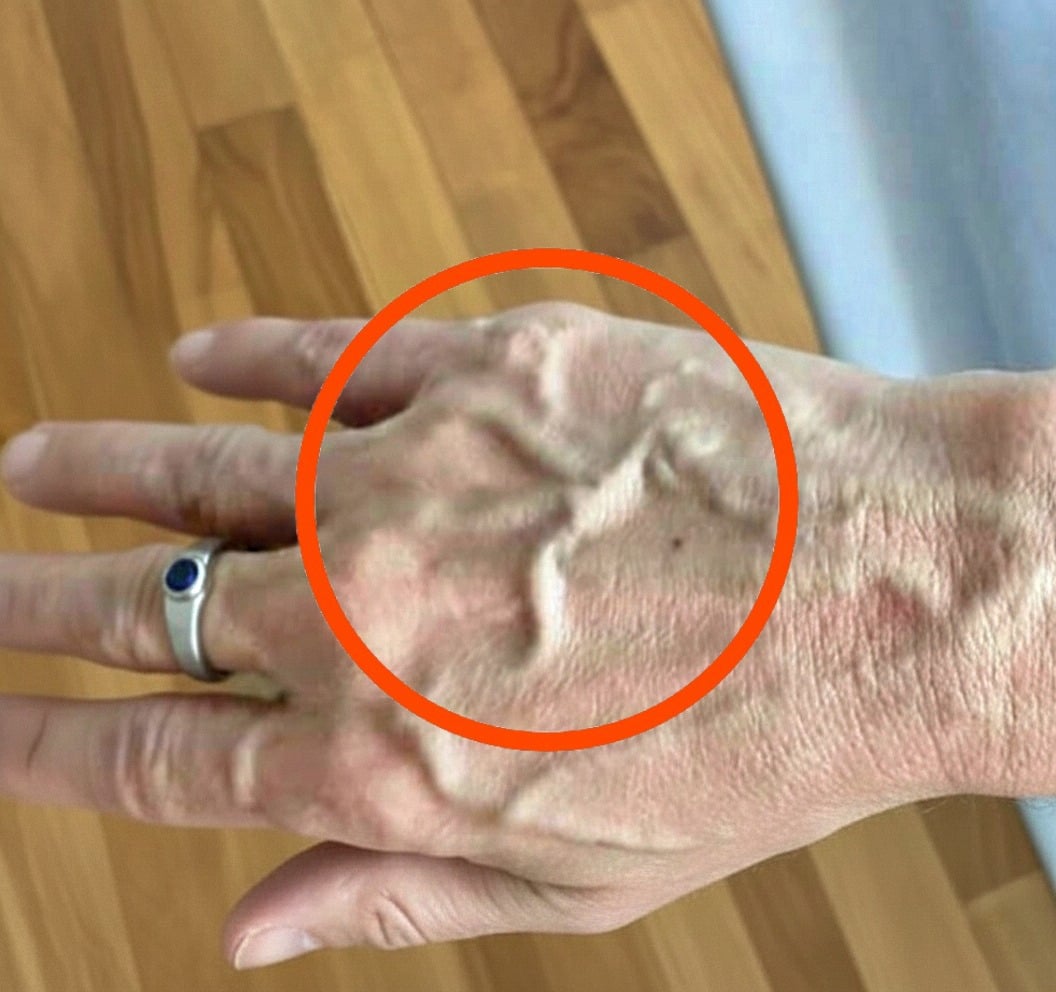
Visible veins are often completely normal, and in many cases, they’re simply a reflection of how your body is changing or responding to daily life. For some people, they become more noticeable after weight loss, regular exercise, or strength training. When body fat decreases, there’s less tissue covering the veins, making them appear closer to the skin’s surface. Similarly, during workouts or in warm weather, blood flow increases and blood vessels naturally expand, which can make veins stand out more clearly.
Age can also play a role. As the skin gradually becomes thinner over time, underlying structures like veins may become more visible without indicating any medical problem. Hormonal changes—such as those experienced during pregnancy or menopause—can also influence circulation and vessel appearance, sometimes making veins more prominent in certain areas of the body. In these situations, visible veins are usually a normal variation rather than a cause for concern.
However, the key factor is change over time.
When veins suddenly appear more pronounced without an obvious reason, it’s worth paying closer attention. New bulging veins that look twisted, raised, or rope-like—especially if they are accompanied by discomfort—may signal an underlying circulation issue. Symptoms such as pain, redness, warmth, or swelling around the vein should not be ignored, as they can sometimes indicate inflammation or vein-related conditions like varicose veins.
In more serious cases, changes in vein appearance may be associated with conditions that require prompt medical attention, including blood clots. These can present with additional warning signs such as localized swelling, tenderness, or skin that feels unusually warm to the touch. While not every visible vein points to a serious problem, sudden and unexplained changes should always be evaluated carefully.
Keep reading…