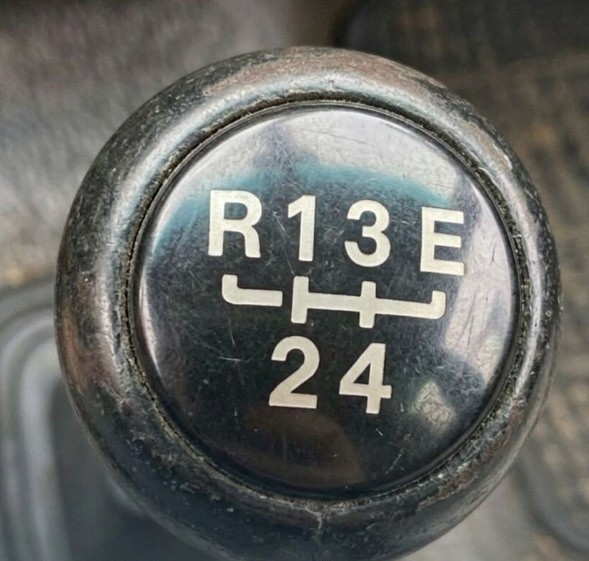
That mysterious “E” stands for Economy mode.
Before today’s cars became rolling computers, engineers relied on mechanical solutions to improve fuel efficiency. Economy mode was one of those early innovations, designed during a time when rising fuel costs and efficiency concerns were pushing manufacturers to rethink how engines performed under everyday driving conditions.
When a driver selected “E,” the car would physically adjust how it behaved. The transmission would shift into higher gears earlier, the throttle response became softer, and the engine operated at lower RPMs. The goal was simple: reduce fuel consumption by limiting unnecessary power output.
The trade-off, however, was immediately noticeable. Acceleration became slower, overtaking required more patience, and the vehicle felt less responsive overall. Economy mode wasn’t designed for excitement—it was built for efficiency. Drivers typically used it during long highway journeys where steady speed mattered more than performance.
This feature reflects a very different era of automotive design—one where efficiency wasn’t managed by software, but by the driver’s direct choice. Instead of intelligent systems working in the background, motorists had to manually decide when to prioritize fuel savings over driving power.
As technology advanced into the late 1990s and early 2000s, these mechanical economy systems gradually disappeared. Modern vehicles replaced them with electronic control units capable of constantly optimizing fuel use in real time. Today, engine performance, fuel injection, and transmission behavior are adjusted automatically within milliseconds—no manual mode required.
What once required a physical gear selection is now handled silently by onboard computers.
Interestingly, while the old “E” gear faded away from traditional cars, the letter itself has made a comeback in a completely different form. In today’s automotive world, “E” is more commonly associated with electric vehicles, symbolizing energy, electrification, and the shift toward sustainable transportation.
So while the function has evolved dramatically, the letter still carries its legacy forward.
What began as a simple fuel-saving gear in mechanical transmissions has transformed into a symbol of the industry’s future.
For many drivers discovering this feature for the first time, it’s a reminder that even the smallest details in automotive design often carry decades of history behind them—quietly reflecting how far technology has come.
If you enjoyed this dive into forgotten car features and automotive history, share your thoughts below and follow for more hidden details from the world of cars and engineering.