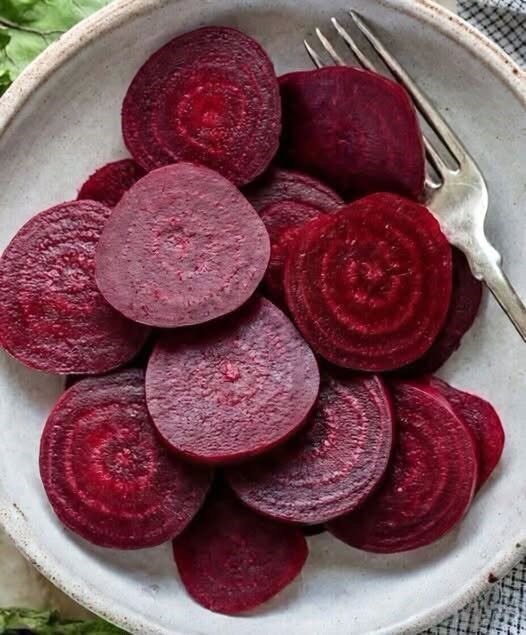
Beets are also an excellent source of dietary fiber, which supports healthy digestion. Fiber promotes regular bowel movements, contributes to a healthy gut microbiome, and can help you feel full longer after meals. Since many adults don’t consume enough fiber, adding vegetables like beets can be a simple way to improve overall nutrition.
In addition to fiber, beets provide several important vitamins and minerals, including folate, potassium, manganese, and vitamin C. Folate supports normal cell growth and DNA production, while potassium helps maintain healthy muscle and nerve function. Together, these nutrients contribute to many everyday processes that keep the body functioning properly.
Preparing beets is easier than many people realize. They can be roasted until tender, steamed, grated raw into salads, blended into smoothies, or added to soups and grain bowls. Their naturally sweet flavor pairs well with ingredients like goat cheese, citrus, walnuts, spinach, and herbs.
It’s also worth knowing that eating beets may temporarily turn urine or stool pink or reddish—a harmless effect known as beeturia. People with certain medical conditions, including a history of some types of kidney stones, may wish to speak with their healthcare provider about how often they should consume foods high in oxalates, including beets.
No single food can guarantee better health, but consistently choosing nutrient-rich vegetables is one of the best ways to support long-term wellness. Beets are a simple example of how everyday foods can provide meaningful nutritional value without expensive supplements or complicated diets.
Do you enjoy eating beets? Tell us your favorite way to prepare them in the comments, and share this article with someone looking for easy ways to add more nutritious foods to their diet.