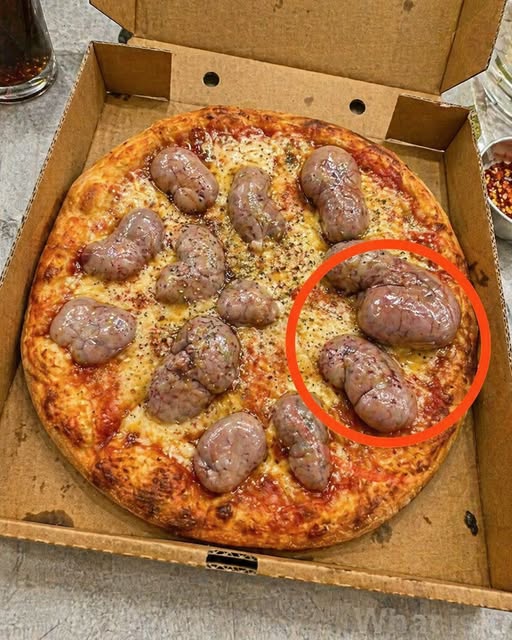
At first glance, something about the pizza didn’t feel right. The crust was uneven, with strange puffed areas and irregular bubbles across the surface. Instead of looking appetizing, it created hesitation. It wasn’t the picture-perfect pizza people usually expect, and that alone was enough to raise doubt.
It looked like something had gone wrong in the kitchen. A mistake. A failed bake. Something that might normally be set aside without a second thought.
Why We Judge Food Before Tasting It
It’s natural to judge food by appearance first. We’re used to polished, uniform visuals—especially with popular foods like pizza. So when something looks different, the brain quickly assumes something is wrong.
In this case, the uneven crust and swollen spots created uncertainty. It didn’t match the familiar idea of what pizza “should” look like, even though nothing was actually wrong with it.
What Was Really Happening in the Oven
The truth is far more interesting—and completely normal.
As pizza bakes, heat turns moisture inside the dough into steam. That steam needs to escape, and when it can’t, it forms bubbles that push the dough upward. Those irregular pockets are what create that uneven, airy surface.
Trapped air in the dough expands as well, especially under high heat. This combination leads to unpredictable shapes, bubbles, and textures.
Keep reading…