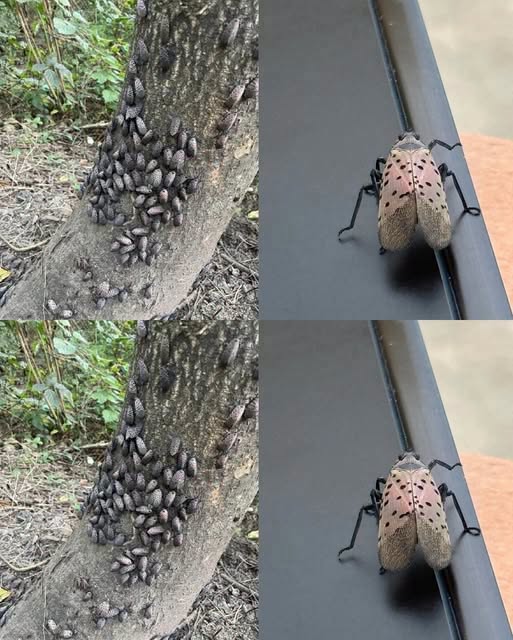
What Is the Spotted Lanternfly?
The spotted lanternfly is an invasive insect originally native to Asia. Since its introduction to North America, it has spread across several regions, where it feeds on the sap of a variety of plants.
Although it can be found on many different species, it is especially attracted to:
- Maple trees
- Grapevines
- Fruit trees
- Walnut trees
- The invasive tree known as the Tree of Heaven
How to Recognize It
The insect changes appearance as it matures.
Young nymphs are small, black, and covered with white spots. As they grow, they develop bright red coloring along with black and white markings.
Adult spotted lanternflies are approximately one inch long and have gray forewings with black spots. When they open their wings, vivid red hindwings become visible, making them easier to recognize.
Why They’re a Concern
Spotted lanternflies feed by piercing plant tissue and extracting sap.
Large populations may weaken plants over time and produce a sugary substance known as honeydew. This residue can encourage the growth of sooty mold, a dark fungus that may coat leaves, branches, outdoor furniture, vehicles, and other surfaces.
While healthy plants can sometimes tolerate limited feeding, repeated infestations may stress certain trees and crops.
What Homeowners Can Do
If you find spotted lanternflies on your property, local agricultural agencies often recommend practical management strategies, including:
- Learning to identify the insect accurately.
- Inspecting outdoor surfaces for egg masses during colder months.
- Removing egg masses by following guidance from local authorities.
- Monitoring trees and plants for signs of activity.
- Avoiding the transportation of insects on vehicles, trailers, or outdoor equipment.
Recommendations may vary depending on your location, so it’s helpful to consult your local extension office or agriculture department.
Understanding Egg Masses
During the fall, spotted lanternflies lay egg masses that resemble patches of dried mud or gray putty on trees, fences, outdoor furniture, rocks, and other surfaces.
Removing egg masses according to official guidance may help reduce future populations in affected areas.
The Role of the Tree of Heaven
One plant frequently associated with spotted lanternflies is the Tree of Heaven, an invasive tree species found in many regions.
Because it serves as a preferred host, local management programs may recommend controlling or removing these trees where appropriate, particularly in heavily affected areas.
Reporting Sightings
In locations where the spotted lanternfly is newly detected, authorities may encourage residents to report sightings.
Reporting helps researchers and agricultural officials monitor the insect’s spread and determine where management efforts should be focused.
Check with your state’s agriculture department or local extension service for current reporting recommendations.
Protecting Your Landscape
While the spotted lanternfly can be frustrating for homeowners and gardeners, early awareness and responsible management can help reduce its impact.
Regular yard inspections, proper identification, and following guidance from local experts are often the most effective ways to protect trees and plants.
Final Thoughts
The spotted lanternfly has become an important concern for many communities because of its potential effects on agriculture, vineyards, and ornamental landscapes.
By learning how to recognize this insect and responding using recommended management practices, homeowners can contribute to protecting local ecosystems while helping slow the spread of this invasive species.
Staying informed and following guidance from trusted agricultural authorities remains the best approach for managing spotted lanternflies safely and responsibly.