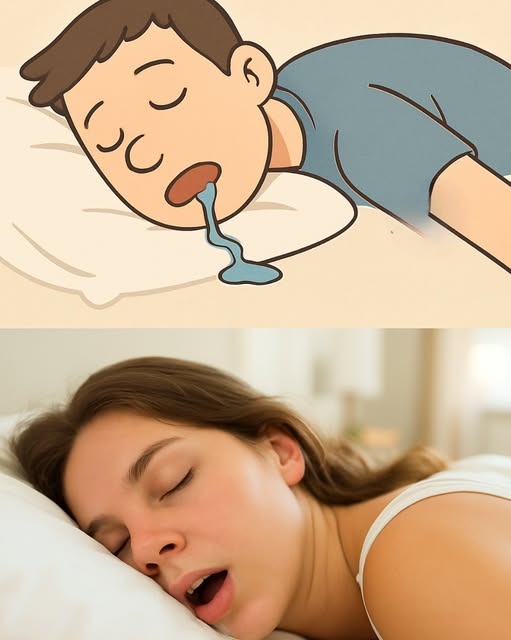
Drooling during sleep is often more normal than people realize, and in most cases, it’s simply a sign that the body has entered a deeper, more relaxed stage of rest.
As you transition into deeper sleep cycles, the muscles in the face, jaw, and throat naturally loosen. This includes the muscles that normally keep your mouth closed and help coordinate swallowing throughout the day. When that control eases, the jaw may drop slightly open, and swallowing becomes less frequent. At the same time, saliva production continues at a steady rate, but without regular swallowing, it can begin to collect.
Gravity also plays a simple but important role. People who sleep on their side or stomach are more likely to notice drooling, because saliva has an easier path to escape the mouth rather than being redirected back toward the throat. In contrast, sleeping on your back can sometimes reduce this effect, although it may not eliminate it entirely.
There are also several everyday factors that can make drooling more noticeable. Nasal congestion from allergies, colds, or sinus issues is one of the most common. When breathing through the nose becomes difficult, the body naturally shifts toward mouth breathing during sleep. This keeps airflow going, but it also allows the mouth to stay open longer, increasing the chance of saliva leakage.
Digestive factors can also contribute. For example, acid reflux may stimulate the body to produce additional saliva as a protective response for the throat and esophagus. While this is a natural defense mechanism, it can sometimes lead to more saliva accumulation during the night.
Keep reading…