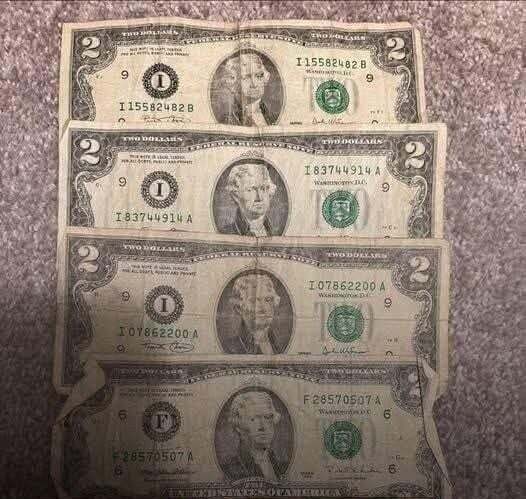
The $2 bill has long carried an unusual reputation. For some, it feels like a novelty. For others, it has been surrounded by myths of bad luck or superstition, something to tuck away rather than spend. Over time, that quiet hesitation has helped it fade into the background of everyday cash transactions, making it far less common in circulation than other denominations.
Yet the reality behind the $2 bill is far more practical—and far more interesting—than its reputation suggests.
The bill is still an official form of U.S. currency, continuously printed and released into circulation. It is not rare in the strict sense, but it appears less frequently in daily spending, which often leads people to assume it has special or hidden value. That perception alone has contributed to its unique place in American financial culture.
Because it is encountered less often, the $2 bill has also become a small point of curiosity among collectors and enthusiasts. In certain cases, its value can exceed its face amount, depending on specific features. Factors such as the year of printing, condition, and serial number patterns can all influence collector interest.
For example, bills in crisp, uncirculated condition are typically more desirable. Similarly, notes with unusual or “fancy” serial numbers—such as repeating digits, palindromes, or low-number sequences—can attract attention in the collector market. Older series or printing variations may also hold additional appeal depending on demand and rarity within numismatic circles.
Keep reading…