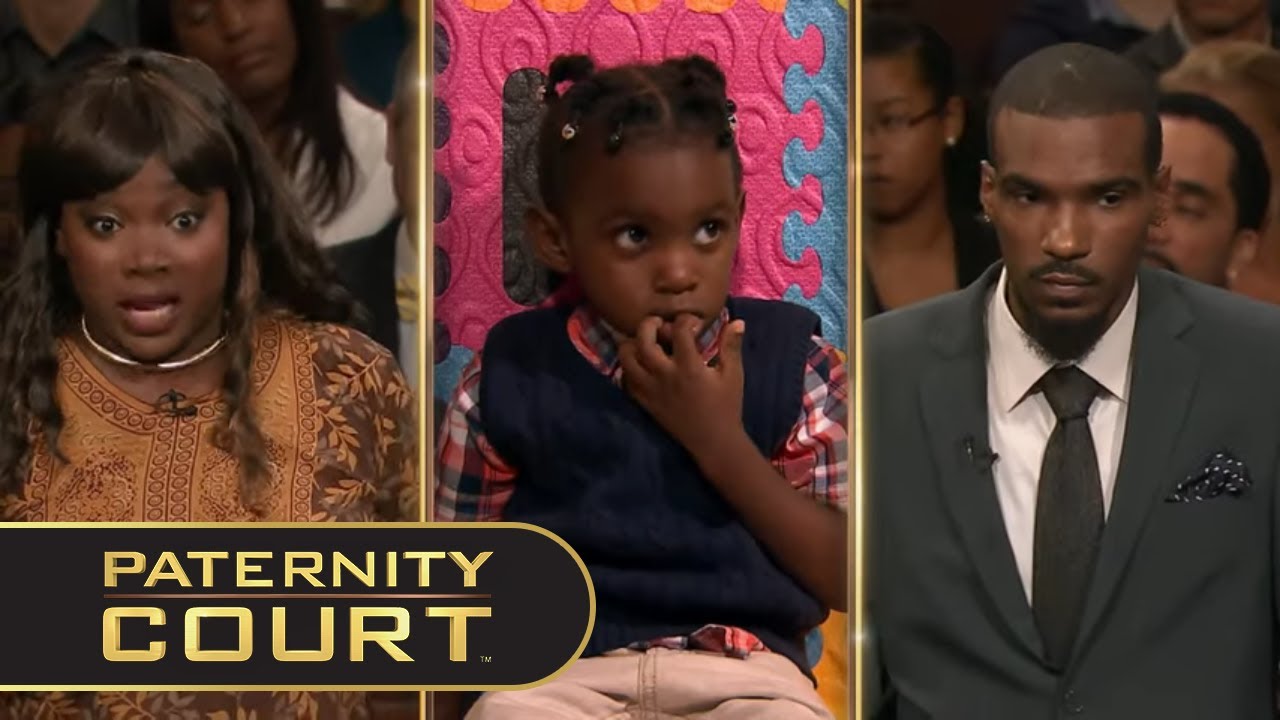
The woman, standing across from him, made an admission that instantly shifted the entire case. She revealed that during the time of conception, she had also been involved with another man. And just like that, certainty turned into doubt.
The child he loved… might not be biologically his.
The courtroom atmosphere shifted immediately. You could feel the weight of that statement. What was once a straightforward case became emotionally charged, layered with betrayal, confusion, and difficult truths.
The man’s reaction said it all. Beneath his composed exterior was a storm of emotions—anger, heartbreak, disbelief. He wasn’t just questioning biology; he was questioning years of trust, years of belief in a relationship that now felt uncertain.
And yet, even in that moment, one thing remained clear—his connection to the child wasn’t something that could be erased overnight.
On the other side, the woman tried to explain. She spoke about a time in her life filled with pressure, uncertainty, and poor decisions. She admitted that boundaries had been crossed and that the truth had been delayed for far too long.
But explanations don’t erase consequences.
Her admission didn’t just create doubt—it exposed a chain reaction of emotional damage. Trust was broken, questions surfaced, and the future of an entire family hung in the balance.
As the judge guided the proceedings, one priority remained at the center of every discussion: the child.
Because beyond the conflict, beyond the accusations, there was an innocent life caught in the middle—one that deserved stability, care, and clarity moving forward.
The case also raised deeper questions that went beyond the courtroom. How much does biology define a parent? Can emotional bonds outweigh DNA? And what happens when truth arrives too late?
These aren’t easy questions—and there are no simple answers.
By the end of the hearing, everything came down to one thing: the DNA results. Science would provide clarity. It would answer the question that had shaken everything.
But even before those results were revealed, the damage had already been done.
Trust had been fractured. Emotions had been exposed. And both individuals were left to face the reality of their choices.
Still, one powerful truth stood out above everything else—being a parent is more than just genetics. It’s about presence, consistency, and the willingness to stand by a child, even when everything else feels uncertain.
This case wasn’t just about who the biological father is. It was about responsibility, honesty, and the long-term impact of decisions made in moments of vulnerability.
And most importantly, it was a reminder that when truth is delayed, the consequences don’t just affect two people—they affect an entire family.
—
If stories like this make you think twice about trust, relationships, and real-life decisions, stay locked in. There’s always more beneath the surface—and the next story might challenge everything you thought you knew.
FULL VIDEO: