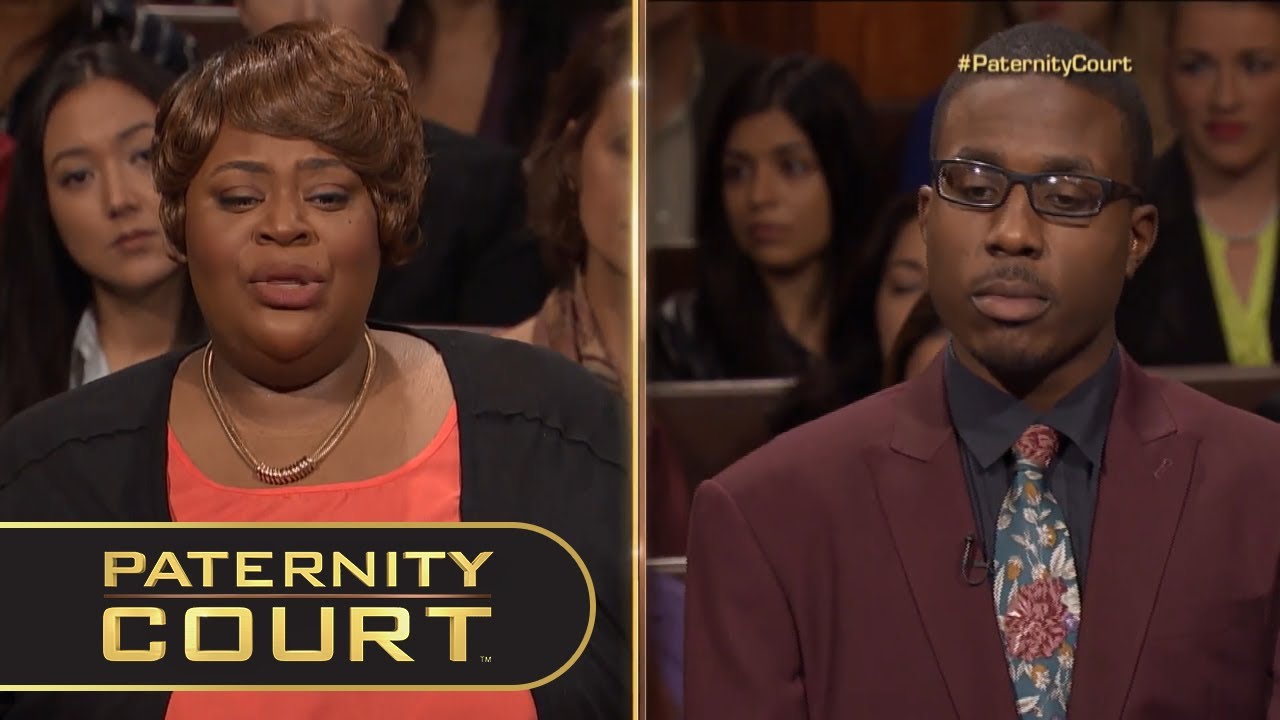
Still, the claim raised understandable questions.
The man, sitting in court, acknowledged the situation with honesty. He confirmed that despite identifying as gay, there had been a moment of intimacy between them. While unexpected, his admission added complexity—and credibility—to the case.
At the same time, he made it clear that fatherhood was never something he had envisioned in this way.
The emotional weight of the situation was evident. For him, the possibility of becoming a parent under such circumstances brought uncertainty and concern. For her, the priority was clarity—ensuring her child would grow up knowing the truth.
As the courtroom discussion unfolded, the judge emphasized a key point: personal beliefs and assumptions cannot determine paternity—only science can.
With that, a DNA test became the only path forward.
Beyond the immediate question of fatherhood, the case touched on broader themes. It highlighted how life doesn’t always follow expected patterns, and how relationships can evolve in ways people never anticipate. It also underscored the importance of responsibility, regardless of how complicated the circumstances may be.
As the moment for results approached, tension filled the room. The woman stood firm in her certainty, while the man prepared himself for a reality that could reshape his life.
No matter the outcome, both had taken a difficult step—choosing honesty over avoidance.
In the end, cases like this remind us that truth is essential, especially when a child’s future is involved. Biology may provide answers, but how people respond to those answers defines what comes next.
What are your thoughts on situations like this—can friendship and unexpected parenthood coexist? Share your perspective in the comments and join the discussion.
FULL VIDEO: