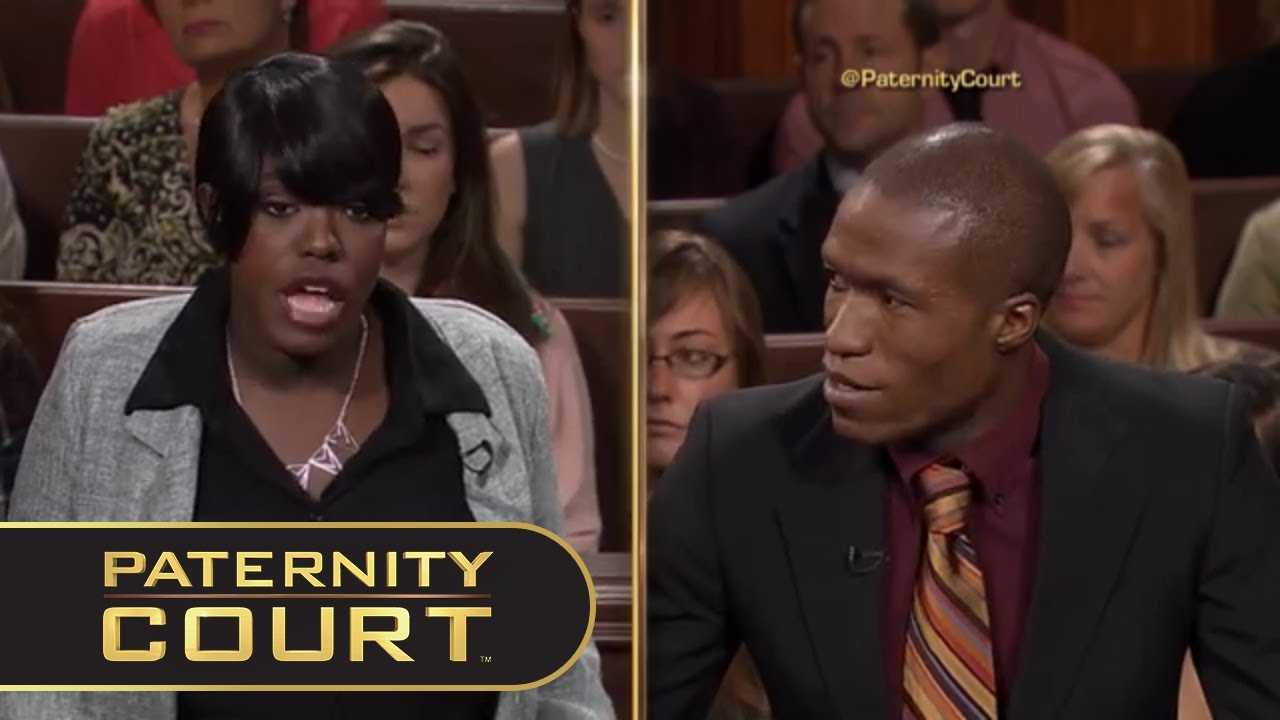
According to him, there was never any romantic or physical involvement. He explained that while they may have known each other, their relationship never crossed into anything intimate. Because of that, he argued, it was impossible for him to be the father. His response wasn’t uncertain—it was absolute.
As the case unfolded, the tension in the courtroom escalated.
The woman pushed back, repeating her claim and expressing frustration at his refusal to accept responsibility. She emphasized the importance of establishing the truth—not just for herself, but for her child. From her perspective, recognition and accountability were essential.
The man, however, saw the situation very differently.
He described feeling blindsided by the accusation, questioning how he could be placed in such a serious situation without any basis. The claim, he argued, was not only false but damaging. Beyond the legal implications, he was concerned about the impact on his personal life, reputation, and future relationships.
At this point, the case became more than a disagreement—it turned into a direct conflict between two completely opposing realities.
The judge stepped in to restore order and refocus the case.
Rather than allowing the dispute to remain driven by emotion, the judge emphasized the need for clear, objective evidence. Paternity cases carry long-term consequences, and assumptions or personal beliefs cannot determine the outcome. The priority, the judge made clear, was to establish the truth in a way that serves the best interest of the child.
That’s when the focus shifted to the only thing that could settle the dispute: scientific testing.
A DNA test was ordered, marking the turning point of the case. Both sides knew that the results would provide a definitive answer—one that could not be argued or reinterpreted. Until then, everything remained uncertain.
The wait for the results brought even more tension.
For the woman, it was a moment of anticipation, believing the outcome would validate her claims and finally bring clarity. For the man, it was a chance to prove his innocence and put an end to what he saw as an unjust accusation.
When the results finally arrived, the atmosphere in the courtroom shifted instantly.
The truth was revealed—clear, direct, and impossible to dispute. Whether confirming or denying paternity, the results forced both individuals to face reality. Emotions ran high as the weight of the outcome settled in, bringing a sense of closure but also leaving behind the impact of everything that had unfolded.
But even with the answer, the story didn’t simply end.
Situations like this leave lasting effects. Trust is shaken, reputations are affected, and relationships—whether they continue or not—are changed permanently. The legal resolution may bring clarity, but the emotional consequences often take much longer to process.
At its core, this case highlights something deeper than just a paternity question.
It shows how fragile trust can be, how quickly situations can escalate without clear communication, and how critical it is to rely on facts when the stakes are high. When a child’s future is involved, certainty is not optional—it’s necessary.
In the end, the courtroom delivered what it could: the truth.
What happens next is up to the people involved.
What do you think?
Should claims like this be taken seriously from the start—or only after proof is presented? Share your thoughts below and join the conversation.
Full video: