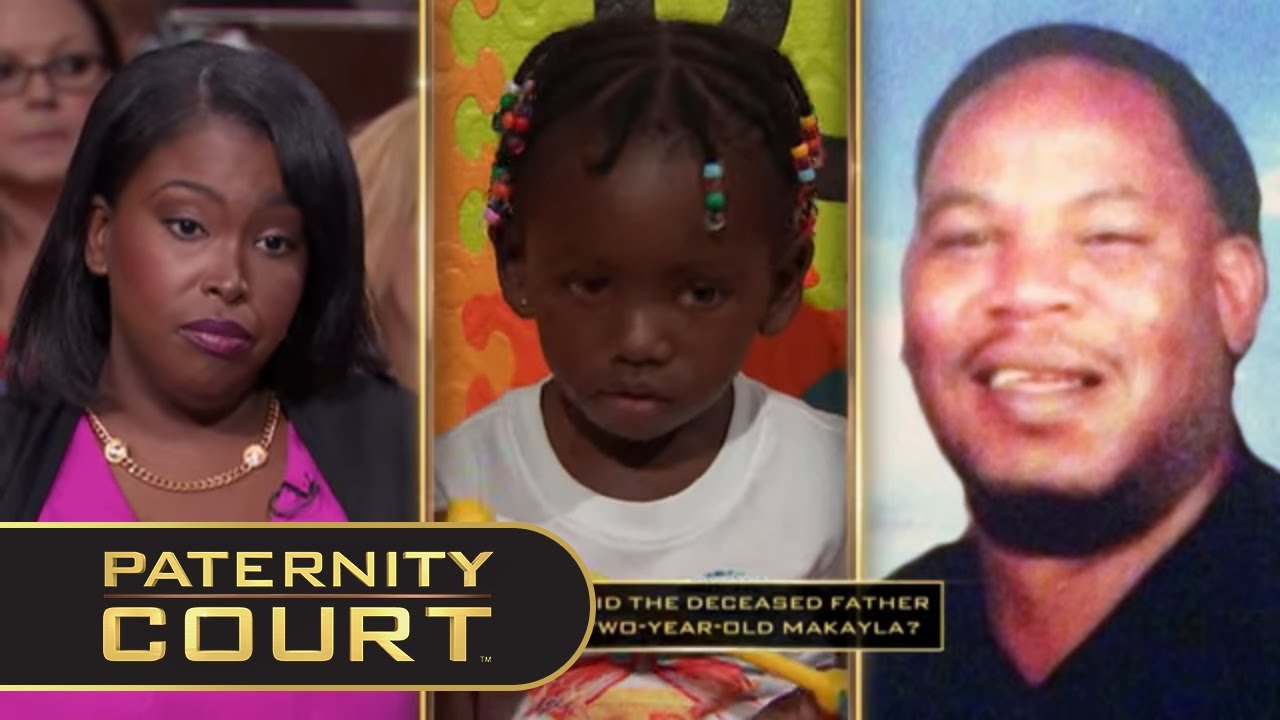
Inside the courtroom, the stakes are high.
Inheritance cases involving unclear parentage often require detailed evidence, including DNA testing and supporting documentation. Without these, claims can be delayed or denied altogether. That’s why establishing biological truth becomes the foundation for everything that follows.
As the case unfolds, the emotional weight becomes impossible to ignore.
The mother speaks openly about her loss, describing the challenges of grieving while also navigating a complex legal system. At the same time, she carries the responsibility of advocating for her daughter—who is too young to understand what’s at stake, but whose future may depend on the outcome.
The court must carefully evaluate every detail.
Was paternity ever formally acknowledged? Is there sufficient evidence to support the claim? These questions are critical, not just for this case, but for how similar situations may be handled in the future.
Beyond the legal arguments, this case sheds light on a broader reality: when a parent passes away without clear arrangements, families are often left to untangle difficult questions under emotional pressure.
And when a child is involved, the urgency is even greater.
This story is a powerful reminder that legal recognition matters—not only for financial stability, but for identity, belonging, and closure. For this mother, the goal is simple but profound: to make sure her daughter’s connection to her father is never questioned again.
Whatever the court decides, the impact will last far beyond the courtroom.
Do you think laws around inheritance and paternity should be clearer in cases like this? Share your thoughts below and join the discussion.
FULL VIDEO: