
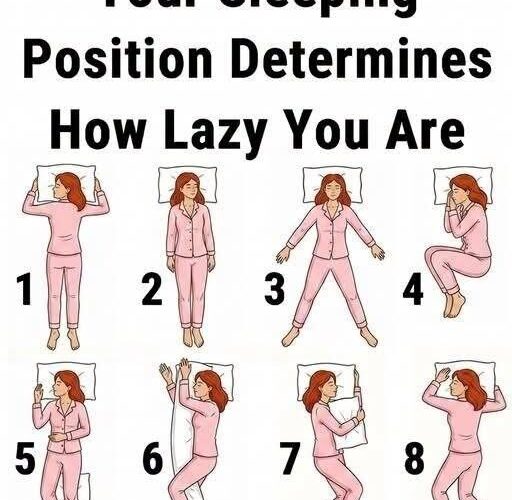

1. The Side Sleeper
Side sleeping is common, and many people naturally find it comfortable.
You might sleep with your legs slightly bent, completely stretched out, or tucked closer toward your body.
Rather than assigning a personality type to this position, it’s more useful to think about comfort. Your mattress, pillow, body shape, temperature, and personal habits can all influence which position feels natural.
2. The Curled-Up Position
Some people naturally sleep with their knees drawn toward their chest.
This position can feel comfortable and secure, particularly after a long day. However, it doesn’t automatically mean someone is anxious, shy, or emotionally sensitive.
Those personality claims are popular online, but they shouldn’t be treated as established psychological facts.
3. Sleeping on Your Back
People who sleep on their backs may keep their body relatively straight, sometimes with their arms beside them or resting near their head.
For some, this simply feels comfortable. For others, another position may feel more natural.
Sleep position can also change depending on your mattress, pillow, physical comfort, and whether you’re experiencing temporary aches or stiffness.
4. The Stomach Sleeper
Sleeping on your stomach is another familiar position.
Some people prefer the feeling of lying against the mattress, while others find it uncomfortable.
Because sleeping on the stomach can place the neck in a rotated position for extended periods, people who regularly experience neck or back discomfort may want to discuss their sleeping habits with a healthcare professional.
5. The Constant Mover
Not everyone stays in one position.
You might fall asleep on your side and wake up on your back—or discover that you’ve changed positions several times during the night.
This doesn’t necessarily indicate a particular personality trait. Movement during sleep can happen for many ordinary reasons, including comfort, temperature, sleep stage, and the sleeping environment.
6. The Pillow Hugger
Some people naturally sleep while holding a pillow or another soft object.
It may simply feel comfortable or provide additional support.
For side sleepers, placing a pillow between the knees can also provide a more comfortable alignment for some people. What matters most is whether the position helps you sleep comfortably.
7. The Spread-Out Sleeper
Some people prefer plenty of space when they sleep.
They may stretch their arms and legs out or regularly change positions throughout the night.
It can be tempting to associate this with being confident, carefree, or independent, but there isn’t enough evidence to make those personality conclusions from posture alone.
Sometimes, a person simply sleeps better when they aren’t feeling restricted.
Your Sleeping Position Can Change
One of the most interesting things about sleep is that your preferred position isn’t necessarily fixed.
You might sleep differently depending on the season, your mattress, your pillow, your physical comfort, or even how tired you are.
That’s why trying to interpret a single sleeping position as a description of someone’s personality can be misleading.
What Matters More Than Personality
Instead of asking what your sleeping position “reveals” about your personality, consider what it tells you about your comfort.
Are you waking up refreshed?
Do you regularly experience neck, shoulder, or back discomfort?
Are you constantly changing positions because something doesn’t feel comfortable?
These questions may be more useful than trying to match yourself with a personality category.
A Small Habit With an Interesting Story
Your sleeping position probably won’t reveal your entire personality—but it can still be an interesting habit to notice.
Sleep is influenced by countless factors, and the position you naturally choose may simply be the one that feels most comfortable to your body.
So tonight, pay attention to how you fall asleep.
You might discover that you’ve had the same sleeping habit for years without ever noticing it.
Final Thought
Sleeping positions can be fun to explore, but they shouldn’t be used to diagnose personality, emotional health, or psychological traits.
The most interesting part may not be what your sleeping position supposedly says about you. It may simply be discovering what helps your own body feel comfortable enough to rest.