Common Causes
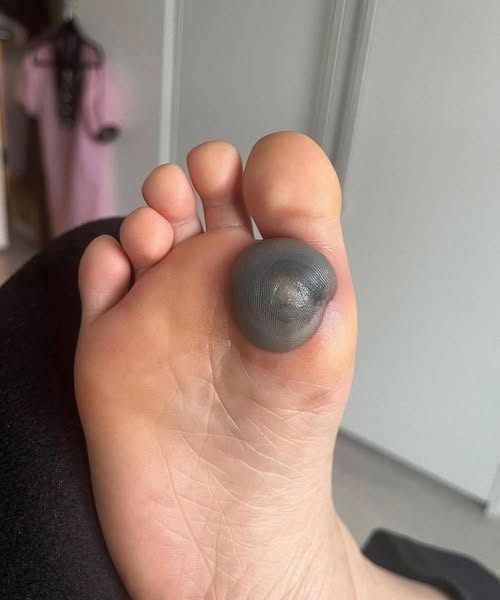
Children are often active, so their feet can experience plenty of pressure throughout the day. A blood blister may develop after wearing shoes that rub against the skin, spending a long time walking or running, or experiencing a minor impact that may not have seemed significant at the time.
In some cases, the cause is easy to identify. A new pair of shoes, extended outdoor activity, or repeated friction can all contribute. Other times, parents may not notice exactly when the irritation occurred.
Most uncomplicated blood blisters heal naturally as the body gradually reabsorbs the fluid. The healing process can take several days or longer, depending on the size and location of the blister.
What Parents Can Do
If the area appears to be a simple blood blister and your child is otherwise well, the best approach is usually to protect it from additional pressure and friction.
Keep the area clean and dry, and make sure your child wears comfortable footwear that does not rub against the affected spot. A loose protective dressing may help prevent further irritation if the blister is in an area that regularly comes into contact with socks or shoes.
It is generally best not to intentionally pop or puncture a blister. The skin covering it provides a natural protective barrier, and opening it unnecessarily may increase the risk of infection.
A cool compress placed gently over the area for a short period may also help with temporary discomfort and swelling. Avoid applying harsh substances or unverified home treatments to damaged skin.
When to Seek Medical Advice
Although many blood blisters are minor, some situations deserve professional attention. Contact your child’s healthcare provider if the area becomes increasingly painful, does not begin to improve, or appears to be getting worse.
Parents should also watch for possible signs of infection, including increasing redness, warmth, swelling, drainage, or fever. If these symptoms develop, medical advice should be sought promptly.
It is also a good idea to consult a healthcare professional if a dark blister or similar mark appears without an obvious explanation, keeps returning, or is accompanied by other unusual symptoms. Children with certain medical conditions that affect circulation, blood clotting, or wound healing may require additional evaluation.
If your child is unable to walk or put weight on the foot after an injury, or if you suspect a more significant injury, a medical assessment can help determine the cause and appropriate treatment.
Helping Your Child Feel Comfortable
A visible injury can be frightening for a child, particularly when they do not understand what caused it. Reassure them calmly and explain that the body often has its own natural healing process.
Encourage your child to avoid activities that cause additional pain until the area feels better. Comfortable socks and properly fitting shoes can help reduce pressure while the skin heals.
The Bottom Line
A dark spot on a child’s foot can have several possible causes, and a blood blister is one relatively common explanation when there has been friction, pressure, or minor trauma. In many cases, these blisters improve with time and protection.
However, appearance alone cannot confirm the cause. If the spot is unusually painful, unexplained, recurrent, or accompanied by signs of infection or other concerning symptoms, it is best to consult a qualified healthcare professional.
When it comes to a child’s health, paying attention to changes and seeking medical advice when something seems unusual is always a sensible approach.