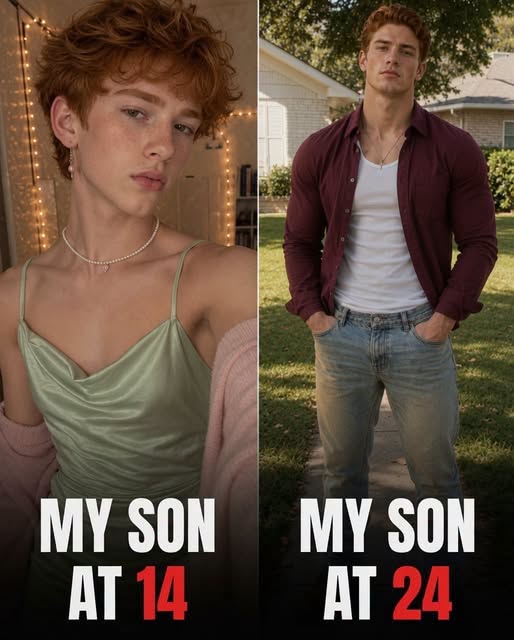
I imagined him crying.
I imagined him forgiving me.
But I had never imagined him standing on my doorstep, looking completely calm, and pointing at my husband as though the entire past six years had been leading to that single moment.
My husband, Daniel, went pale.
“What are you doing here?” he asked.
My son didn’t answer.
Instead, he looked at me.
“Mom, I didn’t come back to hurt anyone.”
His voice was deeper than I remembered, but there was something familiar in it.
The same hesitation he used to have before saying something difficult.
“I came back because you deserve to know what happened after I left.”
My eyes filled with tears.
“I’ve spent six years wondering if you were alive.”
“I know.”
“Where were you?”
He looked toward Daniel.
“That’s part of the story.”
Daniel stepped forward.
“This isn’t the place to discuss old arguments.”
My son finally turned toward him.
“Old arguments?”
There was no anger in his voice.
That somehow made it worse.
“You told me I wasn’t welcome unless I changed who I was.”
Daniel’s jaw tightened.
“I was trying to help you.”
“No,” my son replied. “You were trying to make me into someone you could understand.”
The room went silent.
I looked between them.
“Daniel, what is he talking about?”
My husband looked away.
My son took a slow breath.
“That’s why I came back.”
He reached into his jacket and pulled out a small envelope.
He handed it to me.
My hands trembled as I opened it.
Inside were several letters.
The first was dated six years earlier.
I recognized my son’s handwriting immediately.
I began reading.
It was a letter he had written to me the night he left.
My eyes moved across the page.
He wrote that he loved me.
That he wasn’t leaving because he hated me.
That he knew I had tried to protect him.
But he also wrote something that broke my heart.
He believed I had chosen Daniel over him.
I looked up.
“I never chose him over you.”
“I know that now.”
“Then why didn’t you come back?”
My son looked down.
“Because I thought you agreed with him.”
I shook my head.
“I didn’t.”
“I didn’t know that.”
He explained that after leaving, he had stayed with a friend for several weeks before eventually moving to another state.
He worked different jobs.
He struggled.
There were nights when he didn’t know where he would sleep the following week.
But gradually, his life changed.
He met people who accepted him.
He found work he enjoyed.
He learned how to support himself.
And most importantly, he began understanding that he didn’t need to spend his entire life trying to prove anything to anyone.
“I spent years thinking I had to become somebody else just to deserve respect,” he said.
I wiped my eyes.
“And now?”
He smiled faintly.
“Now I know I don’t.”
Daniel suddenly spoke.
“You’re acting like I was the only problem.”
My son looked at him.
“You weren’t.”
Daniel seemed surprised.
My son continued.
“Mom made mistakes too.”
My heart sank.
“What mistakes?”
He looked directly at me.
“She was afraid.”
I couldn’t deny it.
“I was.”
“You kept trying to keep the peace.”
“I thought I was protecting you.”
“I know.”
“But every time he said something cruel, you tried to make both of us calm down instead of telling him he was wrong.”
His words hurt because they were true.
I had spent years trying to prevent arguments instead of confronting the person causing them.
I thought staying neutral would protect my son.
Instead, my silence had made him feel alone.
“I should have stood up for you,” I whispered.
He nodded.
“Yes.”
There was no accusation in his voice.
Just honesty.
Then he turned toward Daniel.
“And that’s why I need you to tell her the rest.”
Daniel’s face tightened.
“I don’t have anything else to say.”
My son placed another document on the table.
Daniel stared at it.
I picked it up.
It was an old email.
The sender was Daniel.
The recipient was someone I didn’t recognize.
I read the first few lines.
My stomach dropped.
“What is this?”
Daniel didn’t answer.
My son said quietly, “The night I left, he didn’t just tell me to leave.”
I looked at him.
“What else happened?”
“He told me that if I stayed, he’d make sure I couldn’t continue living the way I wanted.”
Daniel shook his head.
“That isn’t what I said.”
My son looked at him.
“You said you’d make sure everyone in the family knew what you thought of me.”
“I was angry.”
“You also contacted my school.”
I turned toward Daniel.
“You did what?”
He lowered his eyes.
My son explained that Daniel had contacted several people in his life after he disappeared, telling them that he was unstable and needed to be pressured into changing his behavior.
I felt sick.
“Why would you do that?”
Daniel finally looked at me.
“Because I thought I was helping.”
“No,” I said quietly.
For the first time in years, I wasn’t trying to keep the peace.
“You were controlling him.”
Daniel didn’t respond.
My son looked at me.
“That was the truth I needed you to hear.”
I started crying.
“I am so sorry.”
He stood there silently.
“I should have protected you,” I continued. “I should have listened. I should have told him that you didn’t need to change to deserve our love.”
My son swallowed.
“I needed to hear that six years ago.”
“I know.”
We stood there for several seconds.
Then he finally stepped toward me.
“I still love you, Mom.”
I broke down.
He opened his arms.
This time, I didn’t hesitate.
I hugged my son as tightly as I could.
For a moment, I was back in that old house, holding the little boy who used to crawl into my bed after nightmares.
Except now he was an adult.
And I finally understood something I had failed to understand when he was younger.
My job had never been to decide who he should become.
My job was to make sure he knew he was loved while he figured that out for himself.
When we finally separated, he looked at Daniel.
“I don’t hate you.”
Daniel seemed surprised.
“But I don’t want a relationship with you.”
Daniel nodded slowly.
“I understand.”
My son picked up his bag.
“I didn’t come back to recreate the past.”
He looked at me.
“I came back to start something different.”
“Where will you stay?”
He smiled.
“I have my own place.”
“You’re staying nearby?”
“For now.”
I felt another wave of emotion.
“You’re really here.”
“Yes.”
“Why now?”
He paused.
“Because six years ago, I left because I thought coming home meant becoming someone else.”
He glanced around the house.
“Now I know I can come home without giving up who I am.”
I started crying again.
He laughed softly.
“You still cry too much.”
“And you still make me cry.”
He smiled.
Then he walked toward the door.
Before leaving, he stopped.
“Mom?”
“Yes?”
“Next Sunday, would you like to have lunch with me?”
I nodded immediately.
“I’d love that.”
He smiled.
“Just us?”
I smiled through my tears.
“Just us.”
He opened the door.
Then he turned back one last time.
“And Mom?”
“Yes?”
“Don’t spend the rest of your life blaming yourself.”
I looked at him.
“I made mistakes.”
“So did I.”
“You were eighteen.”
“And you were trying to survive a difficult situation too.”
He gave me a small smile.
“We can’t change what happened.”
Then he stepped outside.
“But we can decide what happens next.”
The door closed behind him.
I stood there for a long time.
Daniel remained in the living room.
Neither of us spoke.
Finally, he said, “I really did think I was doing the right thing.”
I looked at him.
“Maybe you did.”
He waited.
“But doing what you think is right doesn’t make hurting someone right.”
He nodded.
For the first time in years, the house felt strangely quiet.
But it wasn’t the painful silence I had known after my son disappeared.
It felt different.
Like the end of something.
And the beginning of something else.
Six years earlier, my son had walked out of that house believing he had lost his family.
Six years later, he returned with one demand.
Not an apology.
Not money.
Not revenge.
He wanted the truth to finally be spoken.
And once it was, I realized something I should have understood from the beginning:
Sometimes the hardest part of loving your child isn’t accepting who they are.
It’s finding the courage to stand beside them when someone else refuses to.