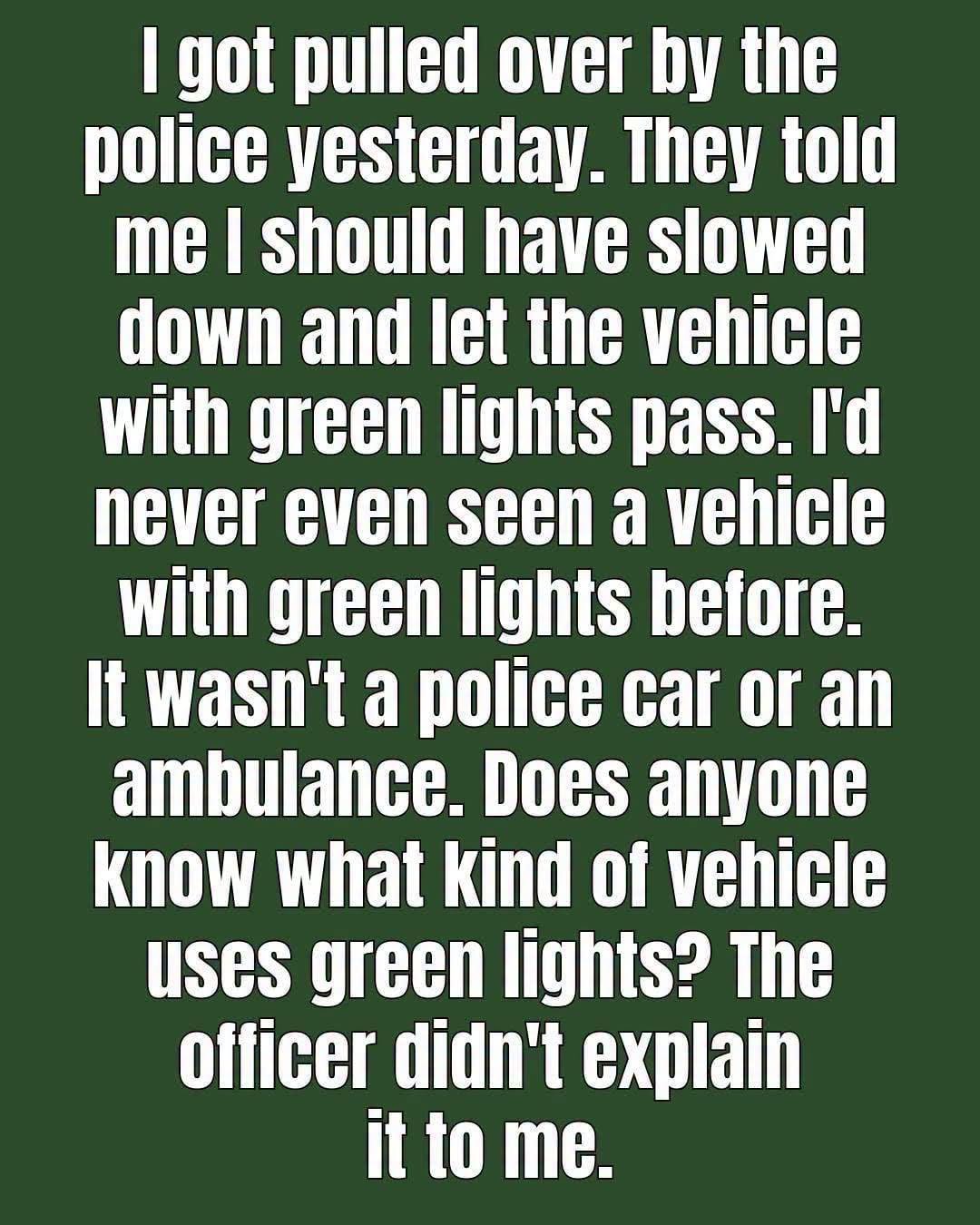
Why Some Vehicles Use Green Lights
Certain jurisdictions permit specific vehicles to display green lighting to identify their role or request additional awareness from other road users.
Depending on local regulations, these vehicles may be connected with emergency response, volunteer services, medical assistance, or other authorized activities.
A green light does not automatically mean that a vehicle is transporting a patient or responding to a medical emergency. The exact meaning depends on local laws.
How Should Drivers Respond?
If you encounter a vehicle displaying an unusual warning light, the safest approach is to remain attentive and follow the traffic laws that apply in your area.
Avoid making sudden maneuvers simply because you see a green light. Instead:
- Check your surroundings carefully.
- Watch for additional warning signals or instructions.
- Give authorized emergency vehicles appropriate space when required.
- Follow posted signs and local traffic regulations.
- If you’re uncertain about a particular light, check your local transportation authority’s guidance.
Why the Meaning Can Be Confusing
Vehicle lighting systems aren’t standardized worldwide. A color used for one purpose in one region may have an entirely different meaning somewhere else.
This is especially important when traveling between countries or even between different states, provinces, or municipalities.
The safest assumption is not that every green light represents the same type of service, but that it may identify a vehicle with a specific authorized function.
A Simple Reminder for Drivers
When you notice an unfamiliar vehicle light, don’t panic—but don’t ignore it either.
Stay alert, avoid interfering with the vehicle, and follow the applicable road rules. Understanding local vehicle-light regulations can help drivers respond appropriately and safely when they encounter unusual warning signals on the road.