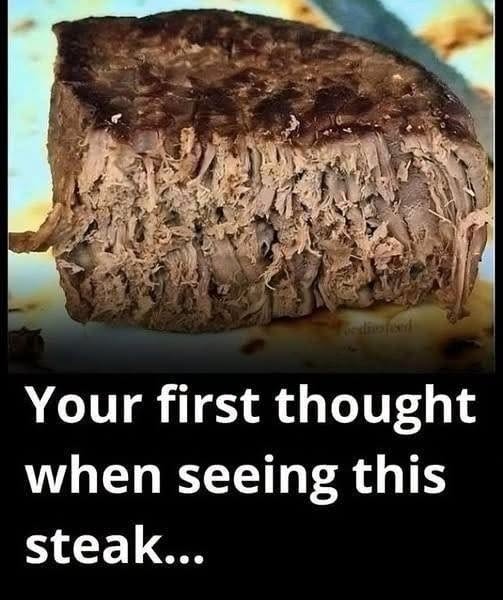
The steak meets the hot cooking surface with a sharp sizzle.
That sound signals the beginning of one of the most important flavor-building processes in cooking: the Maillard reaction. Heat causes proteins and sugars on the surface to undergo chemical changes that create hundreds of new aroma and flavor compounds. That deeply browned crust isn’t merely attractive—it’s a major reason cooked steak smells and tastes so different from raw beef.
The experience continues after cooking.
Allowing the steak to rest gives its juices time to redistribute rather than immediately running onto the cutting board. When you finally slice it, the texture and doneness become visible, revealing whether the cooking process delivered the result you wanted.
Of course, preferences vary. Some people love a deeply browned exterior, while others care most about tenderness. Some prefer a leaner cut; others choose generously marbled beef for its richness.
That’s part of what makes steak so interesting.
It combines simple ingredients with chemistry, technique, anticipation, and personal taste. What appears to be an ordinary piece of food can become a memorable meal when those elements line up.
And perhaps that explains why people keep coming back—not because every steak has to be perfect, but because when everything works, one bite can turn dinner into an experience.
What’s your favorite steak cut and cooking style? Share your pick in the comments and see which one readers choose most often!