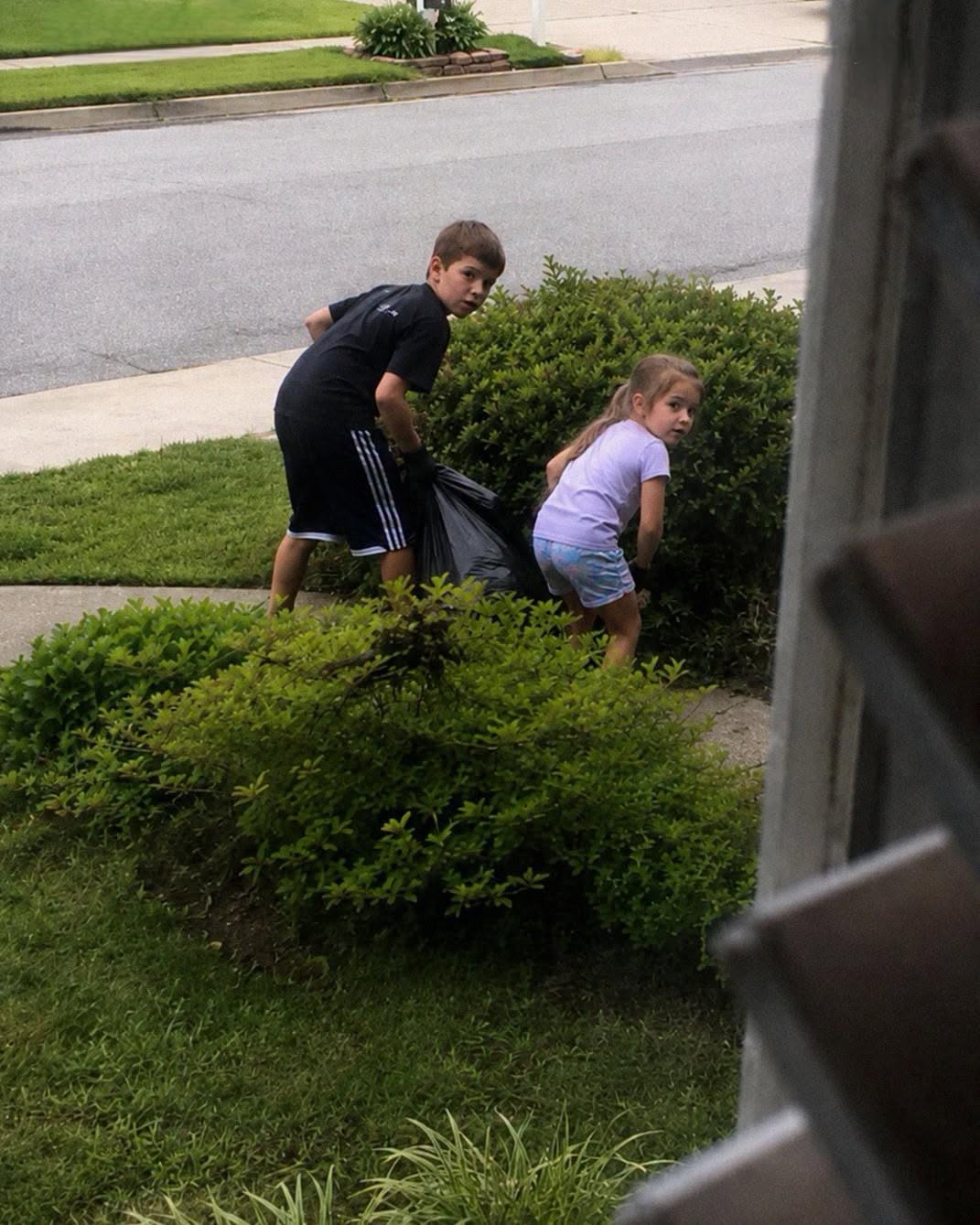
They had been hiding something.
I glanced toward the street.
Nothing moved.
I carefully picked up the box and carried it inside.
My first thought was to call their mother.
My second was to put the box down and forget I had ever seen it.
But curiosity won.
The box wasn’t locked.
Inside was a collection of strange objects.
A house key.
Several old photographs.
A child’s drawing.
Three envelopes.
And a small notebook with a black cover.
I opened the notebook.
The first page contained a date from more than twenty years earlier.
Underneath it was a sentence written in faded blue ink:
“If you’re reading this, please don’t throw anything away.”
I felt a chill.
I turned the page.
There were names.
Dozens of them.
Some belonged to people I recognized from the neighborhood.
Others meant nothing to me.
Beside each name was a date.
Then, on several pages, there were short notes.
“Delivered.”
“Waiting.”
“Don’t tell Mom.”
I stopped.
Why would two children be involved in something like this?
I flipped through more pages.
Then I saw my own street address.
My hands became cold.
Next to it was a date from six months earlier.
And beside that date were two words:
“Still waiting.”
I closed the notebook.
At that exact moment, someone knocked on my front door.
I nearly dropped it.
I walked slowly into the hallway.
Through the glass panel beside the door, I saw the children’s mother standing on my porch.
She looked worried.
I opened the door.
“Hi,” she said.
Her eyes immediately moved toward the notebook in my hand.
Her expression changed.
“You found it.”
I didn’t know what to say.
“What is this?”
She stepped inside and closed the door behind her.
“My children weren’t supposed to let you see that.”
“Then why were they hiding it in my yard?”
She sighed.
“Because they thought you were the person they had been looking for.”
I stared at her.
“Looking for what?”
She looked at the metal box.
“The truth.”
I almost laughed.
Instead, I felt more confused.
“You’re going to have to explain.”
She nodded.
“My father lived in this neighborhood.”
I looked at the photographs.
One of the men pictured in them looked vaguely familiar.
“He died when I was young,” she continued. “But before he died, he told me there was something he had hidden somewhere on this street.”
“What?”
“A collection of letters.”
“Letters from whom?”
She shook her head.
“I don’t know.”
She sat at my kitchen table.
“My father was involved in the neighborhood association years ago. He kept records of people who needed help. Sometimes families couldn’t afford groceries. Sometimes elderly residents needed repairs. Sometimes someone needed a little money and didn’t want anyone to know.”
I looked at the notebook again.
“So this is a list of people he helped?”
“Partly.”
“Then why are my children involved?”
Her eyes filled with tears.
“Because my father left them a puzzle.”
“A puzzle?”
She nodded.
“Before he died, he gave me a letter. It said that something important had been hidden on this street and that one day, someone would need to find it.”
“Why didn’t you?”
“I tried.”
She looked embarrassed.
“I couldn’t figure it out.”
“And your children did?”
“They found the first clue by accident.”
I looked at the metal box.
“What was the clue?”
She pointed toward the notebook.
“The dates.”
I opened it again.
She explained that the dates weren’t random. They corresponded to anniversaries of houses being sold, renovated, or transferred to new owners.
“Your house was one of them,” she said.
“Why?”
“Because my father lived here before the previous owner.”
I stared at her.
That was something I had never known.
I had bought my house years ago, and the previous owner had never mentioned anyone named Thomas.
“Your father lived here?”
“For almost twenty years.”
I looked toward the living room.
Suddenly, the old house felt completely different.
She continued.
“My father believed someone had taken something from him.”
“What?”
“We don’t know.”
“Then what’s in the box?”
“That’s what my children were trying to discover.”
I looked at the photographs again.
One showed a group of neighborhood children standing in front of my house.
Another showed the same house decades earlier.
Then I noticed something.
In the background of the second photograph was the large bush beneath my living room window.
Except it was much smaller.
And beside it stood an elderly man.
My neighbor’s mother pointed at the photograph.
“That’s my father.”
I looked closer.
He was holding something in his hand.
A small metal box.
The same kind of box now sitting on my table.
My heart began racing.
“He buried it here.”
She nodded.
“But why?”
Before she could answer, I heard a sound from outside.
A car door slammed.
We both looked toward the window.
A dark vehicle had stopped across the street.
The children were standing beside it.
They were talking to an older man.
The woman’s face went pale.
“Who is that?”
She stood.
“I don’t know.”
The man stepped out of the car.
He looked toward my house.
Then he began walking toward us.
The children immediately ran inside.
Their mother rushed to the door.
“Stay here.”
“What?”
“Please.”
She opened the door before the man reached it.
The man stopped.
For a few seconds, they stared at each other.
Then he said quietly:
“Did they find it?”
The woman didn’t answer.
He looked past her.
His eyes landed on the metal box.
His expression changed.
“I was afraid of this.”
I stood up.
“Who are you?”
The man looked at me.
“My name is Robert.”
He hesitated.
“I knew your previous owner.”
“What did he hide?”
Robert took a deep breath.
“Not money.”
“Then what?”
“A letter.”
“What kind of letter?”
“One that could have changed what happened to several families in this neighborhood.”
The room went silent.
Robert explained that decades earlier, a dispute had developed over several properties on our street.
A group of residents had been pressured into selling their homes.
Some believed they had been treated unfairly.
Others suspected important documents had been concealed.
Thomas, the woman’s father, had discovered evidence that could have exposed what happened.
But before he could reveal everything, the documents disappeared.
Everyone assumed they had been destroyed.
Apparently, they hadn’t.
The children had discovered the first clue while cleaning the street months earlier.
They had been following the trail ever since.
“And the money?” I asked.
Robert looked confused.
“What money?”
I pointed to the notebook.
“The names.”
He smiled sadly.
“Those aren’t payments.”
“Then what are they?”
“Promises.”
He explained that Thomas had kept track of people he intended to help.
Some of those promises had never been fulfilled.
The children had been searching for the descendants of those families.
They weren’t collecting garbage.
They were collecting pieces of a forgotten story.
I looked at the brother and sister.
“Why didn’t you just tell me?”
The younger boy looked down.
“Mom said grown-ups don’t always believe kids.”
His sister interrupted.
“But we thought you might.”
I smiled despite myself.
“Well, you were right.”
The boy reached into his pocket.
“I found one more thing.”
He pulled out a folded piece of paper.
My neighbor’s mother stared at it.
“Where did you find that?”
“In the old mailbox behind the shed.”
She unfolded it.
Her hands began shaking.
It was a letter.
At the top was a date from twenty-two years earlier.
And underneath it were three names.
One was Thomas.
One was Robert.
The third was my house’s previous owner.
Then came a sentence that made everyone silent:
“The person who eventually owns this house must be told the truth.”
I looked around the room.
For years, I had thought I was simply living in an ordinary old house.
I had never imagined that beneath the garden, behind the walls, and inside forgotten boxes were pieces of a story that had begun long before I arrived.
The children had not been cleaning the street because they were bored.
They had been searching for clues.
And somehow, their search had led them to me.
That evening, we went back outside together.
The sun was beginning to set.
The children stood beside the bush.
I looked at the place where I had found the box.
“How many more clues are there?”
The younger boy smiled.
“We don’t know.”
His sister pointed toward the sidewalk.
“But we found something yesterday.”
“What?”
She reached into her backpack.
It was another photograph.
This one showed my house from the front.
On the back was a handwritten message:
“The first box was never the last.”
I looked at the children.
Then at their mother.
Then at my old house.
For the first time, I understood why they had come out every Sunday.
They weren’t cleaning the street.
They were uncovering a story.
And judging by the photograph in my hands, the biggest secret hadn’t even been found yet.