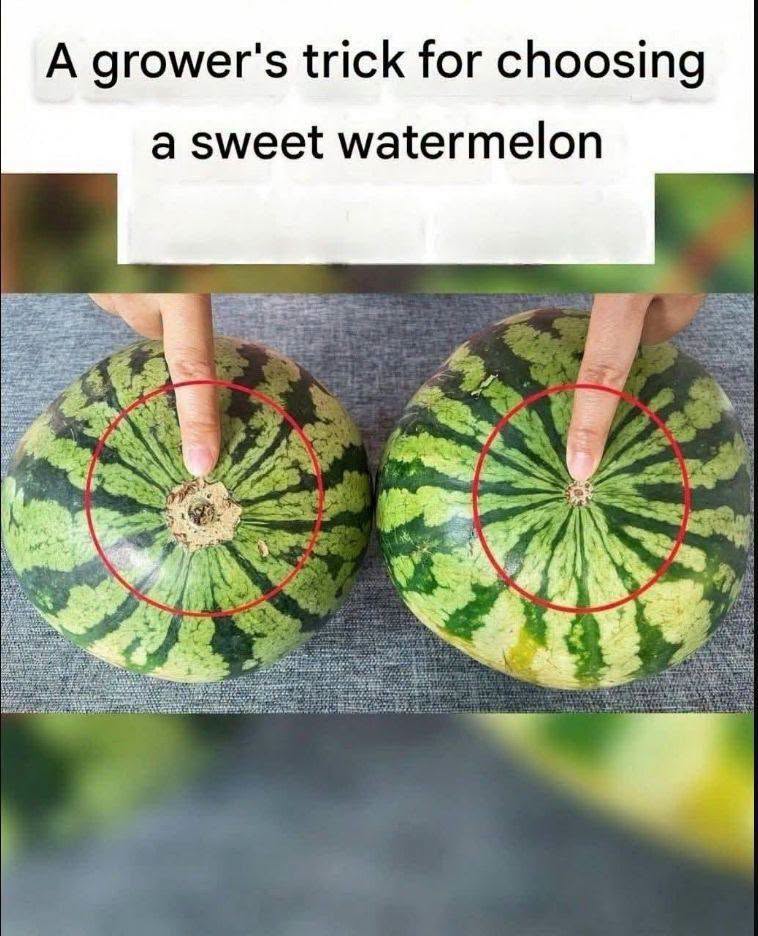
A ripe watermelon generally has a firm rind that isn’t excessively shiny. On striped varieties, look for reasonably clear contrast between the stripes.
The skin should feel firm rather than soft or unusually yielding when gently pressed.
5. Don’t worry about natural webbing
Some watermelons have brown, rough-looking lines or web-like markings on their skin. These can develop naturally as the fruit grows.
Cosmetic markings aren’t automatically signs of poor quality. What matters more is whether the melon has signs of actual damage, decay, or softening.
6. Try the thump test—but don’t rely on it
Many people tap a watermelon and listen to the sound.
A mature watermelon may produce a deeper, resonant sound, while a flatter sound can sometimes indicate a less desirable texture. However, this method can be difficult to interpret consistently.
It’s better to use the sound as one clue among several rather than treating it as a definitive test.
7. Check the stem if it’s still attached
If a portion of the stem remains, a dry, brownish stem can be consistent with a melon that matured before being separated from the plant.
A green stem may indicate earlier harvesting, but stems are frequently removed or altered during harvesting and transportation. Don’t reject an otherwise promising watermelon simply because the stem isn’t present.
8. Once it’s cut, inspect the flesh
The inside should have a rich, appealing color appropriate to the variety and a firm, juicy texture.
If the flesh appears unusually watery, mushy, discolored, or grainy, the watermelon may not have the texture you’re looking for.
Once cut, refrigerate watermelon promptly in a covered container and keep it chilled to help maintain quality.
Easy watermelon checklist
For a quick shopping routine, look for:
- 🟡 Strong yellow field spot
- ⚖️ Heavy for its size
- 🍉 Even, symmetrical shape
- 👋 Firm rind
- 🌿 Dry stem, if present
- 👀 No mold, leaks, major soft spots, or deep damage
- 👂 A resonant sound can be a supporting clue
The key is to combine several clues instead of relying on one supposed secret. With a little practice, choosing a watermelon becomes much more predictable—and that first slice is much more likely to deliver the refreshing, crisp fruit you’re hoping for.