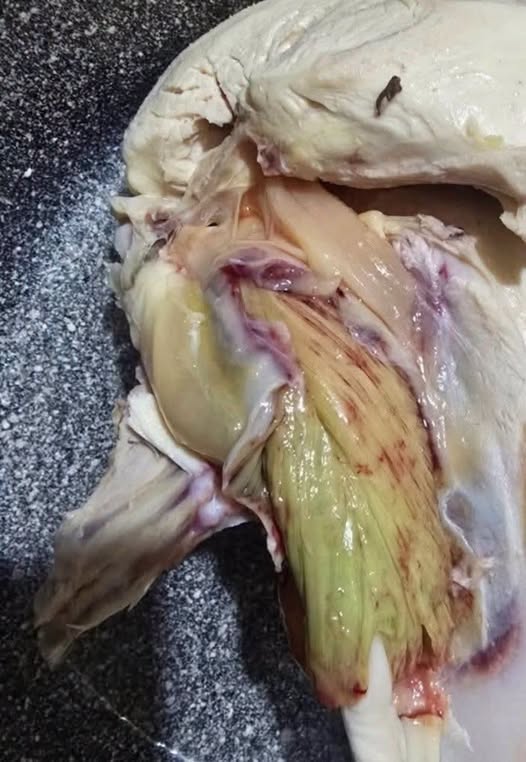
But appearance alone isn’t a reliable way to determine whether poultry is safe.
The bigger concern is spoilage.
As food deteriorates, microorganisms can produce noticeable changes in smell and texture. If raw chicken has a strong sour, rotten, or sulfur-like odor, or if the surface feels unusually slimy or sticky, don’t take chances. Those are strong reasons to discard it.
Texture matters, too.
Fresh poultry should not feel unusually mushy, slippery, or as though the tissue is breaking down. When the smell and texture both seem wrong, saving a few dollars isn’t worth the risk.
There is another visual trick that can confuse shoppers: iridescence.
Under certain lighting, meat can sometimes reflect light in green, blue, or rainbow-like shades. Packaging and the angle of the light can make this effect especially noticeable. Iridescence by itself does not necessarily mean the meat has spoiled.
Still, there is an important rule worth remembering:
You can’t reliably determine poultry safety just by looking at it.
Storage temperature, expiration or use-by information, handling, and proper cooking all matter. If you’re uncertain about the condition of raw chicken, the safest choice is to avoid eating it rather than trying to rescue questionable meat.
And never taste suspicious food to “test” whether it is safe.
A strange color may have an innocent explanation—but an unpleasant smell, slimy texture, damaged packaging, or questionable storage history should make you stop.
When you’re unsure, don’t gamble with food safety.
Have you ever opened a package of chicken and noticed an unusual color or texture? Tell us what you found in the comments, and share this guide with someone who cooks poultry regularly.