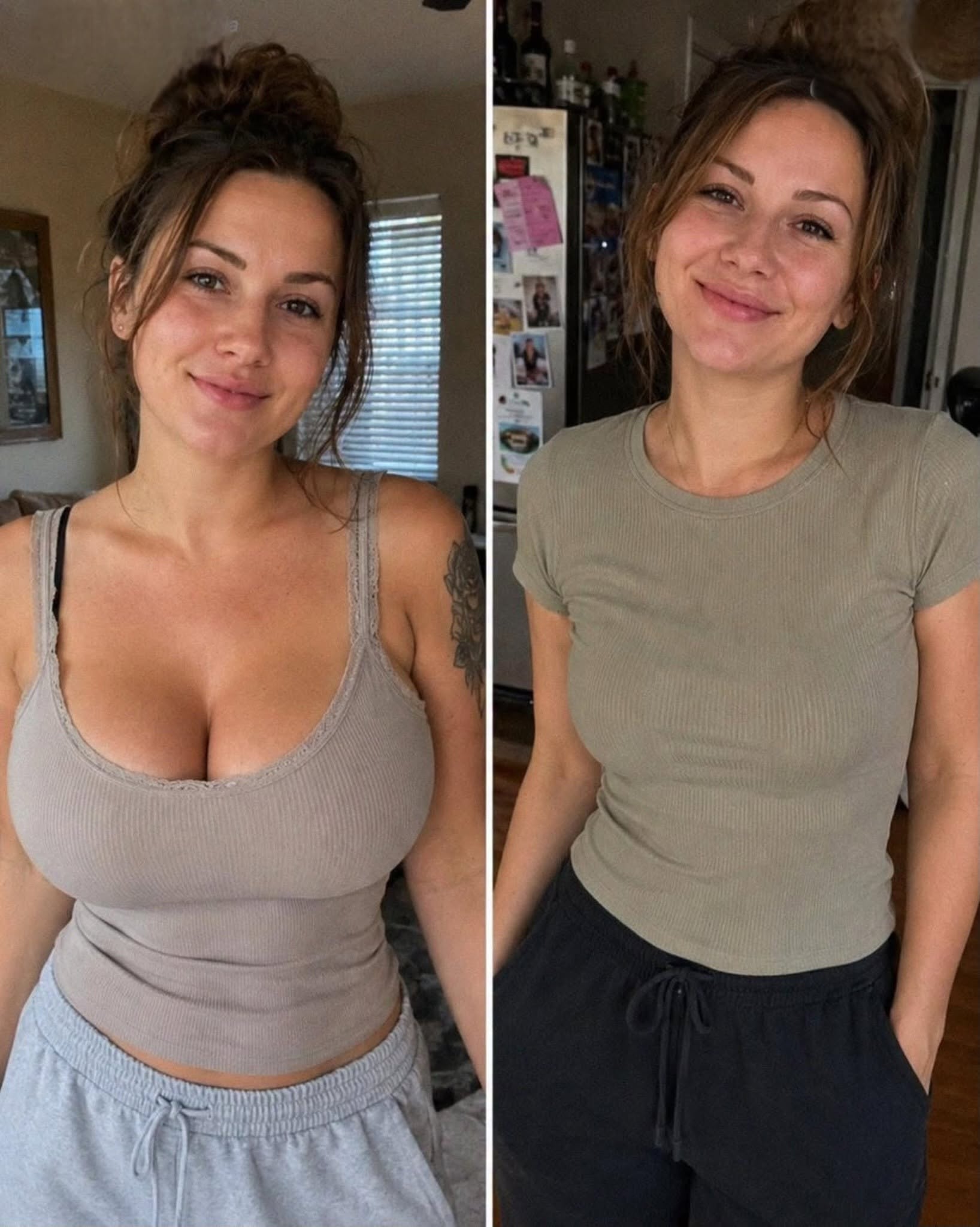
“After I spent years dealing with pain?”
He shrugged.
“You said the surgery was important to you. Fine. You got what you wanted. Now I should get something I’ve wanted.”
I looked down at the clinic website still open on his phone.
Then I looked at him.
“This isn’t the same thing.”
“Why not?”
“Because I didn’t spend years dreaming about changing my body for fun.”
His expression hardened.
“It’s still cosmetic surgery.”
“No.”
I said it quietly.
“But you keep calling it that because you don’t want to acknowledge what it actually was.”
He leaned back.
“What was it, then?”
“It was treatment for a problem that affected my daily life.”
He laughed under his breath.
That hurt more than I expected.
Not because I needed him to agree with every decision I made, but because I had spent years explaining this to him.
He had watched me come home exhausted after ordinary activities.
He had seen me rub my shoulders at the end of long days.
He had heard me complain about back and neck pain.
He knew how carefully I planned clothes around comfort.
He had even helped me pack for the hospital.
And now, sitting across from me, he was acting as though I had casually purchased an expensive accessory.
“I told you what this surgery meant to me before we got married,” I said.
“I know.”
“I told you how long I’d wanted it.”
“I know.”
“I told you why.”
He crossed his arms.
“And I supported you.”
I stared at him.
“Did you?”
He looked offended.
“Of course I did.”
“No. You supported the decision because you thought it would make me happier to look a certain way. You never listened when I told you I wanted to be more comfortable.”
His expression changed.
For the first time, I think he realized I wasn’t going to laugh off his demand.
He picked up his phone.
“I’m not trying to start a fight.”
“Then don’t turn my medical decision into a transaction.”
He went quiet.
I slowly pushed the phone back toward him.
“You don’t get a $5,000 reward because I finally addressed something that had been hurting me for years.”
His jaw tightened.
“You spent our money.”
“We agreed to it.”
“We agreed because I thought you’d eventually change your mind.”
I froze.
“What?”
He looked away.
I could barely believe what I’d heard.
“You thought I’d change my mind?”
“Maybe.”
“After everything I told you?”
He shrugged.
“You’ve talked about it forever.”
“Exactly.”
I stood carefully.
My body was still recovering, and I didn’t want to push myself physically.
But emotionally, I suddenly felt stronger than I had in years.
“I saved for this. I planned for it. We discussed it. You helped me prepare. You told me you understood.”
“I did understand.”
“No, you didn’t.”
He looked at me.
“You understood that I wanted something. You never understood why.”
That sentence hung between us.
For a moment, neither of us spoke.
Then he said something that changed the conversation completely.
“If you really cared about us, you would have spent that money on something we could both enjoy.”
I stared at him.
“What would that have been?”
“A vacation. New furniture. Maybe a better car.”
I almost laughed.
Instead, I asked:
“And if I had spent $5,000 on a vacation, would you have demanded another $5,000 for yourself?”
He didn’t answer.
“Exactly.”
He stood.
“That’s not fair.”
“Neither is what you’re doing.”
He walked into the kitchen.
I stayed at the table.
For years, I had thought the hardest part of my surgery would be the recovery.
I had been wrong.
The hardest part was discovering that the person I expected to comfort me afterward was more concerned about what he believed he had lost.
That evening, I went upstairs early.
I sat on the edge of the bed and looked around the room.
Nothing had changed.
Our photographs were still on the dresser.
His watch was still beside the lamp.
The blanket we’d bought together was still folded at the foot of the bed.
Yet everything felt unfamiliar.
My phone buzzed.
It was my sister.
How are you feeling?
I stared at the message.
Then I typed:
Physically, better than I expected. Emotionally, not so much.
She called immediately.
I told her what had happened.
There was a long silence.
Then she said:
“Did he really ask for five thousand dollars because you had surgery?”
“Yes.”
“After knowing how much pain you were in?”
“Yes.”
She sighed.
“Then this isn’t about the money.”
“I know.”
“What is it about?”
I looked toward the bedroom door.
“Control, maybe.”
My sister was quiet again.
Then she said:
“Or maybe it’s about him realizing that your body belongs to you.”
That sentence stayed with me.
The next morning, my husband behaved as though nothing had happened.
He made coffee.
He asked whether I had slept well.
Then, while looking at his phone, he casually said:
“So, about the motorcycle…”
I nearly dropped my mug.
“You’re still serious?”
“Why wouldn’t I be?”
“Because I said no.”
He looked at me.
“I thought we’d talk about it.”
“We did.”
“No, we argued.”
“Because you made an unreasonable demand.”
He put down his phone.
“Fine. What would make it reasonable?”
I stared at him.
“Nothing.”
He blinked.
“Nothing?”
“This isn’t a negotiation.”
He shook his head.
“You’re making this into something bigger than it is.”
“No.”
I took a breath.
“You are.”
I told him exactly what I needed from him.
Not money.
Not an apology designed to end the argument.
Understanding.
I needed him to acknowledge that my decision had been about my comfort and quality of life.
I needed him to stop describing it as something I had done to myself for vanity.
And most importantly, I needed him to understand that marriage did not mean one person was entitled to make demands on the other’s body.
He listened.
At least, I thought he did.
Then he said:
“So you’re saying I don’t get anything?”
I closed my eyes.
There it was again.
The entire conversation had somehow become about him.
“No,” I said.
“I’m saying that’s not the point.”
He looked frustrated.
“Then what is the point?”
“The point is that I came home hoping my husband would see that I was finally getting relief from something that had affected me for years.”
I paused.
“Instead, you looked at me and calculated what you thought you were owed.”
He didn’t respond.
I continued.
“I don’t need you to celebrate the surgery. I don’t even need you to understand every feeling I’ve had about it.”
My voice became steadier.
“But I need you to respect that it was my decision.”
He looked down.
For the first time, he seemed genuinely uncomfortable.
“I didn’t realize you thought I didn’t respect you.”
“I didn’t realize I had to explain it.”
That was when he finally apologized.
Not perfectly.
Not dramatically.
Just quietly.
“I was being selfish.”
I didn’t answer immediately.
He continued.
“I think I saw the money leaving our account and convinced myself that you were getting something I wasn’t.”
I looked at him.
“But you weren’t buying something for yourself.”
“I know.”
“You were finally dealing with something that had been affecting you for years.”
“I know that now.”
I wanted to believe him.
But trust doesn’t repair itself because someone says the right sentence once.
So I told him that.
“I don’t know if one apology fixes this.”
He nodded.
“I understand.”
“And I don’t want the motorcycle.”
He looked confused.
“What?”
“I don’t want to spend another five thousand dollars on anything right now.”
I pointed toward the savings account information on the counter.
“We need to rebuild what we used for my surgery and make sure we have enough for emergencies.”
He nodded.
“Okay.”
That was the first sensible thing he’d said all morning.
Over the next several weeks, something changed between us.
Not immediately.
There were still awkward conversations.
There were moments when I caught him looking at me and wondered what he was thinking.
There were times when I felt angry all over again.
But he started helping in ways that actually mattered.
He drove me to follow-up appointments.
He took over some household chores while I recovered.
He stopped making jokes about the surgery.
And one afternoon, I caught him researching ways to make our savings plan stronger.
I looked at him.
“What are you doing?”
He closed the laptop.
“Trying to fix what I almost messed up.”
I smiled slightly.
“You can’t fix everything with a spreadsheet.”
“I know.”
He paused.
“I’m learning.”
Months later, I stood in front of the closet getting dressed for work.
For years, getting dressed had involved an uncomfortable calculation.
What would hurt?
What would feel restrictive?
What could I tolerate for several hours?
That morning, I chose clothes because I liked them.
Not because I was trying to hide.
Not because I was trying to look different.
Because they felt comfortable.
I looked at myself in the mirror.
And for the first time, I didn’t think about what my body looked like.
I thought about what it allowed me to do.
I could move more comfortably.
I could exercise without the same worries.
I could sleep more easily.
I could get through an ordinary day without constantly thinking about discomfort.
That was what I had wanted all along.
My husband appeared in the doorway.
“You ready?”
I nodded.
Then he smiled.
“You look happy.”
“I am.”
He glanced at me.
“I’m glad.”
I picked up my bag.
As we walked downstairs, he stopped.
“I owe you something.”
I looked at him.
“What?”
“An apology that isn’t about the money.”
I waited.
He took a breath.
“I thought your decision was about how you wanted to look.”
He shook his head.
“I didn’t understand that you were trying to change how you lived.”
I didn’t say anything.
“And I’m sorry I made you feel like you needed to justify taking care of yourself.”
That apology meant more than the first one.
Because this time, he finally understood.
We didn’t suddenly become a perfect couple.
But we began having conversations we should have had years earlier.
About money.
About boundaries.
About health.
About how easily people can mistake someone else’s personal decision for something they are entitled to control.
And I learned something too.
Sometimes the most important part of making a major decision isn’t whether everyone around you approves.
It’s whether you understand why you’re making it.
I had spent years waiting for permission to prioritize my own comfort.
I finally realized I didn’t need it.
The surgery didn’t give me a new life.
It simply made parts of the life I already had easier to live.
And perhaps that was the real lesson.
Taking care of yourself isn’t selfish simply because someone else doesn’t understand why you need it.
Your body is yours.
Your health decisions are yours.
And the people who love you should be able to respect that—even when they don’t fully understand it.