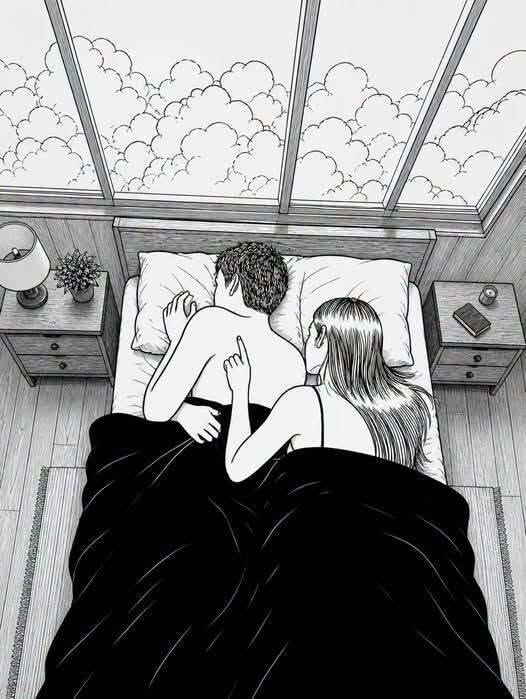
1. They May Simply Be More Comfortable
Some people naturally sleep better on their side with their back facing their partner.
A particular position may make it easier to relax, stretch out, regulate body temperature, or find a comfortable posture.
Sleeping back-to-back does not automatically mean someone wants emotional distance.
2. It Could Be Their Normal Sleep Habit
Everyone develops different sleeping habits.
Some people prefer sleeping on their side, while others move frequently throughout the night. If your partner has always slept facing away, there may be no relationship-related meaning behind it at all.
A long-standing habit is generally less informative than a sudden change in behavior.
3. They May Need More Personal Space
Sharing a bed does not mean two people have to maintain physical contact throughout the night.
Some people sleep more comfortably when they have a little extra space around them. Facing away can simply create a more comfortable sleeping arrangement while still allowing both partners to rest beside each other.
4. Stress Can Affect Sleep
Stress and tiredness can influence sleeping patterns.
After a demanding day, someone may naturally move into a position that feels relaxing or helps them settle down. This does not necessarily indicate that they are upset with their partner.
Sleep behavior can be affected by many things happening outside the relationship.
5. Physical Comfort May Be the Reason
Discomfort can also influence which direction someone faces.
Neck or back discomfort, congestion, sensitivity to light, room temperature, or the position of pillows can all affect sleeping posture.
In these situations, comfort is usually a more practical explanation than relationship symbolism.
6. A New Change May Be Worth Discussing
Although one sleeping position does not reveal someone’s feelings, a noticeable change in behavior may make you curious.
If your partner has suddenly started sleeping differently at the same time that communication or daily interactions have changed, it may be worth having a calm conversation.
The important point is not to treat the sleeping position as proof of a problem.
Instead, consider the wider context.
7. Sleeping Separately Doesn’t Always Mean Emotional Distance Either
Couples can have different sleep preferences.
One person may prefer more space, different room temperatures, different schedules, or less movement during the night. In some relationships, adjusting sleeping arrangements can actually help both people get better rest.
Healthy relationships can include different practical needs.
8. Communication Is More Useful Than Guessing
If your partner’s sleeping position makes you concerned, the most reliable way to understand what is happening is to talk about it.
A simple, non-accusatory conversation can be more helpful than trying to interpret a particular posture.
You might ask whether they are comfortable, whether something has been bothering them, or whether there is anything that would make sleeping together more comfortable.
The Bottom Line
Your partner turning their back while sleeping does not automatically mean they are angry, unhappy, or emotionally distant.
Sleep positions are influenced by comfort, habits, physical needs, stress, and many other factors. A single posture cannot reliably reveal the state of a relationship.
Rather than assigning a hidden meaning to the way someone sleeps, look at the relationship as a whole.
Good communication, mutual respect, and paying attention to how you treat each other while awake are much better indicators of relationship health than the direction someone faces at night.