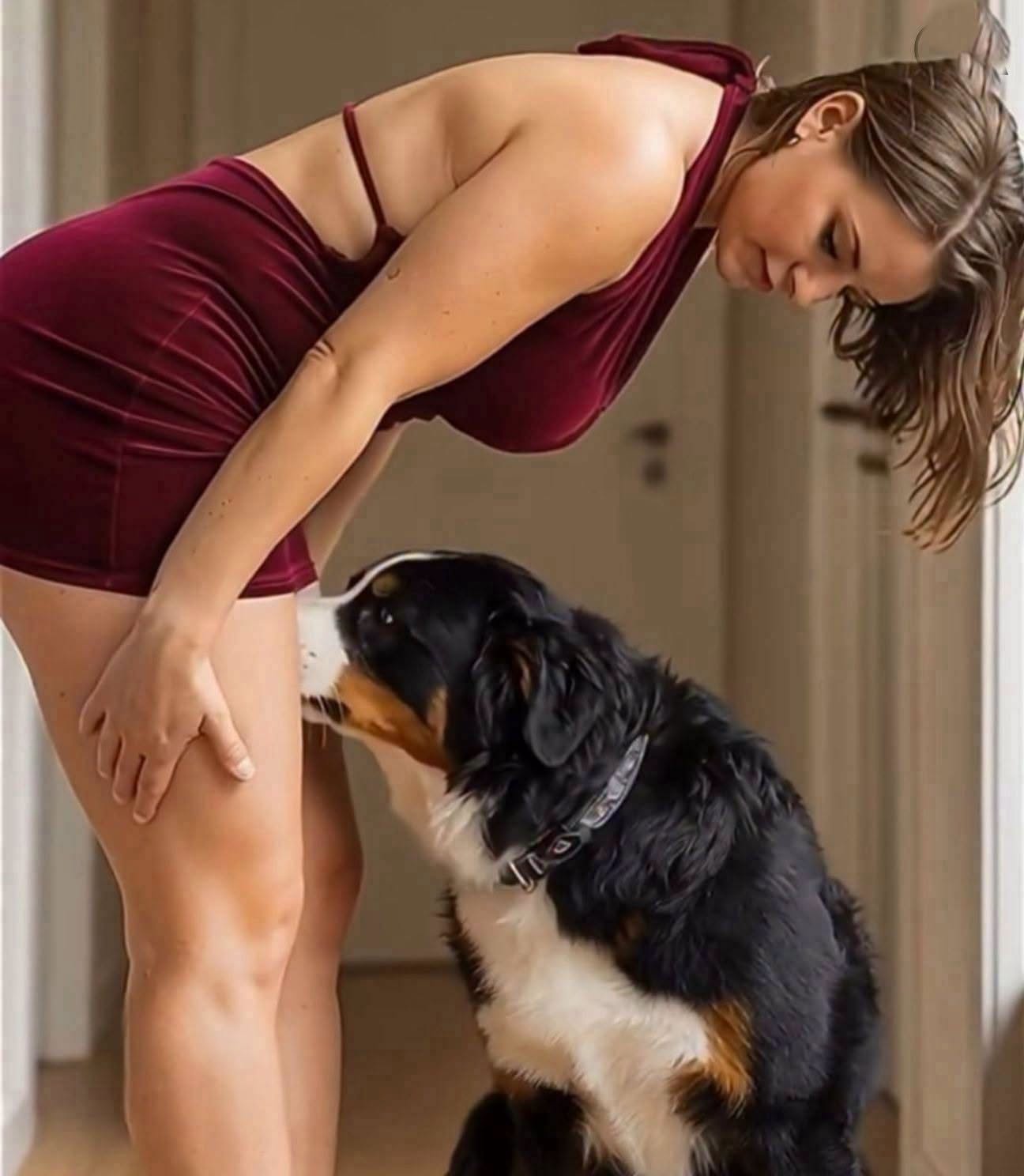
A Dog Experiences the World Through Scent
Humans tend to rely heavily on sight and language to understand their surroundings. Dogs, however, depend much more strongly on their sense of smell.
When a dog encounters a new person, their nose can help them gather information about that individual’s scent and surroundings.
A person’s scent can change depending on where they have been, what environments they have encountered, and whether they have recently interacted with other animals or objects.
That’s one reason a dog may spend more time sniffing one person than another.
To your dog, the scent provides information that you simply cannot perceive in the same way.
Why Does Your Dog Sniff People?
There isn’t always one specific explanation.
Your dog may be curious about a new person, trying to determine whether they are familiar, or simply investigating an unfamiliar scent.
Dogs may also sniff because they are excited about meeting someone or because the person’s clothing carries interesting smells from another environment.
In other words, sniffing doesn’t automatically reveal what a dog “thinks” about someone.
It’s better understood as a natural information-gathering behavior.
Your Dog May Notice Changes You Don’t
A dog’s sense of smell is remarkably sensitive compared with ours.
Dogs can detect subtle differences in odors that humans generally cannot notice. This can include scent changes associated with food, other animals, outdoor environments, and everyday activities.
However, it’s important not to assume that every unusual sniff means your dog has detected a specific medical condition or emotional state.
Although dogs can respond to changes in human scent and behavior, a dog’s sniffing behavior by itself isn’t a reliable way to diagnose a person’s health or determine exactly how they feel.
Why Do Dogs Sometimes Sniff One Person More?
Have you ever noticed your dog showing particular interest in one visitor?
There are many ordinary reasons this can happen.
Perhaps the person has recently been around another dog or cat. Maybe they have been outdoors, visited a park, cooked a strongly scented meal, or simply smell different from the people your dog usually encounters.
The person’s clothing can also carry unfamiliar scents.
Your dog may simply be investigating something new.
That doesn’t necessarily mean the dog likes or dislikes the individual.
Sniffing Is Part of Canine Communication
Dogs use scent as part of their social world.
When dogs meet each other, sniffing can provide information that helps them identify and investigate one another. People may greet with words or gestures, while dogs have their own sensory ways of gathering information.
This is why completely eliminating sniffing isn’t usually necessary.
Instead, the goal for pet owners is to help dogs learn when and how to greet people appropriately.
How to Encourage Polite Greetings
Natural behavior can still be guided.
If your dog becomes overly excited around visitors, training can help create calmer interactions.
For example, you can:
- Teach your dog to sit before greeting a visitor.
- Reward calm behavior with praise or an appropriate treat.
- Give your dog enough space when meeting unfamiliar people.
- Use a leash when additional control is needed.
- Teach a consistent cue for approaching someone.
- Allow visitors to decide whether they are comfortable interacting with your dog.
Short, consistent training sessions are often easier for dogs to understand than constantly correcting them after they become overly excited.
What If Someone Doesn’t Want to Be Sniffed?
Not everyone is comfortable around dogs.
Some people may be nervous around animals, while others may simply prefer more personal space. Children in particular should be supervised during interactions with unfamiliar dogs.
Understanding canine behavior doesn’t mean every greeting should be allowed.
A responsible owner can respect other people’s boundaries while still giving their dog safe opportunities to explore through scent.
Your Reaction Can Influence the Moment
Dogs can pay close attention to human body language, tone, and behavior.
If you become tense or frustrated whenever your dog approaches a guest, your dog may respond to that change in the environment.
Remaining calm and using consistent cues can make greetings easier to manage.
Instead of treating every sniff as a problem, think of it as an opportunity to teach your dog how to investigate appropriately.
When Sniffing Might Be Worth Watching
Sniffing people is generally normal canine behavior.
However, if your dog’s behavior suddenly changes in a broader way—such as becoming unusually anxious, aggressive, withdrawn, or obsessive—it may be worth paying attention to the overall pattern rather than focusing on sniffing alone.
If you are concerned about a significant or persistent change in your dog’s behavior, a veterinarian or qualified animal behavior professional can help you understand what may be happening.
The Real Meaning Behind That Curious Nose
The next time your dog walks toward someone and starts sniffing, remember that your pet isn’t necessarily being rude or strange.
They’re gathering information in one of the ways dogs naturally understand their surroundings.
The most useful response isn’t to panic or assume the sniff has a hidden meaning.
Instead, guide your dog toward calm, respectful greetings while allowing them appropriate opportunities to explore their environment.
Your dog’s nose is an important part of how they experience the world.
And that ordinary sniff at the door may be far more interesting than it first appears.