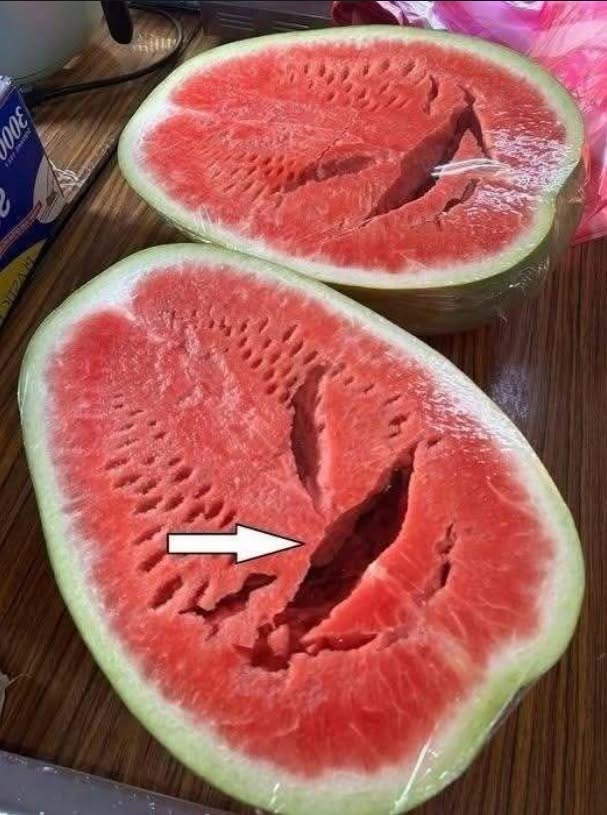
Why Can Watermelon Develop Internal Cracks?
Watermelons contain a large amount of water, and their growth can be affected by environmental conditions.
When growing conditions change, the flesh may sometimes develop internal gaps, cracks, or softer areas. Rapid growth can also place stress on the developing fruit.
These characteristics can vary from one watermelon to another. An unusual appearance inside the fruit does not, by itself, indicate that the watermelon contains something harmful.
What About Claims About Growth Regulators?
Some online discussions connect unusual watermelon interiors with agricultural growth regulators such as chlorfenuron.
However, the appearance of cracks inside a watermelon cannot reliably tell you whether a particular agricultural product was used. Growing practices and regulations also differ between countries and regions.
For consumers, the more useful approach is to evaluate the actual condition of the fruit rather than assuming that an unusual appearance proves chemical exposure.
If you have concerns about agricultural practices or food regulations, information from your local food-safety authority is a better source than social-media claims.
How to Tell If a Watermelon Is Still Fresh
After cutting a watermelon, pay attention to several simple signs.
A fresh watermelon will generally have a pleasant, mild aroma and firm, juicy flesh. Its color should be reasonably consistent with the variety, and the fruit should not have obvious signs of spoilage.
Minor cracks or unusual spaces may simply be a result of how the fruit developed.
However, certain changes deserve more attention.
Be cautious if the watermelon has:
- A strong unpleasant or fermented odor
- Noticeably slimy or mushy flesh
- Visible mold
- Significant discoloration
- An unusual appearance accompanied by an unpleasant taste or smell
- Signs that the fruit has been stored improperly or for too long
When several signs of spoilage are present, it is safer to discard the fruit rather than take a chance.
Choosing a Good Watermelon
There are also a few simple things you can look for before buying a watermelon.
A ripe watermelon often feels heavy for its size because of its high water content. Many shoppers also look for a well-developed field spot, which is the area where the melon rested against the ground while growing.
The rind should generally appear firm and intact rather than damaged or severely bruised.
These observations are not guarantees of quality, but they can help you make a more informed choice.
Don’t Judge a Watermelon by One Imperfection
One of the biggest problems with viral food-safety posts is that they can turn an ordinary variation into something that sounds alarming.
An unusual-looking fruit is not necessarily a dangerous one.
The inside of a watermelon can vary naturally, and appearance alone is not enough to determine whether a particular fruit is safe or unsafe.
Instead of relying on dramatic claims, consider the complete picture: freshness, smell, texture, appearance, storage conditions, and whether there are obvious signs of spoilage.
The Bottom Line
Cracks or unusual spaces inside a watermelon can happen for several reasons, and they do not automatically mean the fruit is unsafe.
If the watermelon looks and smells fresh and has a normal texture, a minor internal imperfection may simply be a characteristic of how the fruit developed.
On the other hand, clear signs of spoilage—such as mold, a strong unpleasant odor, or slimy flesh—are good reasons to discard it.
The most reliable approach is simple: don’t panic over one unusual feature, but don’t ignore obvious signs of spoilage either.
When it comes to food safety, practical observation and reliable information are much more useful than viral claims designed to create fear.